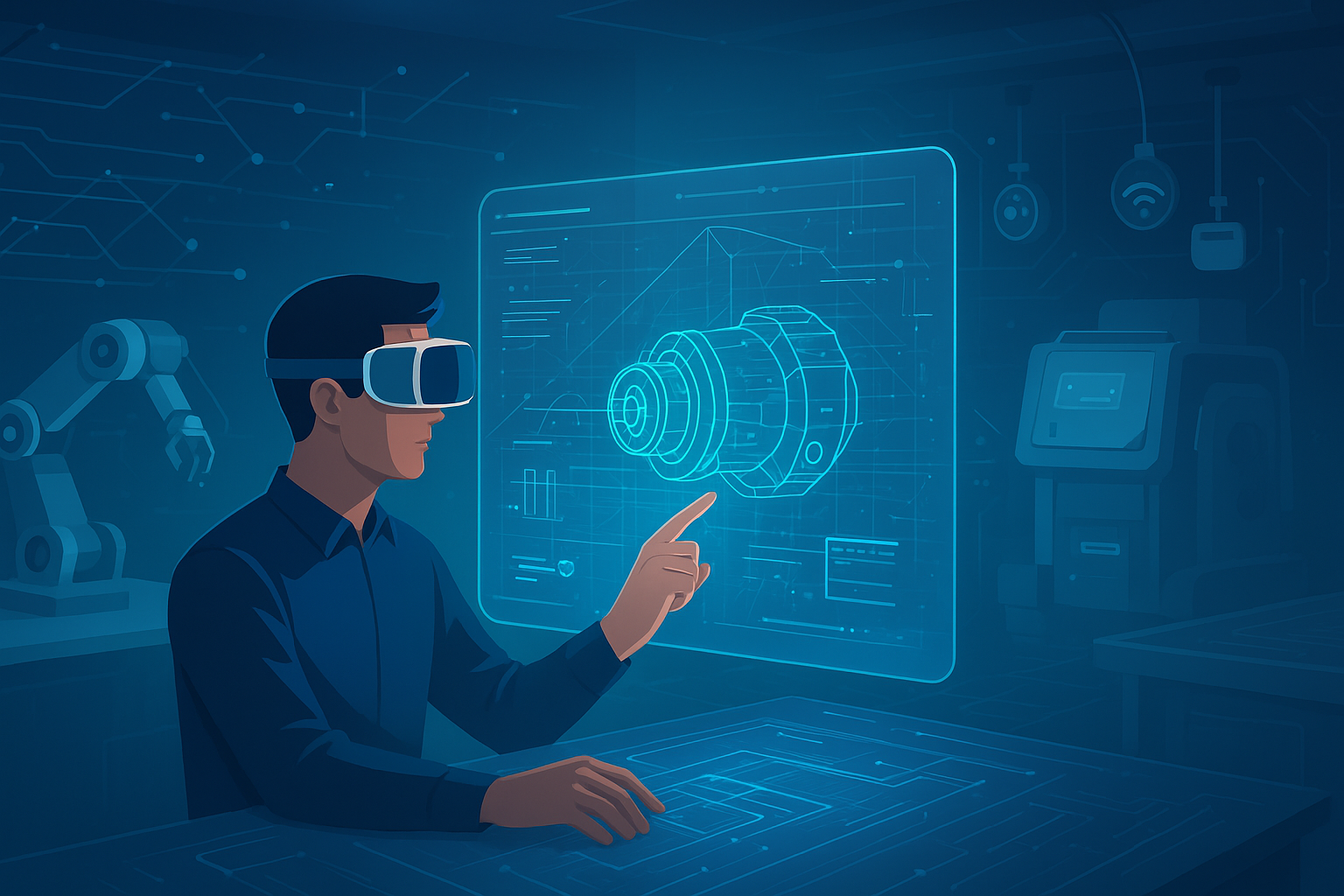

Virtual prototyping is changing the way engineers and designers bring ideas to life. Instead of building a physical model every time a design changes, teams now use advanced software to create, test, and refine products entirely in a digital environment. This approach is faster, cheaper, and far more efficient than traditional prototyping methods.
What Is Virtual Prototyping?
Virtual prototyping is the process of building a digital version of a product and running simulations to understand how it will perform in the real world — before a single physical component is made.
Using 3D models and computer-based simulations, engineers can evaluate how a product looks, feels, and behaves under different conditions. Whether it is testing how a car door handles a crash or checking if a medical device fits correctly inside the human body, virtual prototyping gives designers a clear picture without wasting materials or time.
The core idea is simple: fix problems on screen before they become expensive mistakes in the factory.
How Does Virtual Prototyping Work?
Engineers use a combination of specialized tools to build and test digital prototypes. The most common technologies include:
- CAD (Computer-Aided Design): Used to create detailed 3D models of a product, capturing every dimension and shape with precision.
- Simulation Software: Runs tests on the digital model to check how it responds to heat, pressure, force, motion, and other real-world conditions.
- Digital Twins: A digital twin is an exact virtual replica of a physical object or system. It mirrors real-world behavior and helps engineers monitor performance over time.
Together, these tools help answer critical design questions such as:
- Will the structure hold up under stress or heavy load?
- Are the dimensions and proportions correct?
- How will the product perform during actual use?
- Where are the weak points that need improvement?
Once the simulation results are in, designers can make changes instantly and run the test again — a process that would take weeks if done with physical prototypes.
Industries That Rely on Virtual Prototyping
Virtual prototyping is not limited to one sector. It is used across a wide range of industries where precision, safety, and efficiency matter most.
- Automotive: Car manufacturers test vehicle behavior in crash simulations, wind tunnel tests, and road condition scenarios without building a single test car.
- Aerospace: Aircraft component designers verify whether parts can withstand extreme air pressure, temperature changes, and mechanical stress at high altitudes.
- Architecture and Construction: Architects create full digital models of buildings to study structural integrity, lighting, airflow, and space planning before breaking ground.
- Healthcare and Medical Devices: Medical equipment designers use virtual prototyping to develop surgical tools, implants, and diagnostic devices with greater accuracy and safety.
- Consumer Electronics: Electronics companies test circuit boards, device casings, and component layouts to ensure products work correctly before mass production begins.
Key Benefits of Virtual Prototyping
The advantages of virtual prototyping go beyond just saving money. Here is a clear comparison of what it offers:
| Benefit | What It Means in Practice |
|---|---|
| Cost Savings | No need to build expensive physical test models repeatedly |
| Faster Development | Design cycles are shorter with fewer errors and rework |
| Better Testing | Products can be tested under heat, speed, pressure, and more |
| Eco-Friendly | Less raw material is wasted during the design phase |
| Higher Accuracy | Problems are identified and fixed early in the process |
Why Virtual Prototyping Matters for the Future of Engineering
As products become more complex and development timelines shrink, the pressure on engineering teams to deliver faster without compromising quality is growing. Virtual prototyping directly addresses this challenge.
It allows small teams to test ideas that would otherwise require large budgets and long timelines. Startups can compete with established players because the barrier to testing and refining a design is much lower. Large corporations can reduce their time-to-market significantly.
Beyond speed and cost, virtual prototyping also supports sustainability. By reducing the number of physical prototypes needed, companies use fewer raw materials and generate less industrial waste — a meaningful benefit as industries work toward greener practices.
The technology also supports better collaboration. Engineers, designers, and stakeholders in different locations can review the same digital model, run tests, and share feedback in real time without shipping physical samples across the world.
In conclusion, virtual prototyping is not just a technical tool — it is a smarter way to design. From automobiles and aircraft to hospitals and smartphones, it is helping industries build better products with less waste, lower costs, and greater confidence. As simulation technology continues to advance, virtual prototyping will only become more central to how the world engineers its future.