Blockchain technology is reshaping industries from finance and real estate to gaming. But as more people use it, the technology runs into real problems — slow transaction speeds, high fees, and network congestion. To fix these issues, developers built two types of solutions: Layer 1 and Layer 2 blockchains. Understanding the difference between them helps you make sense of how the entire crypto ecosystem works.
What Is a Layer 1 Blockchain?
A Layer 1 blockchain is the base network — the original, foundational platform where all transactions are recorded and verified. It is responsible for keeping the system secure, decentralized, and running at all times.
Think of it as the main highway that carries all traffic. Every transaction goes through it, and the network itself sets the rules for how data is stored and validated.
Some of the most well-known Layer 1 blockchains include:
- Bitcoin (BTC) — the first and most widely recognized blockchain
- Ethereum (ETH) — the leading platform for smart contracts and decentralized apps
- Solana (SOL) — known for high-speed transaction processing
These networks are powerful, but they have limits. When too many users send transactions at the same time, the network slows down and fees shoot up.
Key Challenges Faced by Layer 1 Blockchains
Layer 1 blockchains are the backbone of the crypto world, but they struggle to scale efficiently. Here are the main pain points:
- Scalability Issues: Most Layer 1 networks cannot handle millions of simultaneous transactions without slowing down.
- Slow Transaction Speeds: During peak usage, a single transaction can take several minutes to confirm.
- High Transaction Costs: When the network is congested, users must pay higher fees to get their transactions processed faster.
These limitations are often called the blockchain trilemma — the difficulty of achieving security, decentralization, and scalability all at once.
What Is a Layer 2 Blockchain?
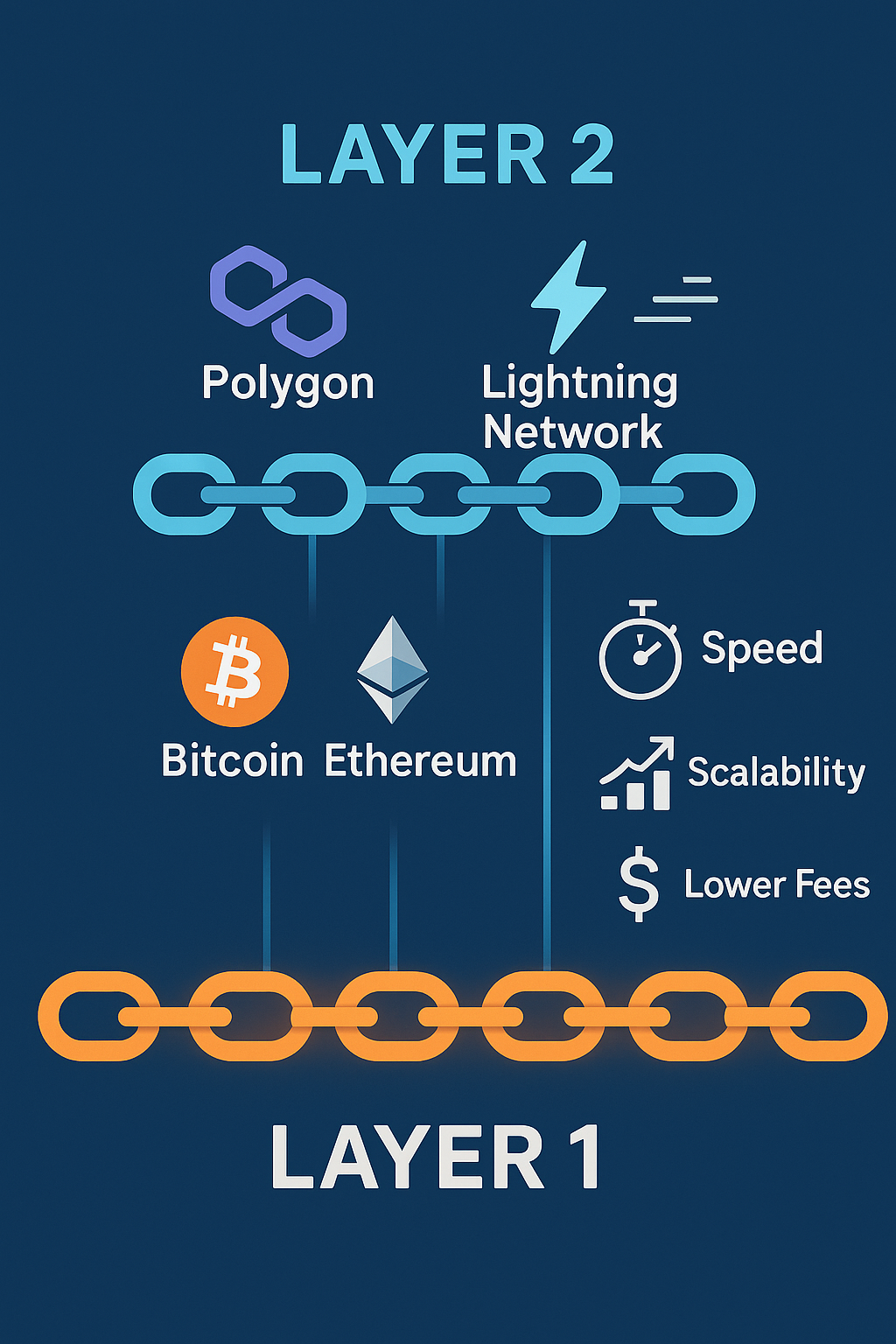
A Layer 2 blockchain is a secondary framework built on top of an existing Layer 1 network. It processes transactions independently and then records the final results back on the main blockchain. This reduces the load on the base layer significantly.
If Layer 1 is the main highway, Layer 2 is a fast side road that handles overflow traffic. Vehicles move faster, the main road stays clear, and everyone gets to their destination sooner.
Some of the most widely used Layer 2 solutions include:
- Polygon — works alongside Ethereum to speed up transactions and cut costs
- Lightning Network — built specifically for Bitcoin to enable near-instant payments
- Arbitrum — an Ethereum-compatible Layer 2 that uses optimistic rollups to process transactions off-chain
How Layer 2 Solutions Improve Blockchain Performance
Layer 2 networks bring several practical benefits to users and developers alike:
- Faster Transactions: By processing most activity off-chain, Layer 2 solutions confirm transactions in seconds rather than minutes.
- Lower Fees: Less congestion on the main network means users pay significantly less per transaction.
- Better Scalability: The main blockchain can support millions of transactions without becoming overloaded.
- Maintained Security: Final transaction data is still recorded on the Layer 1 blockchain, preserving its security guarantees.
| Feature | Layer 1 Blockchain | Layer 2 Blockchain |
|---|---|---|
| Role | Base network | Built on top of Layer 1 |
| Transaction Speed | Slower during congestion | Much faster |
| Fees | Higher during peak times | Lower |
| Security | High | Inherits from Layer 1 |
| Examples | Bitcoin, Ethereum, Solana | Polygon, Lightning Network, Arbitrum |
How Layer 1 and Layer 2 Work Together
Layer 1 and Layer 2 blockchains are not rivals — they are partners. Layer 1 provides the foundation of trust, security, and decentralization. Layer 2 adds speed, efficiency, and affordability on top of that foundation.
A simple way to picture this: imagine a busy coffee shop (Layer 1) where weekend lines are long. A quick-order counter (Layer 2) lets you place and pay for your order instantly, while the main counter simply hands you your drink. The experience is faster for everyone, and the main counter is not overwhelmed.
This combination is what makes modern blockchain networks capable of supporting large-scale applications — from decentralized finance (DeFi) platforms to NFT marketplaces and blockchain-based games.
As blockchain adoption grows across India and globally, understanding these two layers becomes increasingly important for investors, developers, and everyday users. Whether you are sending crypto payments, using a DeFi app, or exploring Web3 projects, knowing which layer you are interacting with helps you understand the speed, cost, and security of your transactions.