Checking blood sugar used to mean needle pricks, lancets, and test strips — multiple times a day. That reality is now changing fast. Non-invasive blood glucose monitoring devices are making it possible to track glucose levels through the skin, without drawing a single drop of blood. For millions of people living with diabetes in India and worldwide, this shift could make daily health management far more comfortable and consistent.
What Is Non-Invasive Blood Glucose Monitoring?
Non-invasive blood glucose monitoring refers to technology that measures blood sugar levels without breaking the skin. Instead of using a needle or lancet to collect a blood sample, these devices use methods like near-infrared light sensors, optical technology, or bioimpedance to detect glucose levels through the skin’s surface.
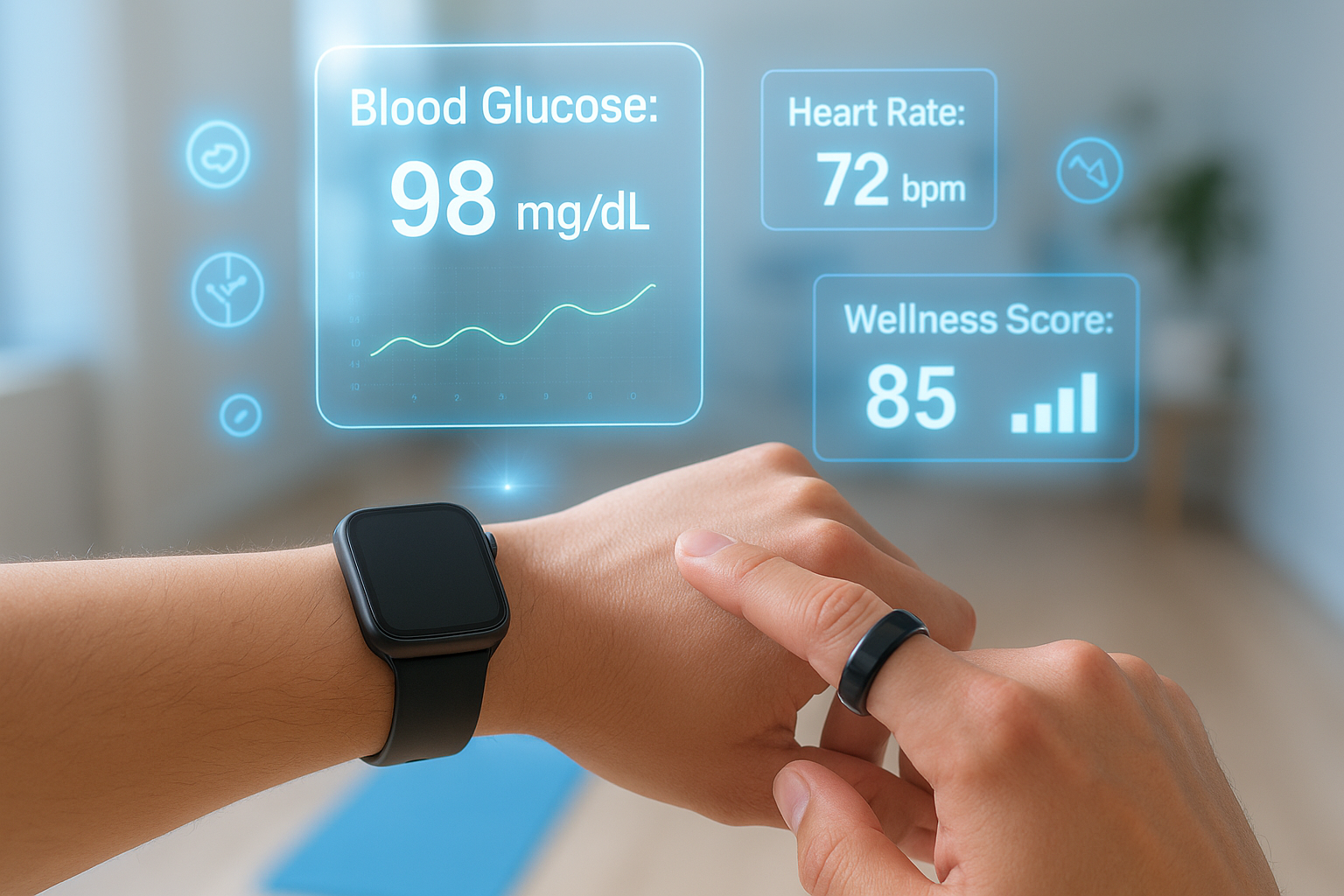
Many of these devices are built into wearables — smartwatches, rings, or arm patches — that sit comfortably on your body and continuously read your glucose in real time. The data is then sent to a smartphone app, where you can view trends, receive alerts, and understand how your lifestyle choices affect your blood sugar.
Why This Technology Matters for People with Diabetes
People managing diabetes — whether Type 1 or Type 2 — are often required to test their blood sugar several times a day. Traditional finger-prick tests are painful, inconvenient, and can discourage regular monitoring. When people skip tests, they miss critical information about their glucose levels, which can lead to dangerous highs or lows.
Non-invasive devices address this problem directly. Because they are painless and automatic, users are far more likely to monitor consistently. Continuous, real-time data also gives a much clearer picture of how blood sugar moves throughout the day — something that snapshot finger-prick tests simply cannot provide.
Key advantages for people with diabetes include:
- No more painful finger pricks — monitoring becomes stress-free and routine.
- Continuous glucose tracking — see how meals, exercise, stress, and sleep affect your levels.
- Instant alerts — get notified when glucose rises or falls to unsafe levels.
- Better insulin management — more data means smarter decisions about medication and diet.
Key Benefits of Non-Invasive Glucose Monitors
Beyond diabetes management, these devices offer benefits for a wider audience. Here is a quick comparison of what traditional and non-invasive monitoring offer:
| Feature | Traditional Finger-Prick | Non-Invasive Device |
|---|---|---|
| Pain Level | Moderate to High | None |
| Frequency | Manual, a few times daily | Continuous, 24/7 |
| Data Insights | Single reading at a time | Trends, patterns, app alerts |
| Ease of Use | Requires supplies and skill | Wear and forget |
| Suitable For | Primarily diabetic patients | Diabetics, fitness users, health-conscious individuals |
Who Can Benefit from These Wearable Glucose Monitors?
Non-invasive glucose monitors are not just for people with diabetes. A growing number of health-conscious individuals and fitness enthusiasts are also turning to this technology to better understand their bodies.
- People with Diabetes — Helps manage insulin levels and avoid unexpected blood sugar spikes or crashes throughout the day.
- Fitness Enthusiasts — Tracks how workouts and meals affect energy and glucose, helping optimise training and nutrition plans.
- Health-Conscious Individuals — Provides a daily snapshot of metabolic health without any painful procedures.
- Elderly Individuals — Easier to use than traditional kits, especially for those with limited dexterity or a fear of needles.
- Pre-Diabetics — Allows early monitoring of glucose trends before the condition progresses.
The Technology Behind the Devices
Most non-invasive glucose monitors use near-infrared (NIR) spectroscopy or similar optical sensing methods. Light is passed through the skin, and the device measures how glucose molecules absorb or scatter that light. Advanced algorithms then convert this data into a glucose reading.
Many devices also connect to smartphone apps that use smart analytics to identify patterns — for example, showing how a particular meal causes a glucose spike, or how a morning walk helps stabilise levels. Some platforms also send personalised tips based on your data history.
Wearable form factors currently available or in development include:
- Smartwatches with built-in glucose sensors
- Smart rings worn on the finger
- Adhesive skin patches worn on the arm or abdomen
- Clip-on devices that attach to the earlobe or fingertip
While the technology is advancing rapidly, users should note that accuracy can vary between devices, and some may still recommend occasional calibration with a traditional test for clinical decisions.
Non-invasive blood glucose monitoring represents a meaningful step forward in personal health technology. By combining wearable hardware, smartphone connectivity, and smart data analysis, these devices make glucose tracking accessible, painless, and practical for everyday life. Whether you are managing a chronic condition or simply want to understand your body better, this technology offers a smarter, more comfortable way to stay informed about your health.