Artificial intelligence is no longer just about spotting patterns in data. Two emerging concepts — Causal AI and Reciprocal Human-Machine Learning (RHML) — are pushing AI systems toward deeper understanding, better decision-making, and stronger collaboration with humans. Here is a clear breakdown of what these terms mean and how they connect.
What Is Causal AI and How Does It Differ from Regular AI?
Most traditional AI systems work by identifying correlations in data. They notice that two things happen together and use that link to make predictions. Causal AI goes a step further — it tries to understand why things happen, not just that they happen together.
A simple example makes this clear:
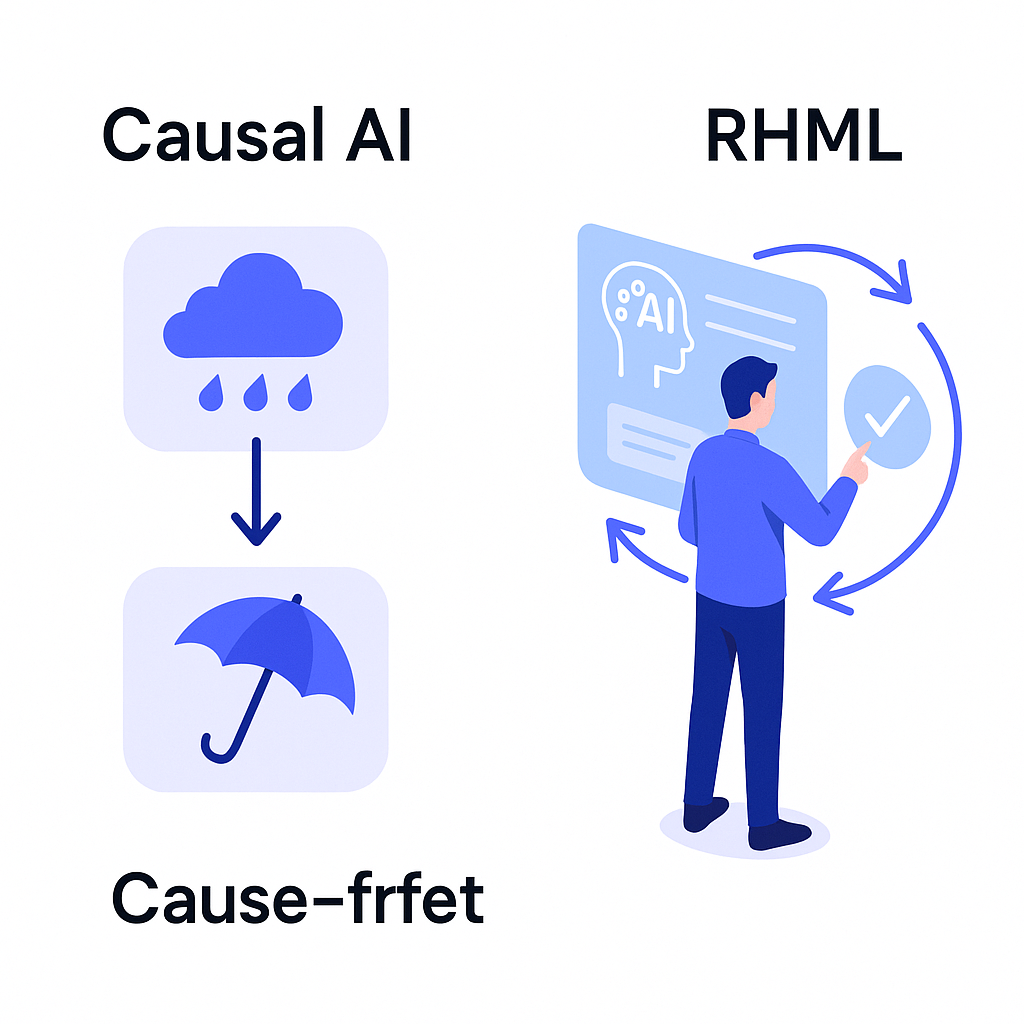
- A regular AI might notice that umbrella sales rise when it rains and use that pattern to forecast sales.
- Causal AI understands that rain causes people to buy umbrellas — not the other way around.
This distinction matters enormously in real-world applications. When an AI system understands cause and effect, it can make smarter decisions even when conditions change. It does not get confused by coincidences or misleading correlations in the data.
Why Causal AI Is Important Across Industries
The ability to reason about causes and effects makes Causal AI far more reliable than pattern-based systems in high-stakes situations. Key areas where it makes a real difference include:
- Healthcare: Understanding what actually causes a patient’s condition, rather than just identifying symptoms that appear together, leads to better treatment decisions.
- Finance: Identifying the true drivers of market movements helps analysts avoid costly mistakes based on misleading data trends.
- Policy-making: Governments and organisations can design better interventions when they know the actual cause of a social or economic problem.
Causal AI also helps organisations avoid errors that arise from acting on correlations alone. Decisions backed by causal understanding are more robust and hold up better when the environment shifts.
What Is Reciprocal Human-Machine Learning (RHML)?
RHML stands for Reciprocal Human-Machine Learning. The core idea is that humans and AI systems learn from each other continuously, creating an ongoing feedback loop rather than a one-time training process.
The cycle works like this:
- The AI system produces an answer, recommendation, or output.
- A human reviews that output, corrects errors, or provides additional input.
- The AI uses that human feedback to improve its future responses.
A practical example: a teacher uses an AI tool to grade student tests. When the teacher corrects some of the AI’s grading mistakes, the system learns from those corrections. Over time, the AI’s grading becomes more accurate and better aligned with the teacher’s judgment.
This is not a one-way street. Humans also learn from the AI’s outputs — gaining new insights, spotting patterns they might have missed, and refining their own thinking based on what the system surfaces.
Why RHML Matters for Safe and Trustworthy AI
RHML addresses one of the biggest concerns around AI adoption: keeping humans in control. Because the system continuously incorporates human feedback, it stays aligned with human values and goals over time. This has several important benefits:
- AI systems grow smarter and more accurate with real-world use, not just initial training data.
- Humans retain oversight, which is essential for safety and ethical accountability.
- Trust between users and AI systems builds naturally as the AI demonstrates it listens and adapts.
In sectors like education, healthcare, and legal services — where errors carry serious consequences — RHML provides a practical way to deploy AI responsibly while continuously improving its performance.
How Causal AI and RHML Work Together
Causal AI and RHML are complementary approaches that together push AI systems toward a higher level of capability and reliability.
| Concept | Core Strength | Key Benefit |
|---|---|---|
| Causal AI | Understanding cause and effect | More reliable decisions in changing conditions |
| RHML | Continuous human-machine feedback | AI stays aligned with human goals over time |
When used together, these two approaches shift AI from being a simple forecasting tool to becoming a genuine collaborative partner — one that understands context, grows through interaction, and adapts to the real needs of the people using it.
Causal AI sharpens the system’s reasoning, while RHML ensures that reasoning keeps improving through real human input. The result is AI that is not only smarter but also more trustworthy and better suited to complex, real-world challenges.
As organisations across healthcare, finance, education, and public policy look for AI they can actually rely on, the combination of Causal AI and RHML offers a clear path forward — one built on understanding, collaboration, and continuous growth.