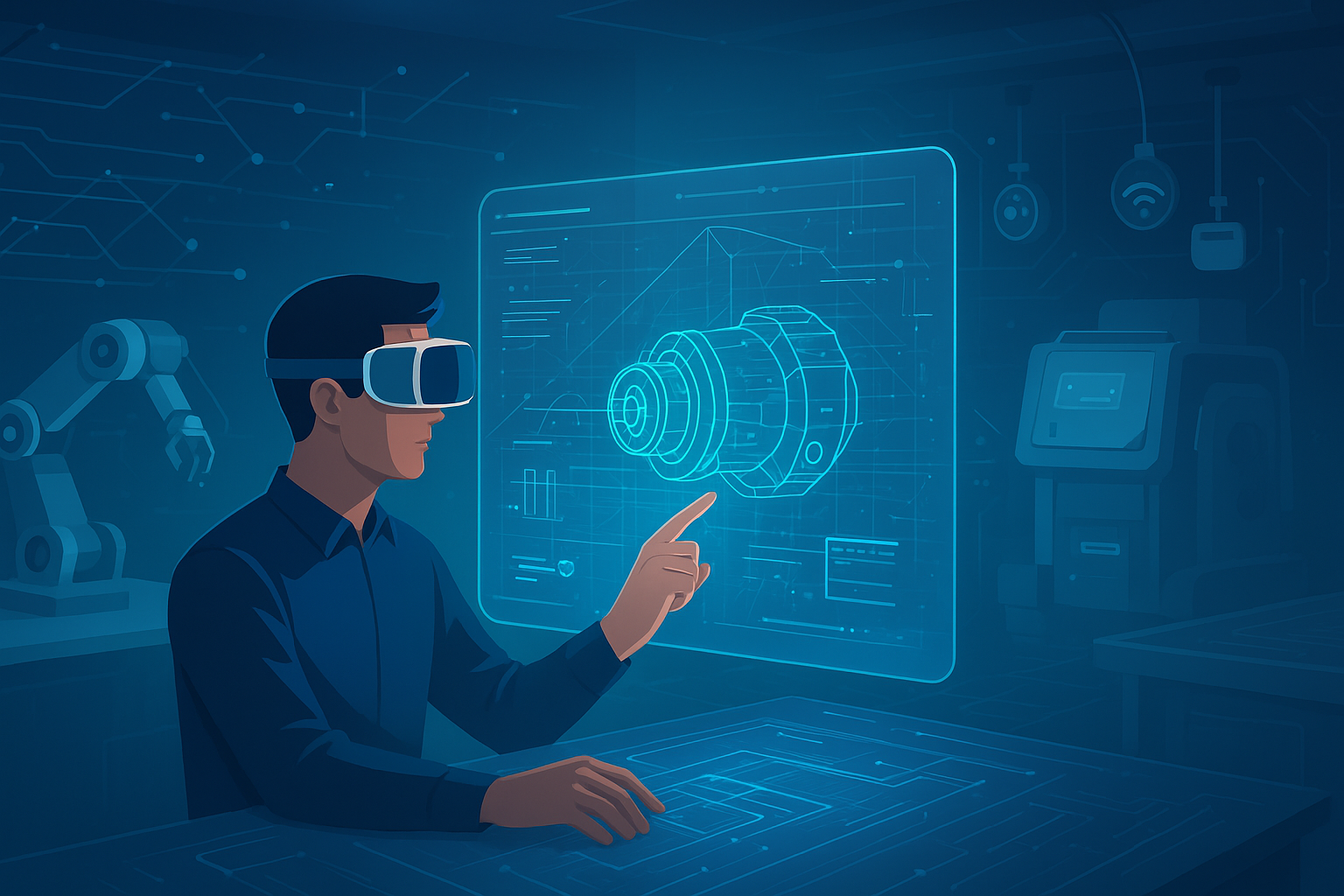

Technology no longer works in silos. Across the world, fields like artificial intelligence, robotics, biotechnology, materials science, and data analytics are merging to create solutions that no single discipline could achieve alone. This shift — known as technology convergence — is reshaping industries, redefining careers, and opening doors to a new era of hybrid innovation.
What Is Technology Convergence?
Technology convergence happens when two or more scientific or engineering disciplines combine to form a unified system or product. Instead of working independently, these fields collaborate to solve complex problems more effectively.
For example, a medical device today might combine AI-powered diagnostics, sensor hardware, and cloud-based data analytics — all working together in one compact tool. This kind of integration was nearly impossible just a decade ago.
The result is a wave of products and systems that are smarter, faster, and more capable than anything built from a single technology alone. Industries from healthcare to manufacturing to energy are already feeling the impact.
Why Tech Convergence Matters Now More Than Ever
Modern challenges — climate change, aging populations, urban congestion, industrial safety — are too complex for any one technology to address on its own. Convergence allows multiple strengths to work together, producing results that are far more powerful.
- AI and smart sensors help doctors detect diseases at early stages with greater accuracy.
- Robotics combined with automation improves factory output while reducing workplace injuries.
- Data analytics paired with clean energy systems minimizes waste and maximizes efficiency in power grids.
- Biotechnology and materials science together enable the creation of lab-grown tissues and sustainable eco-friendly materials.
When technologies cooperate, decision-making becomes smarter, performance improves, and outcomes become more reliable. This is why businesses and governments are increasingly investing in cross-disciplinary research and development.
Real-World Examples of Hybrid Innovations
Some of the most exciting technologies being developed today are hybrid products — born from the merging of multiple fields into one integrated solution. Here are key examples:
| Technology Combination | Innovation Outcome |
|---|---|
| AI + Healthcare | Accurate medical imaging and personalised treatment plans |
| Biotech + Materials Science | Lab-grown tissues and biodegradable eco-friendly materials |
| Robotics + IoT + Automation | Smart factories with real-time monitoring and safer workplaces |
| Energy Tech + Smart Systems | Stable, clean power supply using renewable sources with live tracking |
Each of these combinations represents a new category of innovation — one that could not exist without the convergence of its component technologies.
How Tech Convergence Is Shaping Careers and Industries
The rise of hybrid innovation is also changing what skills professionals need. Engineering careers today demand a mix of programming knowledge, hardware understanding, automation expertise, and data analysis capabilities. A single-skill background is no longer enough to stay competitive.
Companies that adopt hybrid technology strategies are growing faster and outperforming those that rely on traditional, single-discipline approaches. Startups and large enterprises alike are building cross-functional teams that bring together experts from different fields to tackle shared challenges.
As technology integration deepens, several major trends are expected to emerge:
- Smarter robots that can adapt to dynamic environments using AI and real-time data.
- Smart cities that use IoT, data analytics, and energy systems to manage infrastructure efficiently.
- Personalised healthcare driven by the combination of genomics, AI, and wearable technology.
- Eco-friendly industrial solutions built from sustainable materials and powered by clean energy.
The Long-Term Impact of Cross-Disciplinary Innovation
Technology convergence is not a passing trend — it is becoming a core driver of global progress. As disciplines continue to merge, the pace of innovation will accelerate. Problems that once took decades to solve may be addressed in years or even months.
For businesses, staying ahead means investing in multi-technology capabilities and building teams that think across disciplines. For students and professionals, it means developing a broad yet deep understanding of how different technologies interact.
The future belongs to those who can connect the dots between fields — and build something greater than the sum of its parts.
In summary, technology convergence and hybrid innovation are not just reshaping individual industries — they are redefining how humanity approaches its biggest challenges. From healthcare to energy to manufacturing, the most impactful solutions of the coming decades will be born at the intersection of multiple technologies working as one.