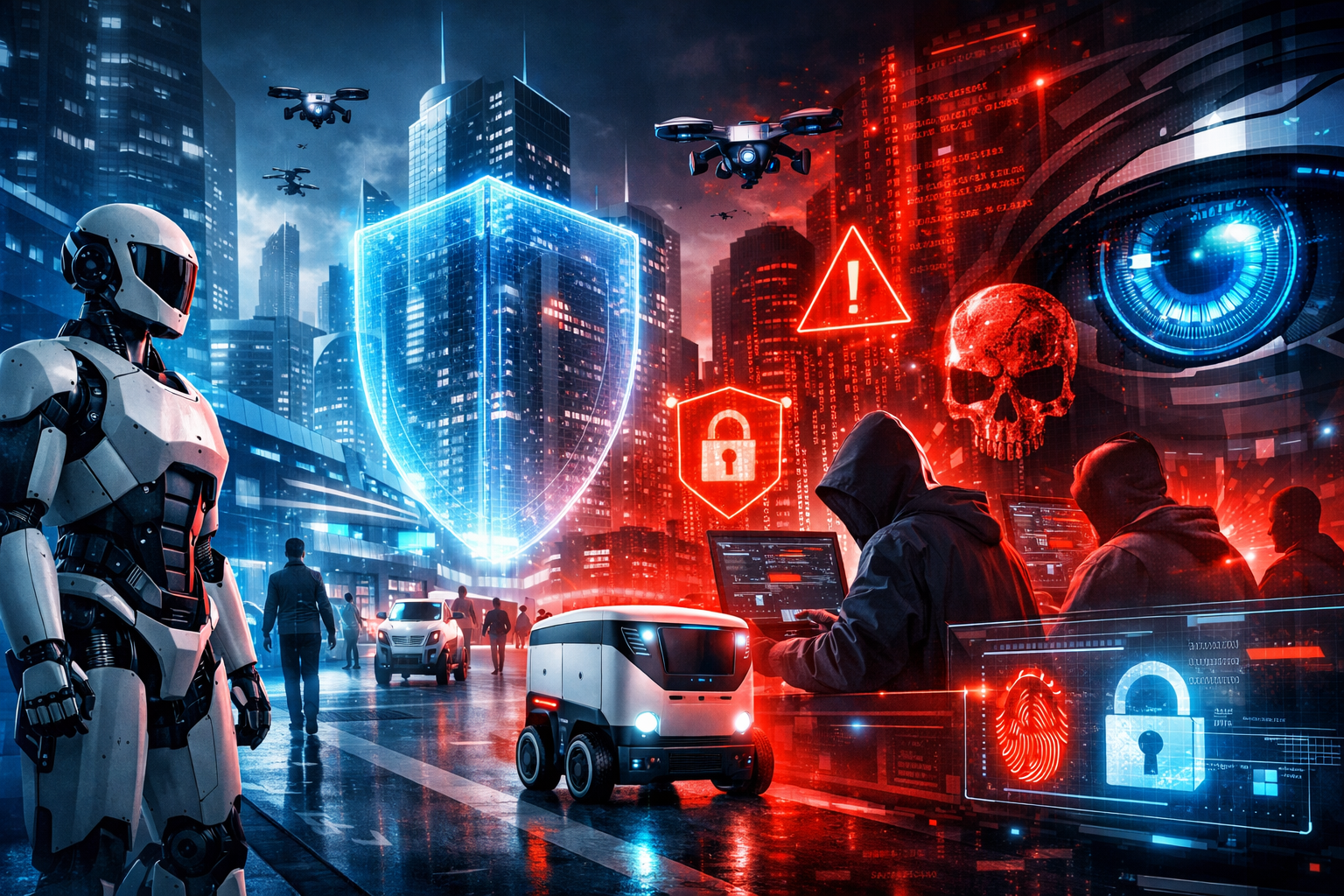
Robots are no longer just science fiction. From delivering parcels to assisting surgeons, automated machines are becoming part of daily life. But as robotics grows, so do the risks. Security threats, criminal misuse, and privacy concerns are now real challenges that businesses, governments, and individuals must face head-on.
Why Robot Security Has Become a Serious Concern
Modern robots are connected to the internet, cloud platforms, and advanced software systems. This connectivity makes them powerful tools — but it also makes them targets. A compromised robot is not just a data breach. It can cause physical harm, disrupt operations, or be turned into a tool for crime.
Industries like manufacturing, healthcare, logistics, and smart city management are already heavily dependent on automation. Any security failure in these sectors can lead to:
- Operational shutdowns and financial losses
- Physical injury to workers or bystanders
- Theft of sensitive business or personal data
- Erosion of public trust in automated systems
Hacking Autonomous Robots: A Growing Threat
Autonomous robots operate without constant human supervision. That independence is their strength — but it is also a vulnerability. Cybercriminals can attempt to take control of delivery drones, factory robots, or service machines by exploiting weak software or unsecured network connections.
Once a robot is hacked, the consequences can be severe. A hijacked delivery robot could be used to steal goods. A compromised factory robot could cause accidents on the production floor. A hacked medical robot could put patients at risk. These are not hypothetical scenarios — they are real possibilities that security experts are already working to prevent.
How Robots Could Be Used for Criminal Activities
Beyond hacking, robots themselves can be weaponised for criminal purposes. Bad actors could use drones or small robots to:
- Spy on private properties or restricted facilities
- Smuggle illegal goods across borders or into secure areas
- Conduct surveillance without human detection
- Access locations that are physically difficult for humans to reach
The compact size and autonomous nature of many robots make them attractive tools for modern criminals. Law enforcement agencies are already studying how to detect and counter such misuse.
Privacy Risks and AI Manipulation in Robotics
Many robots are equipped with cameras, microphones, and environmental sensors. They constantly collect data — including personal information, location details, and confidential business activity. Without strong security protocols, this data can be stolen, leaked, or misused.
A separate but equally serious risk involves the manipulation of the artificial intelligence systems that power robot decision-making. If a hacker can alter how a robot’s AI model processes information, the robot may begin making dangerous or incorrect decisions. It could misidentify people, ignore safety rules, or act in ways that harm those around it.
| Security Risk | Potential Impact |
|---|---|
| Robot hacking | Physical damage, theft, operational disruption |
| Criminal misuse of drones | Smuggling, illegal surveillance, trespassing |
| Data theft via sensors | Privacy violations, corporate espionage |
| AI model manipulation | Incorrect decisions, safety failures |
| Legal accountability gaps | No clear liability when robots cause harm |
Legal Gaps and the Question of Accountability
One of the most complex challenges in robot security is accountability. When a robot causes harm or is involved in a crime, it is often unclear who is legally responsible. Is it the manufacturer who built the machine? The software developer who programmed it? The company that deployed it? Or the individual who owns it?
Current laws in most countries are not equipped to answer these questions clearly. Legal frameworks need to catch up with the pace of technological change. Without clear liability rules, victims of robot-related incidents may struggle to seek justice or compensation.
Building a Safer Robotic Future
Governments and corporations are beginning to take robot security seriously. Several approaches are being explored to reduce risks:
- Designing robots with stronger built-in cybersecurity features
- Regulating the use of autonomous systems through national and international policy
- Monitoring robot behaviour in real time to detect unusual activity
- Keeping humans involved in critical decision-making processes
- Developing ethical guidelines for AI used in robotics
The goal is not to slow down innovation but to make sure that automation serves society safely and responsibly. A robot that is secure by design is far more valuable than one that is powerful but vulnerable.
As robotics continues to grow across sectors, the conversation around security, privacy, and legal responsibility must grow with it. The technology holds enormous promise — but only if the risks are managed with the same seriousness as the opportunities.
Frequently Asked Questions
The main risks include hacking of robot systems, criminal misuse of drones and robots for smuggling or surveillance, theft of data collected by robot sensors, and manipulation of AI decision-making models. These threats can cause physical harm, financial loss, and privacy violations.
Yes. Robots and drones can be used by criminals to spy on restricted areas, smuggle illegal goods, or access locations that are difficult for humans to reach. Their compact size and autonomous operation make them potential tools for modern criminal activity.
This is currently one of the biggest legal challenges in robotics. Responsibility could fall on the robot manufacturer, the software developer, the company that deployed the robot, or the individual owner. Most existing laws do not clearly address this, and new legal frameworks are needed.