
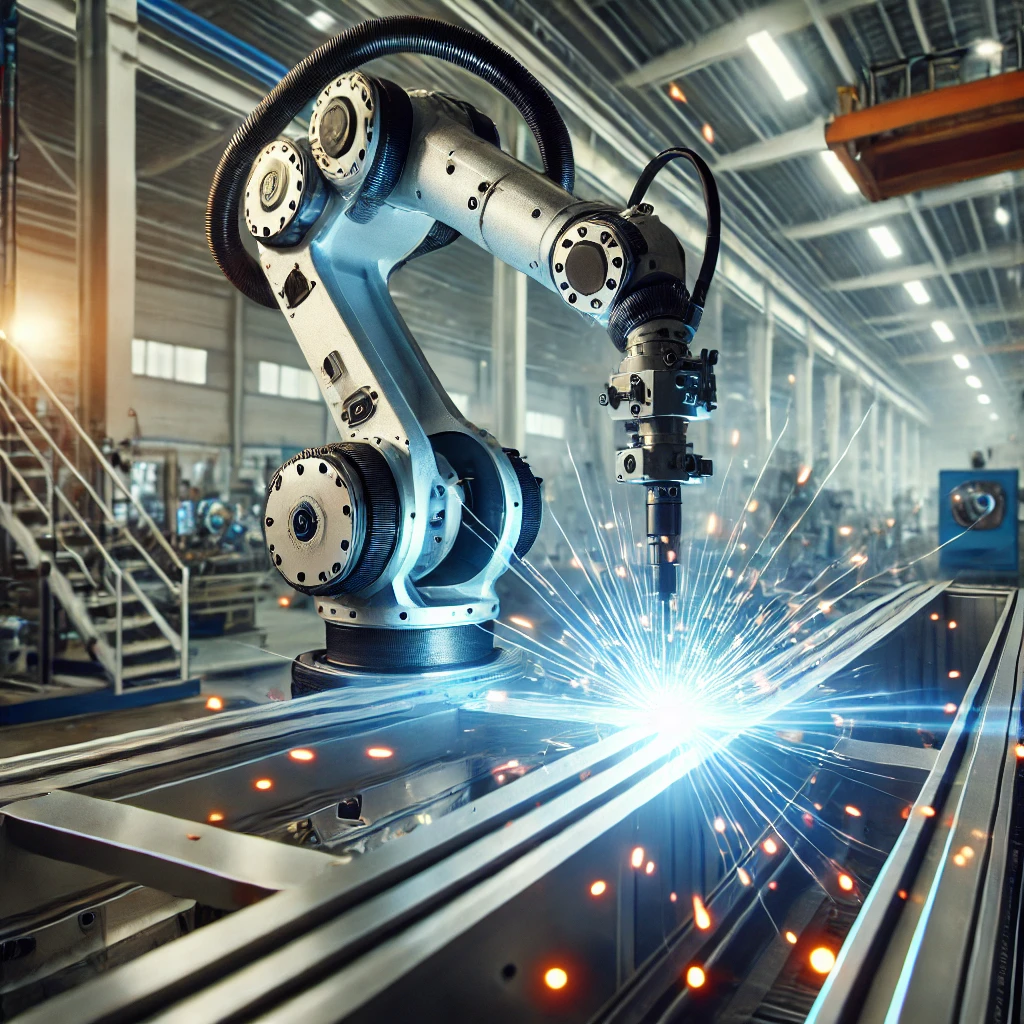
Robotic welding has become one of the most significant shifts in modern manufacturing. By replacing manual welding with automated robotic systems, industries are achieving higher accuracy, faster output, and safer work environments. From car assembly lines to aircraft production, robotic welding is now a core part of industrial operations worldwide.
What Is Robotic Welding?
Robotic welding refers to the use of programmed robots to carry out welding tasks that were traditionally performed by human workers. These robots are fitted with specialized welding tools and can execute a wide range of welding techniques with consistent precision.
Common welding methods used by robots include:
- Arc Welding: Uses an electric arc to melt and join metals — widely used in heavy manufacturing.
- Spot Welding: Joins metal sheets at specific points using heat and pressure — common in automotive assembly.
- Laser Welding: Uses a focused laser beam for high-precision joins — preferred in aerospace and electronics.
These capabilities make robotic welding systems suitable for industries where quality and repeatability are non-negotiable.
Why Robotic Welding Matters for Modern Industry
The shift to robotic welding is not just about replacing workers. It is about achieving standards of quality and speed that manual welding simply cannot match at scale. Here are the key reasons manufacturers are adopting robotic welding systems:
- Better Accuracy: Robots perform the same weld repeatedly without deviation. In sectors like automotive and aerospace, even a minor inconsistency can lead to product failure or safety risks.
- Faster Production: Unlike human workers, robots do not need breaks. They can operate around the clock, significantly increasing throughput and meeting high-volume production demands.
- Cost Savings: The upfront investment in robotic systems is high, but long-term savings on labour costs, rework, and workplace injuries make them financially viable for most large manufacturers.
- Improved Worker Safety: Welding exposes workers to intense heat, ultraviolet radiation, and toxic fumes. Robots take on these hazardous tasks, reducing workplace injuries and health risks for human employees.
Industries That Rely on Robotic Welding
Robotic welding is not limited to one sector. Its applications span several critical industries:
- Automotive Industry: Car manufacturers use welding robots extensively to assemble vehicle bodies, frames, and components. This ensures structural integrity and consistent quality across thousands of units.
- Aerospace Industry: Aircraft and spacecraft require welds that meet extremely tight tolerances. Robotic systems provide the precision needed to meet aviation safety standards.
- Construction and Heavy Machinery: Large structural components for construction equipment, cranes, and industrial machinery are welded using robotic systems that can handle heavy materials efficiently.
Key Components of a Robotic Welding System
Understanding how a robotic welding system works helps explain why it performs so reliably. A standard system includes the following components:
| Component | Function |
|---|---|
| Robot Arm | Positions the welding tool accurately at the required location and angle. |
| Welding Torch | Generates the heat needed to melt and fuse metal parts together. |
| Control System | Programs the robot with specific instructions for each welding task. |
| Sensors and Cameras | Monitor the welding process in real time and make adjustments as needed. |
Each component works together to ensure the robot performs its task with minimal error and maximum consistency.
The Future of Robotic Welding
Robotic welding systems are growing smarter. With advances in machine learning and computer vision, modern welding robots can analyse past performance, adapt to new materials, and self-correct during the welding process. This makes them more flexible and capable of handling complex or varied production requirements.
Manufacturers are also integrating robotic welding with broader smart factory systems, allowing real-time monitoring, predictive maintenance, and data-driven quality control. As these technologies mature, robotic welding will become accessible to mid-sized manufacturers, not just large industrial players.
In conclusion, robotic welding represents a practical and proven approach to improving manufacturing quality, speed, and safety. As automation technology continues to advance, its role in global manufacturing will only grow stronger — making it a critical investment for any industry that depends on reliable metal joining at scale.