
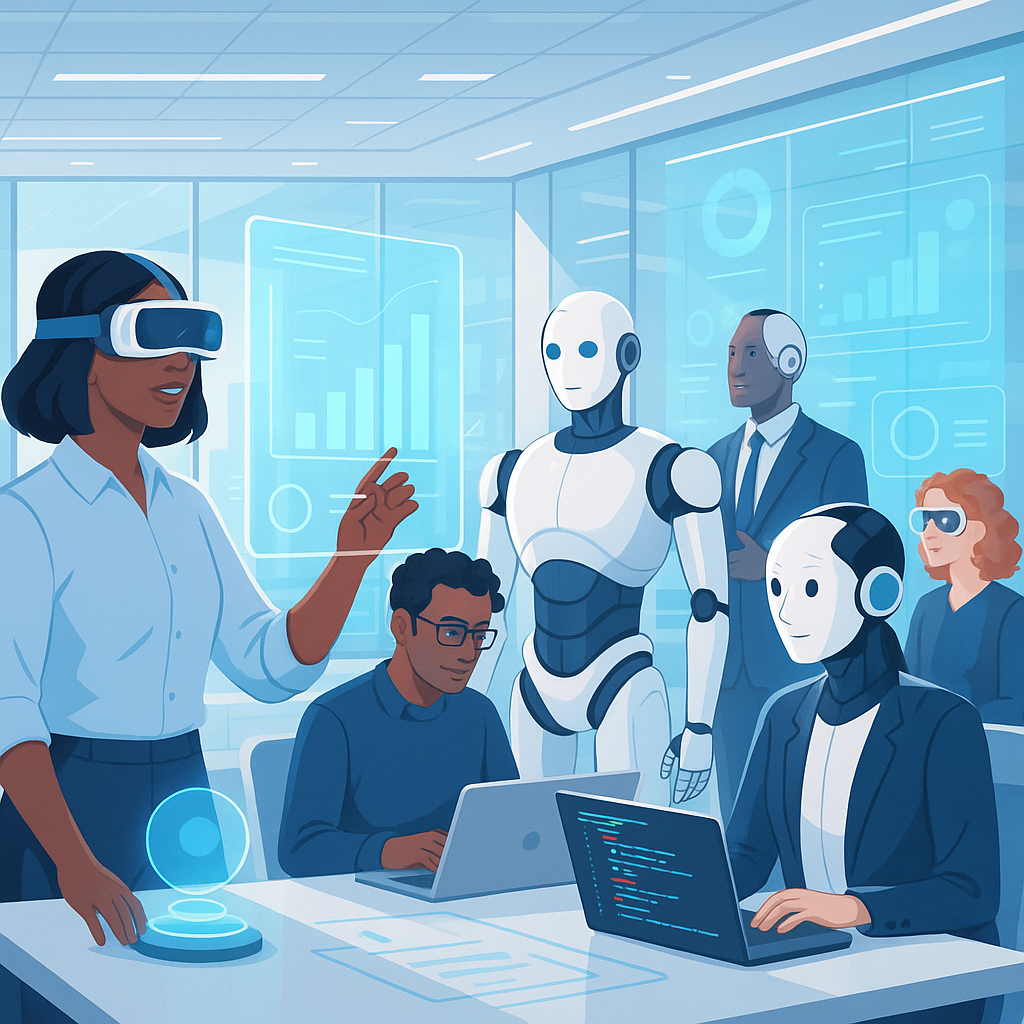
Automation is reshaping the job market faster than ever. From manufacturing floors to hospital billing departments, machines and software are taking over repetitive tasks. But this shift is not just about job losses — it is also creating new opportunities for workers who are ready to adapt and grow.
How Automation Is Changing the Way We Work
Across industries like manufacturing, healthcare, finance, retail, and logistics, software and machines now handle routine, rule-based tasks with speed and accuracy. This has understandably raised concerns about job security for millions of workers.
However, automation also frees people to focus on work that requires creativity, critical thinking, emotional intelligence, and human connection — areas where machines still cannot compete. The key is positioning yourself to take advantage of this shift rather than being left behind by it.
Key Skills That Will Keep You Relevant
Building the right skill set is the most effective way to stay competitive in an automated workplace. Here are the most important skills to develop:
- Tech Know-How: Understanding how tools like machine learning, basic coding, and data analysis work gives you a significant advantage, even if you are not in a purely technical role.
- Problem-Solving Ability: Machines follow instructions, but humans are needed to identify problems, think critically, and find solutions that go beyond pre-set rules.
- Strong Communication: The ability to clearly explain ideas, collaborate across teams, and lead conversations remains a deeply human skill that employers value highly.
- Adaptability: The willingness and ability to learn new tools, adjust to changing systems, and stay curious is perhaps the most important trait in a fast-moving work environment.
Practical Ways to Start Upskilling Right Now
You do not need to enroll in a full-time degree program to build new skills. There are many accessible and affordable options available today:
- Online Courses: Platforms like Coursera, Udemy, and LinkedIn Learning offer flexible, affordable courses across hundreds of topics — from data science to project management.
- Workshops and Seminars: Short-format learning events help you pick up specific skills quickly while also expanding your professional network.
- Certifications: Industry-recognized certificates in areas like cybersecurity, data analysis, cloud computing, or project management can make your resume stand out to employers.
- Hands-On Practice: Apply what you learn through real projects, freelance work, internships, or volunteer opportunities. Practical experience reinforces learning and builds your portfolio.
Industries Where Upskilling Is Most Urgent
While automation affects nearly every sector, some industries are experiencing faster and more disruptive change than others. Workers in these fields should prioritize upskilling without delay:
| Industry | Impact of Automation | Skills in Demand |
|---|---|---|
| Information Technology | High — AI tools replacing basic coding and testing tasks | Cloud computing, cybersecurity, AI integration |
| Healthcare | Medium — Admin and diagnostic support being automated | Health informatics, patient communication, data management |
| Finance | High — Routine accounting and reporting automated | Financial analysis, risk assessment, fintech tools |
| Logistics | High — Warehousing and tracking increasingly automated | Supply chain management, data analytics, robotics oversight |
Why Investing in Upskilling Pays Off
The benefits of upskilling go well beyond simply keeping your current job. Here is what consistent learning can do for your career:
- Better Job Opportunities: A broader skill set opens doors to roles that did not exist a few years ago.
- Greater Job Security: Workers who adapt quickly are far harder to replace than those who rely on a single, static skill set.
- Higher Earning Potential: Skills that are in short supply and high demand typically come with better compensation packages.
- Increased Confidence: Knowing you have the skills to handle new challenges gives you a stronger sense of purpose and direction at work.
The pace of automation is not slowing down. Workers who treat learning as an ongoing habit — not a one-time event — will be the ones who thrive in the years ahead. Whether you start with a short online course or earn a professional certification, every step you take toward building new skills is an investment in your own future.