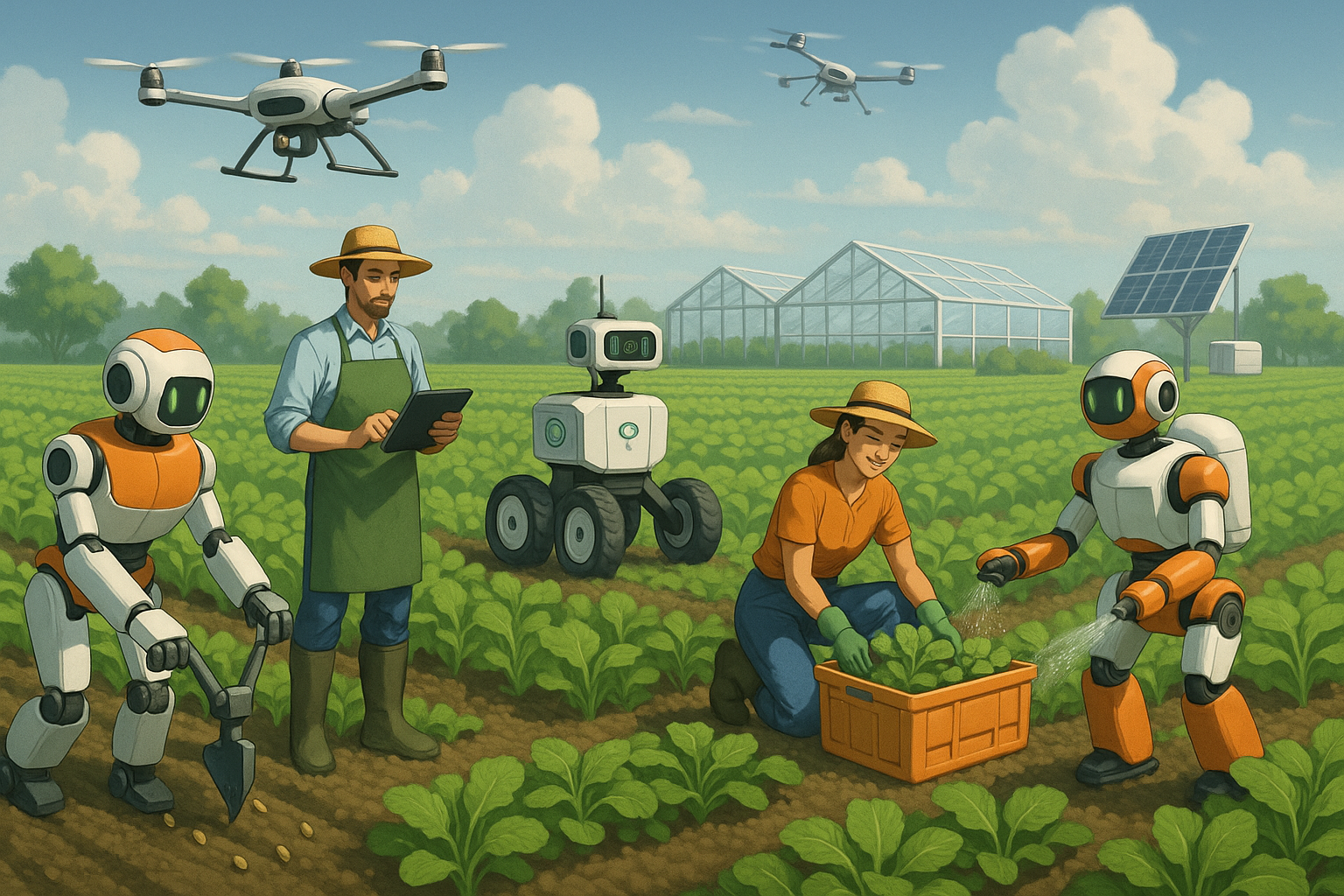
Farming has always been hard work, but new robotic technologies are changing that fast. From planting seeds to picking ripe fruits, agricultural robots are helping farmers produce more food using fewer resources. These machines are not just saving time — they are making farms more productive and environmentally responsible.
Robotic Planters: Getting Seeds in the Ground the Right Way
Traditional seed planting was either done by hand or with machinery that often lacked precision. Today, robotic planters have changed the process entirely. These machines identify the exact location for each seed, set the correct depth, and maintain proper spacing across the field.
- Seeds are conserved, reducing waste
- Crop growth improves due to better spacing
- Time spent on planting is cut significantly
- Human errors in the planting process are eliminated
The result is healthier plants, less wasted seed, and higher food production from the same area of land.
Weeding Robots: Fighting Weeds Without Harsh Chemicals
Weeds compete with crops for water and nutrients, making weed control one of the most time-consuming tasks on any farm. While chemical sprays were the go-to solution for decades, weeding robots now offer a smarter and cleaner alternative.
These robots use sensors and cameras to identify weeds among crops. They then remove them either by cutting or by applying a very small, targeted amount of herbicide — only where needed.
- Chemical usage on farms drops significantly
- Soil health and surrounding environment are better protected
- Beneficial plants and insects are not harmed
Fields with fewer weeds produce healthier crops and better yields at harvest time.
Harvest Robots and Agricultural Drones: Working Around the Clock
Picking fruits like strawberries, tomatoes, and apples requires careful handling. Harvest robots use cameras and sensors to detect ripe produce and collect it without causing damage. They work faster than human pickers and can operate continuously, even through the night.
This is especially valuable during harvest season when labor shortages are common. Farmers no longer need to worry about crops going unpicked due to a lack of workers.
Alongside harvest robots, agricultural drones are giving farmers a bird’s-eye view of their fields. These flying machines scan entire farms and send back real-time data on crop health, water needs, and early signs of disease or pest damage.
- Struggling crops are identified early
- Problem areas receive targeted attention
- Field inspection time is reduced from hours to minutes
With this information, farmers can act quickly and prevent small problems from becoming costly ones.
Smart Irrigation Robots: Making Every Drop of Water Count
Water scarcity is a growing concern in many farming regions across India and the world. Smart irrigation robots and automated watering systems help farmers deliver the right amount of water to each section of a field — no more, no less.
| Traditional Irrigation | Smart Irrigation Robots |
|---|---|
| Water applied uniformly across fields | Water delivered precisely where needed |
| High risk of overwatering or underwatering | Sensors monitor soil moisture in real time |
| Higher water bills and resource waste | Lower costs and better crop growth |
By reducing water waste, these systems lower farming costs and support better crop growth — a win for both farmers and the environment.
The Future of Farming Robots: What Comes Next
As robots become more capable and affordable, even small family farms will be able to use them. The next generation of farming robots is expected to:
- Choose the best planting times based on live weather data
- Apply organic fertilizers automatically based on soil readings
- Operate in all weather conditions, day and night
- Communicate with each other to coordinate tasks across large farms
When robots handle routine tasks like planting, weeding, watering, and harvesting, farmers can focus their energy on planning, improving their land, and growing their business. The entire food supply chain benefits — from the farmer in the field to the consumer at the market.
Agricultural robots are not replacing farmers. They are giving farmers powerful tools to work smarter, produce more, and build a more sustainable future for food production.