Robots are transforming factories, warehouses, and production lines across the world. They boost speed, accuracy, and output — but when they operate near humans, safety cannot be an afterthought. Robotics safety standards exist to protect workers, ensure legal compliance, and help manufacturers build reliable automated systems. Here is a clear breakdown of the most important standards every manufacturer should understand and implement.
Industrial Robot Safety: ISO 10218
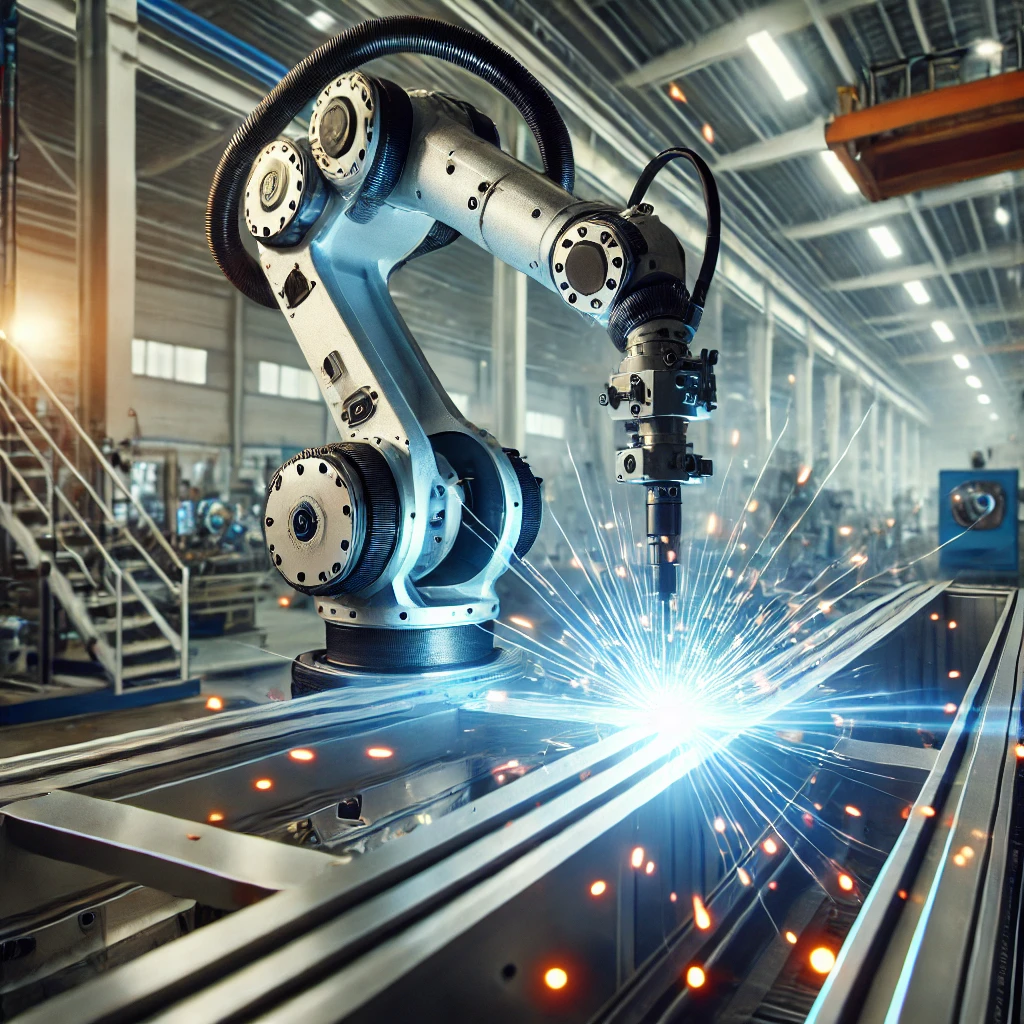
Industrial robots handle demanding tasks like welding, heavy lifting, and precision assembly. Their speed and power make them potentially dangerous without proper safeguards.
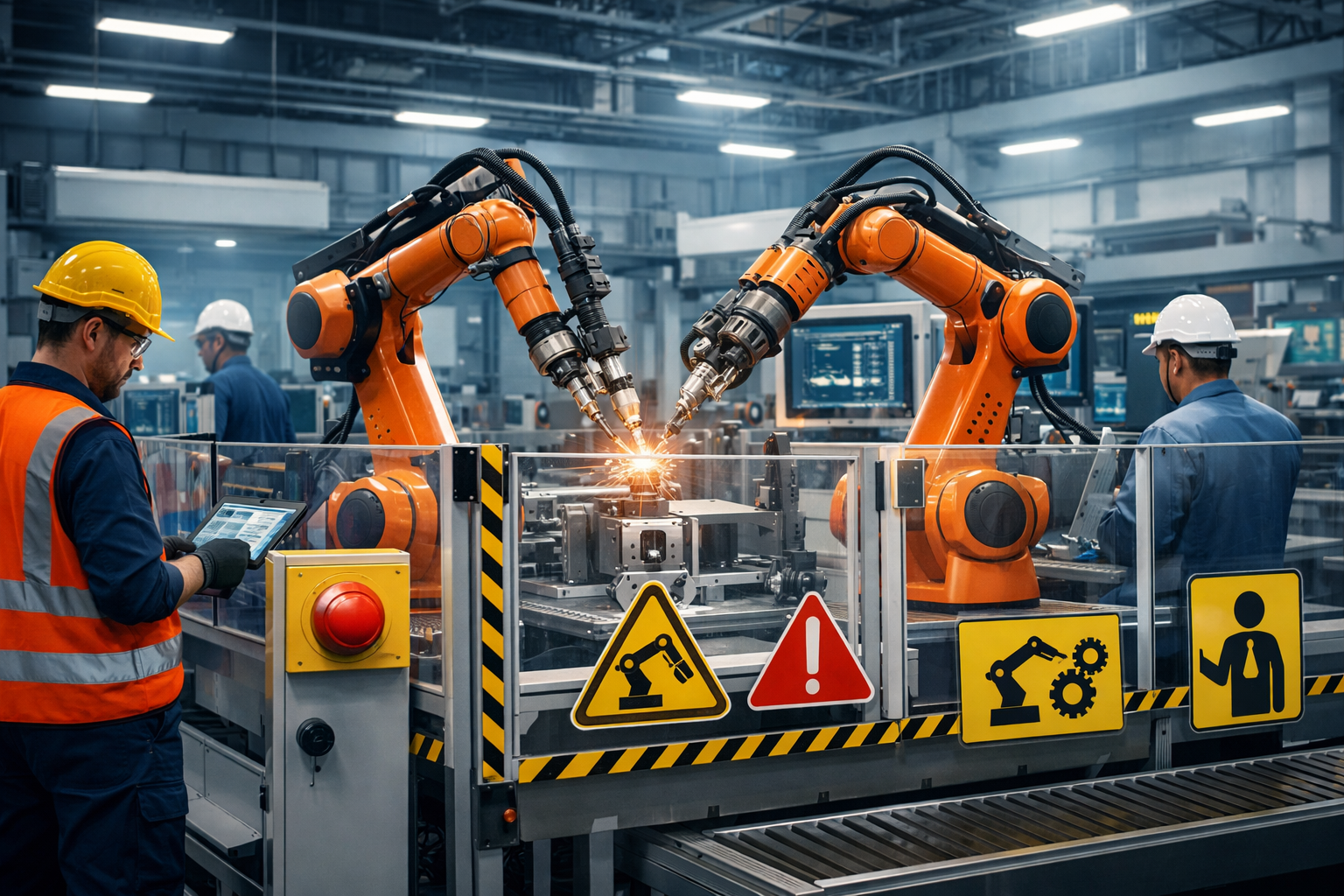
ISO 10218 is the globally recognised standard for the safe design and operation of industrial robots. It requires manufacturers to:
- Install emergency stop buttons and protective guards
- Define safe operating modes for different tasks
- Conduct thorough risk assessments before robot installation
- Provide proper training to all workers who interact with or work near robots
This standard is foundational for any manufacturing facility using industrial robots. It directly reduces the risk of serious injuries on the shop floor.
Collaborative Robot Safety: ISO/TS 15066
Collaborative robots — commonly called cobots — are built to work alongside humans without physical barriers. This close proximity demands stricter safety controls than traditional industrial robots.
ISO/TS 15066 sets specific limits on robot speed, force, and contact pressure to ensure that any accidental human contact does not cause injury. It also defines how cobots should respond when a person enters their workspace — typically by slowing down or stopping completely.
For manufacturers deploying cobots on assembly lines or in logistics operations, this standard is essential. It allows human-robot collaboration to happen safely without sacrificing productivity.
US Robotics Safety Regulations: ANSI/RIA R15.06
Manufacturers operating in North America must also comply with regional safety requirements. ANSI/RIA R15.06 is the primary robotics safety standard in the United States. It aligns closely with international ISO standards but includes additional compliance requirements specific to the US market.
Following ANSI/RIA R15.06 helps manufacturers:
- Meet legal obligations under US workplace safety laws
- Avoid regulatory penalties and operational shutdowns
- Demonstrate due diligence to insurers and auditors
Any manufacturer selling or operating robotic systems in the United States should treat this standard as non-negotiable.
Electrical and Control System Safety: IEC 60204-1 and ISO 13849
Robots rely on complex electrical systems and sophisticated control software. Two standards address these specific risks.
IEC 60204-1 covers electrical safety for machinery, including robotic systems. It sets requirements for wiring, grounding, and emergency controls to protect against electrical shocks, short circuits, and fire hazards. Compliance with this standard improves both worker safety and overall system reliability.
ISO 13849 focuses on safety-related control systems — the sensors, software, and emergency stop mechanisms that manage robot behaviour. It ensures these systems continue to function correctly even if a component fails, and it helps manufacturers determine the required reliability level for each safety function.
| Standard | Focus Area | Key Requirement |
|---|---|---|
| ISO 10218 | Industrial Robots | Safe design, guards, emergency stops |
| ISO/TS 15066 | Collaborative Robots | Speed, force, and pressure limits |
| ANSI/RIA R15.06 | US Compliance | Regional legal requirements |
| IEC 60204-1 | Electrical Safety | Wiring, grounding, emergency controls |
| ISO 13849 | Control Systems | Reliable safety control functions |
| ISO 12100 | Risk Assessment | Hazard identification and reduction |
| IEC 62443 | Cybersecurity | Protection from hacking and digital attacks |
Risk Assessment and Cybersecurity: ISO 12100 and IEC 62443
Preventing accidents starts before a robot is even switched on. ISO 12100 provides a structured method for identifying mechanical, electrical, and operational hazards during the design and planning phase. By assessing risks early, manufacturers can eliminate or reduce dangers before robots are installed on the factory floor.
As robots become increasingly connected to networks and software platforms, cybersecurity has become a genuine safety concern. IEC 62443 addresses cybersecurity for industrial automation systems. It protects robotic systems from hacking, unauthorised access, and digital attacks that could trigger dangerous physical behaviour or cause complete system shutdowns.
A cyberattack on a connected robot is not just an IT problem — it can directly endanger workers. IEC 62443 ensures manufacturers treat digital security as part of their overall safety strategy.
Why Following These Standards Pays Off
Investing in robotics safety compliance delivers real, measurable benefits for manufacturers:
- Fewer workplace accidents — protecting workers and reducing downtime
- Legal and regulatory compliance — avoiding fines, penalties, and legal liability
- Improved machine reliability — well-maintained, compliant systems break down less often
- Higher employee confidence — workers perform better when they feel safe
- Stronger company reputation — clients and partners trust safety-certified manufacturers
Compliance is not just about avoiding problems. It actively improves operational performance and builds long-term business credibility.
As automation expands across industries, robotics safety standards will continue to evolve. Manufacturers who stay updated with standards like ISO 10218, ISO/TS 15066, ISO 13849, IEC 60204-1, ISO 12100, and IEC 62443 will be better positioned to protect their workforce, meet regulatory demands, and build a sustainable automated operation for the future.