Nature has spent millions of years solving complex problems with remarkable efficiency. From the aerodynamics of bird flight to the structural strength of spider silk, the natural world offers a treasure trove of engineering solutions. Scientists and engineers are now tapping into these biological blueprints through a field known as bio-inspired robotics — building machines that mimic living organisms to perform better, adapt faster, and last longer.
What Is Bio-Inspired Robotics?
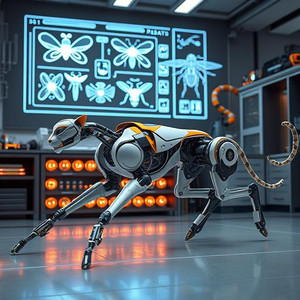
Bio-inspired robotics is a branch of engineering and computer science that draws directly from nature to design and build robots. Rather than starting from scratch, researchers study how animals move, sense their environment, and respond to challenges — then translate those strategies into mechanical and digital systems.
The goal is not to copy nature exactly, but to extract the core principles behind biological success and apply them to real-world machines. The result is a new generation of robots that are more capable, more efficient, and far better at handling unpredictable environments than traditional designs.
Key Areas Where Nature Inspires Robotics
Bio-inspired robotics spans several major areas of innovation. Each draws from a different corner of the natural world to solve a specific engineering challenge.
- Locomotion: Animals have mastered movement across every type of terrain. Engineers study snakes, insects, and birds to design robots that can navigate rubble, uneven ground, and tight spaces. Search-and-rescue robots, for instance, are being built with snake-like movement to crawl through collapsed buildings and reach survivors in areas humans cannot safely enter.
- Sensing: Nature has developed extraordinary sensory systems over millions of years. Bats use echolocation to navigate in complete darkness. Insects detect ultraviolet light invisible to the human eye. Borrowing these principles, researchers are developing robot sensors that dramatically improve how machines perceive and interpret their surroundings — making them more aware and responsive in complex environments.
- Artificial Intelligence: The structure and function of animal brains continue to inspire advances in machine learning and AI. Neural networks — the backbone of modern AI — are themselves modeled on biological brain activity. By studying how animals learn, adapt, and make split-second decisions, scientists are building smarter robots capable of real-time problem-solving without human input.
- Material Science: Biological materials like spider silk, bone, and plant fibers offer a unique combination of strength, flexibility, and lightness that synthetic materials struggle to match. These natural structures are guiding the development of new robot components that are more durable, lighter in weight, and better suited to dynamic physical tasks.
Real-World Applications of Bio-Inspired Robots
The impact of bio-inspired robotics is already being felt across multiple industries. Here is a look at where these innovations are making a difference:
| Application Area | Biological Inspiration | Key Benefit |
|---|---|---|
| Search and Rescue | Snake locomotion | Navigate collapsed structures |
| Medical Robotics | Soft tissue flexibility | Safer interaction with human body |
| Drone Technology | Bird and insect flight | Improved stability and efficiency |
| Environmental Monitoring | Fish swimming patterns | Silent underwater exploration |
| Industrial Automation | Ant colony coordination | Efficient multi-robot teamwork |
Why Bio-Inspired Design Works Better
Traditional robots are often rigid, energy-hungry, and limited in how they handle unexpected situations. Bio-inspired designs address these weaknesses directly. Animals have evolved to be energy-efficient, adaptable, and resilient — qualities that engineers are now successfully replicating in machines.
For example, soft robots inspired by octopuses can squeeze through narrow gaps and handle fragile objects without causing damage. Robots modeled on the gecko’s adhesive feet can climb smooth vertical surfaces without any mechanical gripping tools. These capabilities open doors that conventional engineering simply cannot.
The field also benefits from advances in biomaterials — materials designed to mimic biological tissue. These allow robots to interact more safely with humans and operate in environments where hard, metallic machines would cause harm or fail entirely.
Challenges and the Road Ahead
Despite its promise, bio-inspired robotics faces real challenges. Replicating the full complexity of biological systems is extraordinarily difficult. A bird’s wing, for instance, involves thousands of micro-adjustments per second that even the most advanced engineering struggles to reproduce faithfully.
Power efficiency remains another hurdle. Biological organisms convert energy with remarkable efficiency, but current robotic systems still lag behind. Researchers are working on new energy storage and actuation technologies to close this gap.
There is also the challenge of cost. Many bio-inspired materials and manufacturing techniques are expensive to produce at scale. However, as the technology matures and production methods improve, costs are expected to fall significantly.
Looking ahead, bio-inspired robotics is set to play a central role in fields ranging from disaster response and healthcare to space exploration and environmental conservation. As our understanding of biology deepens alongside advances in engineering and computing, the machines of the future will owe much of their capability to the natural world.
In essence, the best engineering textbook ever written is the one nature has been authoring for millions of years — and scientists are only just beginning to read it properly.