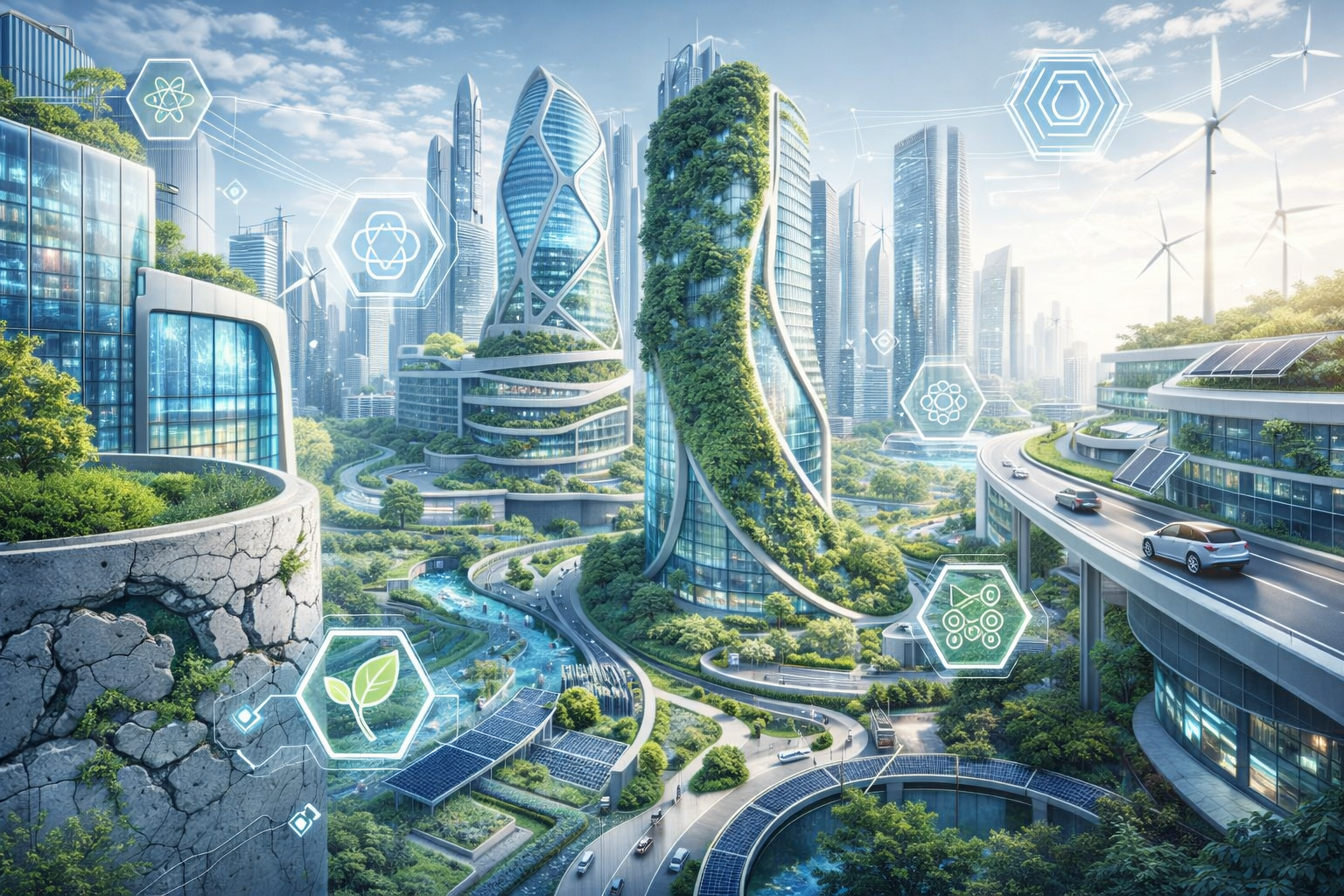

Nature has spent billions of years perfecting its designs. From the lotus leaf that repels water to termite mounds that stay cool without electricity, the natural world is full of engineering brilliance. Bio-inspired engineering, also known as biomimicry, is the practice of studying these natural systems and applying their principles to solve real human problems. The results are reshaping robotics, architecture, aviation, and medicine.
What Is Bio-Inspired Engineering?
Bio-inspired engineering is not about copying nature directly. Instead, engineers study the underlying principles behind how plants, animals, and ecosystems function, then apply those principles to design better products and systems.
Think of it as using nature as a reference guide for innovation. A bird’s wing is not attached to an aircraft, but the aerodynamic principles behind how a bird glides through air currents have directly influenced how modern aircraft and drones are designed.
This field sits at the crossroads of biology, physics, materials science, and engineering. It is gaining rapid attention because it tends to produce solutions that are energy-efficient, durable, low-maintenance, and environmentally responsible.
Why Engineers Look to Nature for Answers
Nature has had millions of years to refine its designs through evolution. Every organism alive today has developed highly efficient systems for movement, energy use, temperature regulation, and survival. Engineers want to tap into that accumulated wisdom.
Some key reasons bio-inspired engineering is growing in importance:
- Energy efficiency: Natural systems rarely waste energy. Applying similar principles can reduce power consumption in machines and buildings.
- Sustainability: Nature-based designs tend to work with the environment rather than against it.
- Durability: Biological structures are often lightweight yet incredibly strong.
- Low maintenance: Many natural surfaces are self-cleaning or self-repairing, inspiring similar properties in engineered materials.
Real-World Examples of Bio-Inspired Technology
Bio-inspired engineering is not a theoretical concept. It is already producing practical technologies across multiple industries.
| Natural Inspiration | Engineering Application |
|---|---|
| Octopus arms | Soft robotic arms used in delicate surgical procedures |
| Snake movement | Snake-like robots for search and rescue in tight spaces |
| Fish swimming | Underwater robots for ocean research and exploration |
| Lotus leaf surface | Waterproof coatings, stain-resistant fabrics, self-cleaning windows |
| Bird and insect flight | Energy-efficient drones and stable aircraft designs |
| Termite mound ventilation | Natural airflow systems in eco-friendly buildings |
Soft Robotics: When Machines Move Like Animals
One of the most exciting areas of bio-inspired engineering is soft robotics. Traditional robots are rigid and mechanical. Soft robots, inspired by animals like octopuses, snakes, and fish, are flexible, adaptable, and far safer to use around humans.
- Octopus-inspired robotic arms can bend and grip in ways rigid arms cannot, making them ideal for assisting surgeons in complex, high-risk procedures.
- Snake-like robots can navigate through rubble and narrow passages during disaster rescue operations, reaching survivors that humans or conventional machines cannot.
- Fish-inspired underwater robots swim efficiently through water, making them useful for deep-sea research, pipeline inspection, and environmental monitoring.
These robots are not just novelties. They represent a shift in how engineers think about machine design, prioritising adaptability and safety over raw mechanical power.
Green Buildings and Self-Cleaning Surfaces
Bio-inspired engineering is also changing how buildings are constructed and how everyday surfaces behave.
Termite mounds in Africa maintain a stable internal temperature despite extreme external heat. They do this through a network of tunnels and vents that regulate airflow naturally. Architects have borrowed this concept to design buildings with passive ventilation systems that reduce dependence on air conditioning and lower electricity consumption significantly.
The lotus leaf, famous for its water-repellent surface, has inspired a range of commercial products. The microscopic texture of a lotus leaf causes water droplets to roll off, carrying dirt with them. Engineers have replicated this structure to create:
- Waterproof coatings for outdoor gear and electronics
- Stain-resistant fabrics for clothing and upholstery
- Self-cleaning glass for windows and solar panels
These applications reduce maintenance costs and extend the lifespan of products.
The Future of Bio-Inspired Engineering
This field is expanding rapidly. Researchers are exploring bio-inspired solutions in transportation, medical devices, smart materials, and renewable energy. The alignment with global priorities like sustainability, carbon reduction, and resource efficiency makes it one of the most relevant areas of engineering research today.
Industries are increasingly looking for solutions that offer competitive advantages while also meeting environmental standards. Bio-inspired design delivers on both fronts. It produces technology that is smarter, lighter, more efficient, and built to last.
As climate concerns grow and resources become more constrained, the ability to design systems that work in harmony with nature rather than against it will become a defining feature of successful engineering.
Nature has already solved many of the problems engineers are working on. The task now is to learn from those solutions and apply them thoughtfully to build a better, more sustainable world.