Autonomous Mobile Robots, commonly known as AMRs, are reshaping how industries operate. From sorting packages in massive warehouses to delivering medicines in hospitals, these intelligent machines are becoming a core part of modern operations. Unlike older robotic systems that needed fixed tracks or floor markings, AMRs navigate freely using sensors, cameras, and real-time decision-making. Here is a closer look at what AMRs are, how they function, and the real-world impact they are creating across sectors.
What Are Autonomous Mobile Robots?
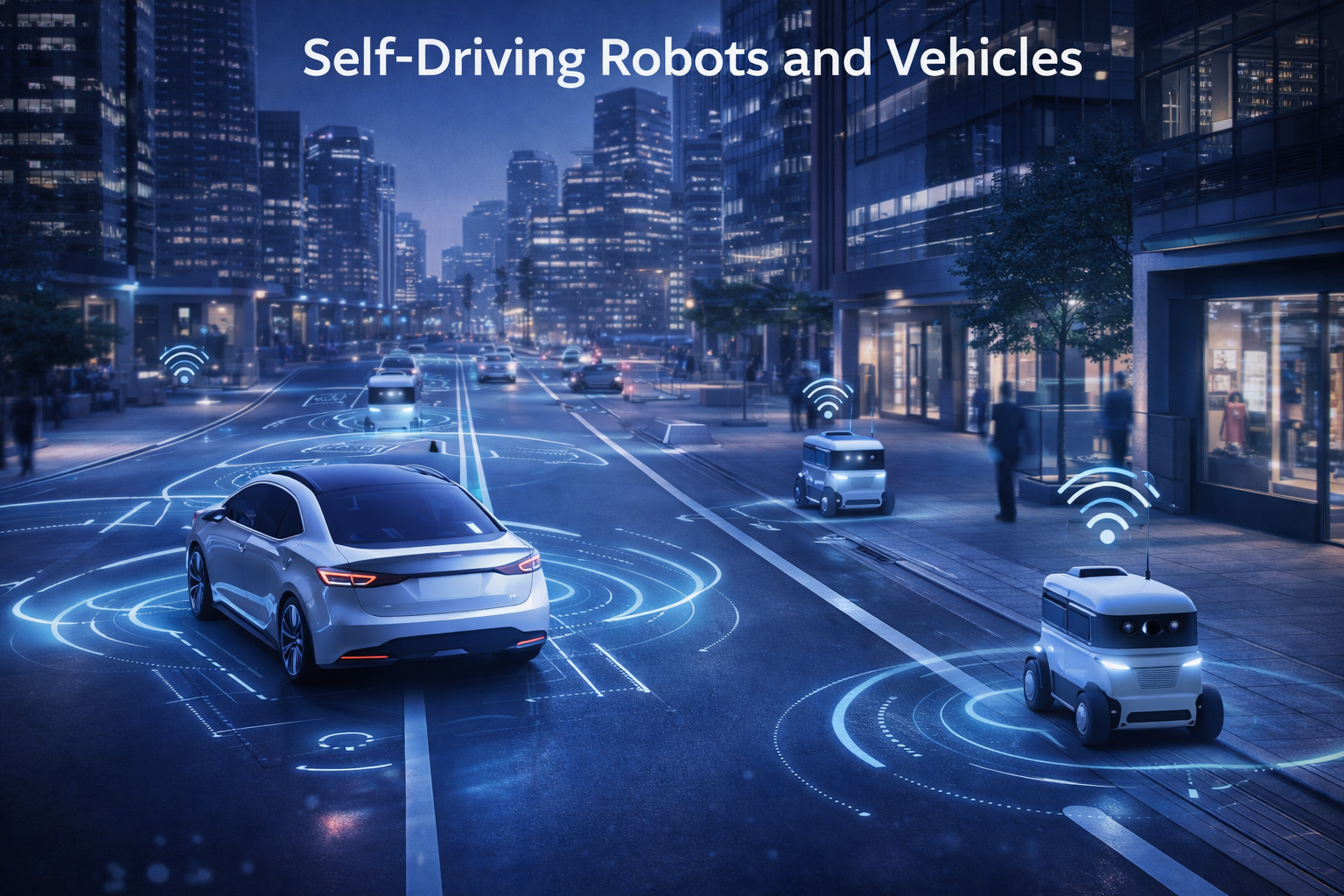
AMRs are self-navigating robots that move through environments without needing pre-set paths, floor guides, or human control. They use a combination of advanced mapping technology, obstacle detection, and live data processing to find their way around people, equipment, and changing layouts.
This is what sets them apart from Automated Guided Vehicles (AGVs), which follow fixed routes and cannot adapt when something blocks their path. AMRs, by contrast, reroute themselves automatically and learn from their surroundings over time.
Key technologies that power AMRs include:
- Sensors and cameras – Detect nearby objects and map the surrounding space
- Machine learning algorithms – Improve navigation based on past experience and live data
- Cloud connectivity – Share information across networks for coordinated performance
- Autonomous decision-making – Adjust routes instantly when the environment changes
Where Are AMRs Being Used Today?
AMRs are no longer limited to large tech companies. Businesses of all sizes across multiple industries are deploying them to improve speed, accuracy, and safety.
Warehousing and Logistics
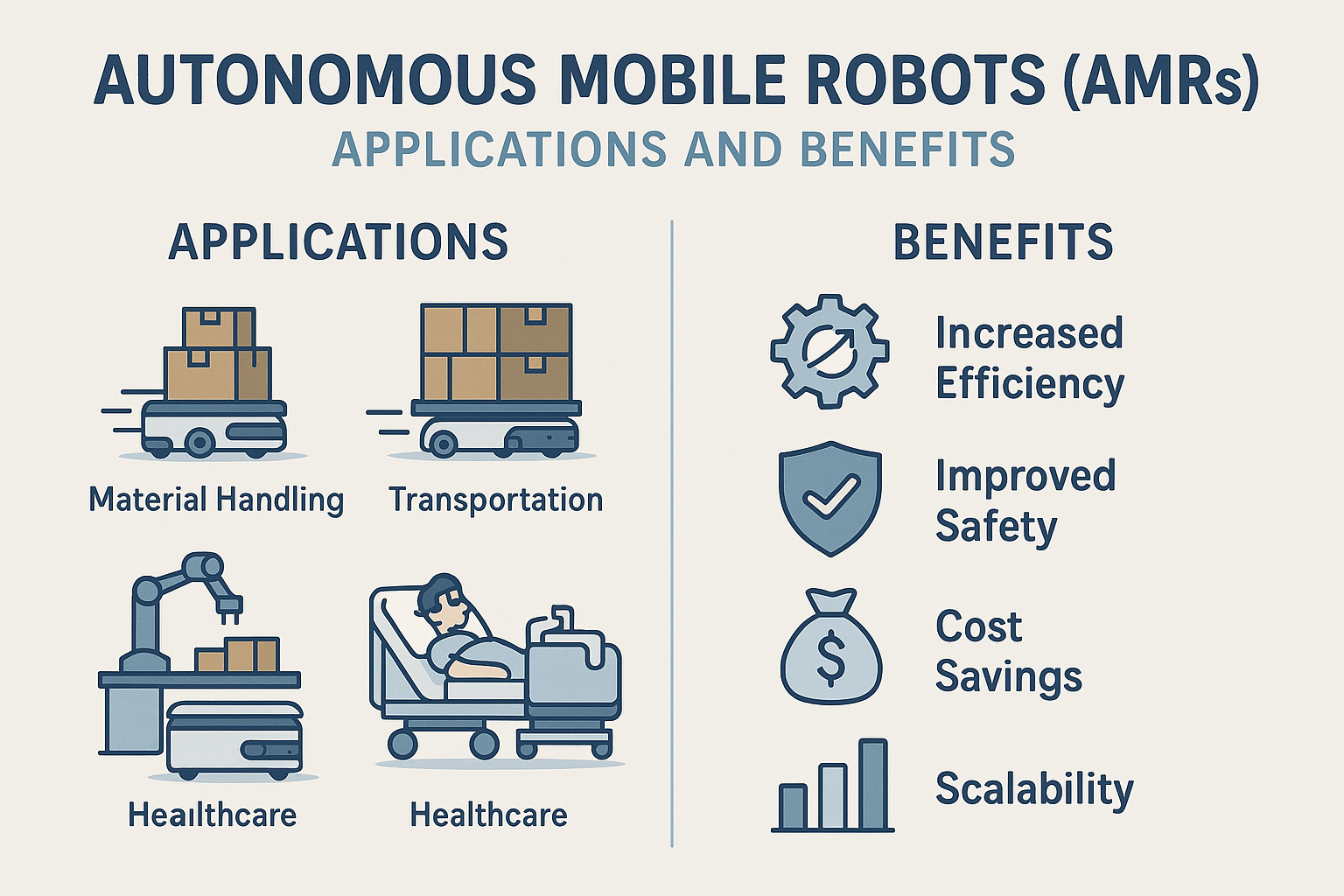
This is where AMRs have made the biggest impact so far. In large fulfillment centers, they handle inventory tracking, order picking, and goods transport — tasks that once required large teams of workers walking miles each shift. Amazon is a well-known example, using AMRs in its fulfillment centers to automate product storage and retrieval, significantly cutting down processing time.
Manufacturing and Assembly
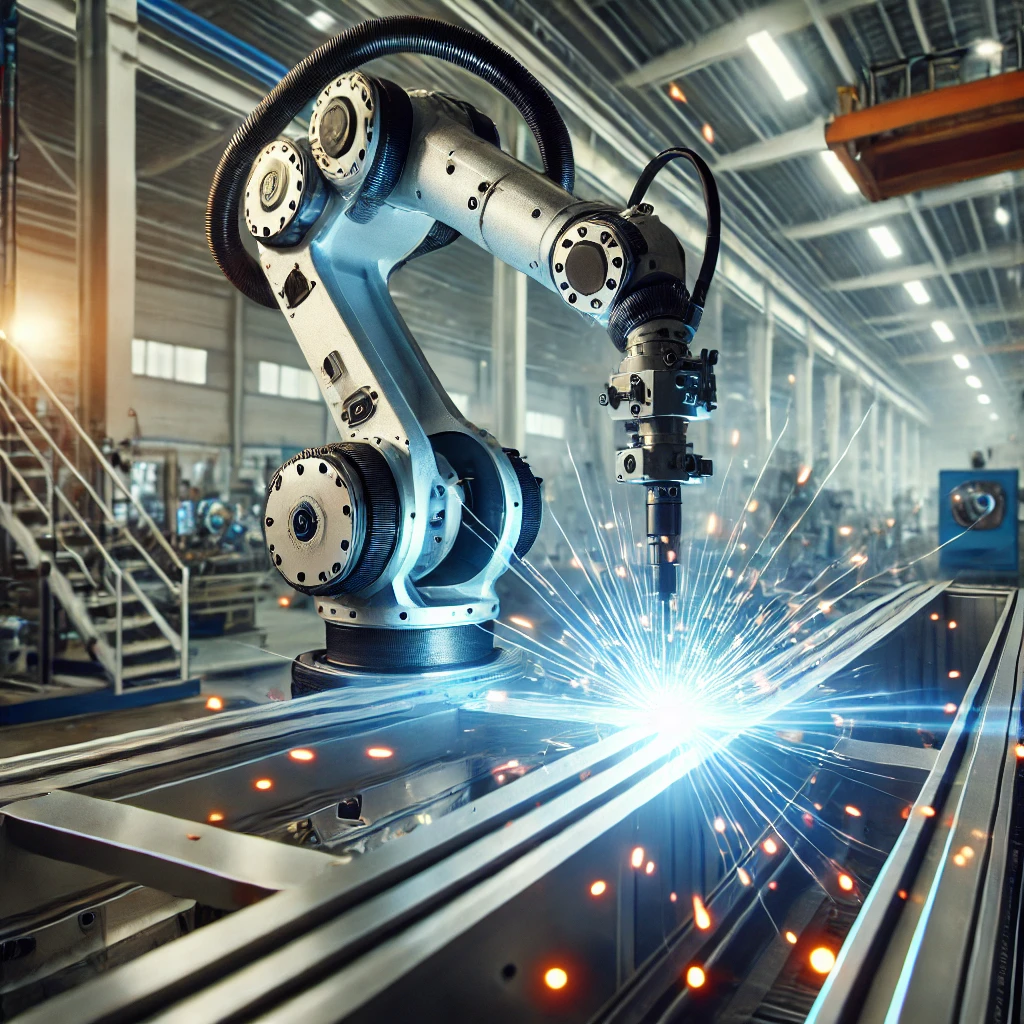
On factory floors, AMRs transport raw materials and finished goods between stations. They also support assembly lines by delivering components exactly when and where they are needed. Some AMRs are equipped with vision systems to inspect products for defects, helping reduce waste. Automobile manufacturers use AMRs to carry parts between assembly lines, keeping production consistent and reducing delays.
Healthcare
Hospitals are increasingly turning to AMRs to handle non-clinical tasks. These robots deliver medications, transport lab samples, and manage supply logistics — freeing up nursing staff to focus on patient care. Some specialized AMRs use UV light technology to disinfect hospital rooms, reducing the spread of infections. This application became especially relevant during and after the COVID-19 pandemic.
Retail and Customer Service
In retail environments, AMRs scan shelves to monitor stock levels and alert staff when items need restocking. Some robots assist customers directly by guiding them to products. Walmart has deployed AMRs in its stores to track inventory and improve operational efficiency across its large retail network.
| Industry | AMR Application | Key Benefit |
|---|---|---|
| Warehousing | Order picking, inventory tracking | Faster order processing |
| Manufacturing | Parts transport, quality inspection | Reduced downtime and waste |
| Healthcare | Medicine delivery, disinfection | Better patient care, infection control |
| Retail | Shelf scanning, customer assistance | Improved stock management |
Key Benefits of Using AMRs in Business Operations
Businesses that adopt AMRs report measurable improvements across several areas. Here are the most significant advantages:
- Higher productivity: AMRs take over repetitive, time-consuming tasks, allowing human workers to focus on more complex responsibilities. In warehouses, this directly speeds up order fulfillment cycles.
- Flexibility and adaptability: Unlike AGVs, AMRs do not need infrastructure changes when layouts shift. This makes them ideal for growing businesses or operations with seasonal demand fluctuations.
- Improved workplace safety: Built-in collision avoidance technology allows AMRs to operate safely alongside people, reducing the risk of workplace accidents.
- Long-term cost savings: While the initial investment can be significant, AMRs reduce labor costs and minimize errors over time, leading to a faster return on investment.
- Easy scalability: Companies can add more AMRs to their fleet as they grow, without major infrastructure overhauls. This makes them a practical long-term automation choice.
AMRs vs AGVs: Understanding the Difference
Many people confuse AMRs with AGVs, but the two are quite different in how they operate and where they work best.
AGVs follow fixed, pre-programmed routes and rely on physical guides like magnetic strips or wires embedded in the floor. They are reliable in highly controlled, repetitive environments but struggle to adapt when anything changes.
AMRs, on the other hand, build their own maps, detect obstacles in real time, and reroute themselves without human intervention. This makes them far more versatile and suitable for dynamic environments where conditions change frequently.
For businesses looking to automate operations in complex or growing facilities, AMRs generally offer greater long-term value than traditional AGVs.
What the Growing Adoption of AMRs Means for the Future
The adoption of AMRs is accelerating across industries, driven by rising labor costs, supply chain pressures, and the need for greater operational efficiency. As the technology matures, AMRs are expected to become smarter, more affordable, and more widely accessible — even for small and mid-sized businesses.
Industries like agriculture, construction, and last-mile delivery are already exploring AMR applications. As cloud connectivity and machine learning capabilities improve, these robots will handle increasingly complex tasks with minimal human oversight.
For businesses still evaluating automation options, AMRs represent a practical and scalable starting point — one that delivers measurable results without requiring a complete overhaul of existing operations.
In short, AMRs are not just a technology trend. They are becoming a fundamental part of how modern businesses operate, compete, and grow.