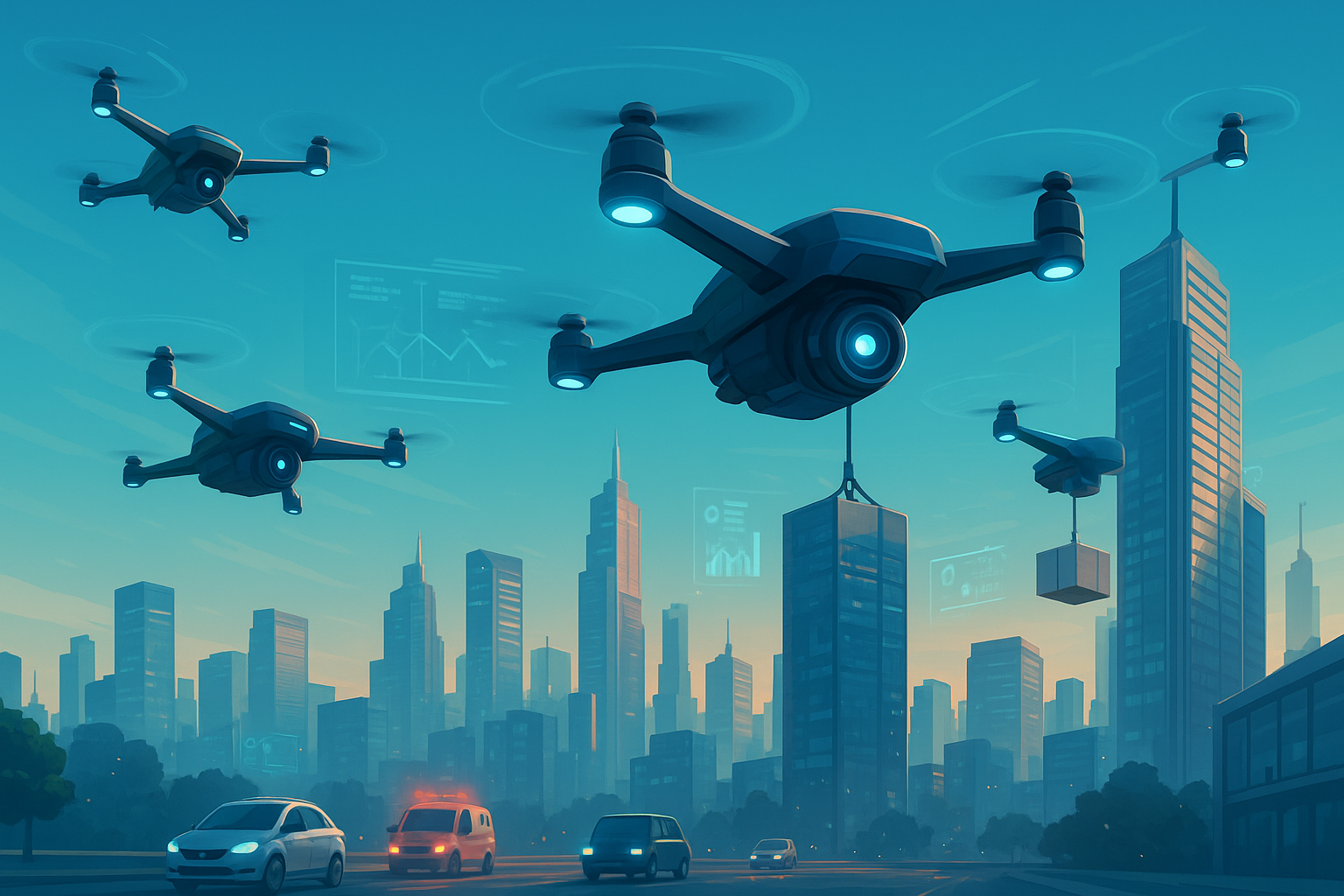
Drones are no longer just flying cameras for hobbyists or photographers. With artificial intelligence built into their systems, these unmanned aerial vehicles are becoming powerful tools across industries — from farming and construction to disaster response and law enforcement. The shift is real, and it is happening fast.
What Makes a Drone AI-Driven?
An AI-driven drone is an unmanned aerial vehicle (UAV) equipped with advanced sensors, high-resolution cameras, and intelligent algorithms that allow it to make decisions on its own. Unlike basic remote-controlled drones, these machines can avoid obstacles automatically, track moving targets, and process data in real time without human input at every step.
This level of autonomy is what sets them apart. They do not just fly — they think, adapt, and respond to their environment.
Industrial Uses That Are Already Making a Difference
Across several sectors, AI-powered drones are proving their value in practical, measurable ways.
- Construction and Infrastructure: AI drones map large construction sites, inspect bridges, and monitor project progress with high accuracy. Engineers receive real-time updates without sending workers into dangerous zones.
- Agriculture and Farming: Farmers use these drones to monitor crop health, detect pest infestations early, and assess soil conditions. The result is better yields with lower spending on fertilizers and pesticides.
- Logistics and Delivery: Companies like Amazon and UPS are actively testing AI drones for fast package delivery. These drones calculate optimal routes and can reach remote or hard-to-access locations that traditional delivery vehicles cannot.
| Industry | Key Use | Main Benefit |
|---|---|---|
| Construction | Site mapping and bridge inspection | Reduces risk to workers |
| Agriculture | Crop monitoring and pest detection | Cuts input costs, boosts yield |
| Logistics | Last-mile delivery | Faster delivery to remote areas |
Strengthening Public Safety on Multiple Fronts
Beyond industry, AI drones are becoming critical tools for emergency services and law enforcement agencies.
- Search and Rescue: Emergency teams deploy AI drones to locate missing persons in forests, mountains, and disaster-hit zones. Equipped with heat-sensing cameras, these drones can detect body warmth even in complete darkness.
- Disaster Management: During floods, earthquakes, or wildfires, AI drones transmit live aerial footage to officials, helping them plan rescue operations faster and more effectively.
- Law Enforcement: Police departments use AI drones to manage traffic, monitor large crowds, and deter criminal activity. They act as aerial surveillance units, reducing the need to put officers in potentially dangerous situations.
Key Benefits Driving Adoption
The growing interest in AI drones across sectors comes down to a clear set of advantages:
- Faster decision-making through real-time AI analysis
- Reduced human exposure to dangerous environments
- Lower operational costs compared to traditional methods
- Higher productivity across agriculture, logistics, and infrastructure
- Improved accuracy in data collection and monitoring
Challenges That Still Need to Be Addressed
Despite their clear advantages, AI drones come with a set of challenges that industries and governments must work through before widespread adoption becomes possible.
- Privacy concerns: Drones with always-on cameras raise serious questions about surveillance and individual privacy rights.
- Regulatory hurdles: Air traffic rules, no-fly zones, and legal frameworks around drone use are still being developed in many countries, including India.
- High initial costs: Setting up AI drone systems requires significant upfront investment, which can be a barrier for smaller businesses and local government bodies.
Addressing these issues will require cooperation between technology developers, regulators, and the communities where drones operate.
What the Future Looks Like
The trajectory for AI drones points toward deeper integration into daily life. Experts and industry leaders are already discussing possibilities like self-flying passenger drones, smarter urban delivery networks, and coordinated AI drone fleets for disaster response. As battery technology improves and regulations catch up, these scenarios are likely to move from concept to reality within this decade.
In conclusion, AI-driven drones represent one of the most practical and impactful applications of intelligent technology today. Whether it is saving lives during a natural disaster, helping a farmer protect crops, or delivering a package to a remote village, these machines are quietly but steadily changing how the world works — and the pace of that change is only going to increase.