
Robotics is moving faster than ever. Whether it is a drone navigating a crowded airspace, a robotic arm sorting packages on a factory floor, or a self-driving car making split-second decisions, one thing is clear — real-time control is no longer optional. It is essential. The combination of Artificial Intelligence (AI) and Edge Computing is making this possible, and the results are already visible across industries.
What Role Does AI Play in Modern Robotics?
AI gives robots the ability to process information and make decisions — much like a human brain, but faster and more consistently. In practical terms, this means:
- Robots can identify and classify objects using computer vision
- They can predict the best next action using machine learning models
- They can adapt to changes in their environment without human intervention
However, all this intelligence is only useful if it works fast enough. A robot that takes two seconds to decide whether to stop is a safety risk. This is where the processing architecture behind AI becomes critical.
Why Cloud-Based AI Falls Short for Robotics
For years, many AI systems relied on the cloud. A robot would collect data, send it to a remote server for processing, and wait for instructions to come back. This worked well for tasks that did not require instant responses.
But in robotics, even a one-second delay can be dangerous. Imagine a factory robot that needs to stop immediately when a human worker steps into its path. If that decision depends on a round trip to a distant server, the delay could cause a serious accident.
Cloud-based AI also has other limitations:
- It requires a stable internet connection at all times
- It increases the risk of data breaches since sensitive information travels over networks
- It adds ongoing bandwidth and server costs
What Is Edge Computing and How Does It Help?
Edge computing solves the delay problem by processing data directly on or near the device — at the “edge” of the network — rather than sending it to a distant cloud server.
In robotics, this means the robot’s onboard computer or a nearby smart chip handles all the data processing locally. Decisions happen in milliseconds, not seconds. The robot does not need to wait for a server response because the intelligence is built right into the device itself.
This shift has a significant impact on how robots perform in real-world conditions, especially in environments where connectivity is unreliable or where privacy is a concern.
Key Benefits of Combining AI with Edge Computing
When AI runs at the edge, robots gain several important advantages:
- Faster reactions: Robots respond to their surroundings instantly, improving both safety and efficiency
- Offline intelligence: Robots can think and act without a constant internet connection, making them suitable for remote or high-security locations
- Lower data traffic: Processing data locally reduces network load and cuts operational costs
- Better privacy and security: Sensitive data such as video feeds or location information stays on the device and is not transmitted over external networks
| Feature | Cloud AI | Edge AI |
|---|---|---|
| Response Speed | Seconds (depends on network) | Milliseconds (local processing) |
| Internet Dependency | Required | Not required |
| Data Privacy | Lower (data leaves device) | Higher (data stays local) |
| Bandwidth Cost | Higher | Lower |
Real-World Applications Across Industries
The impact of edge AI in robotics is already being felt across multiple sectors:
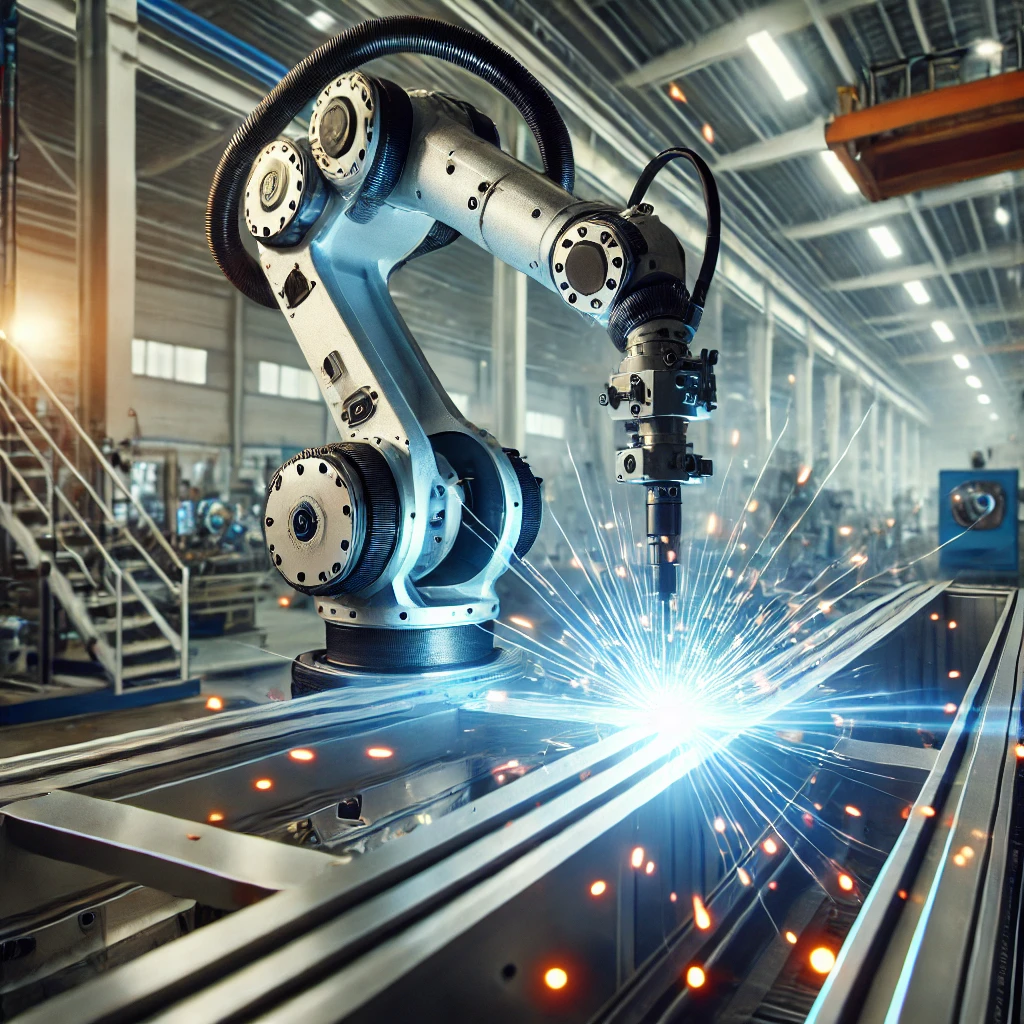
- Manufacturing: Smart robots on production lines detect defects, adjust their movements, and avoid collisions — all without cloud feedback. This keeps production lines running smoothly and safely.
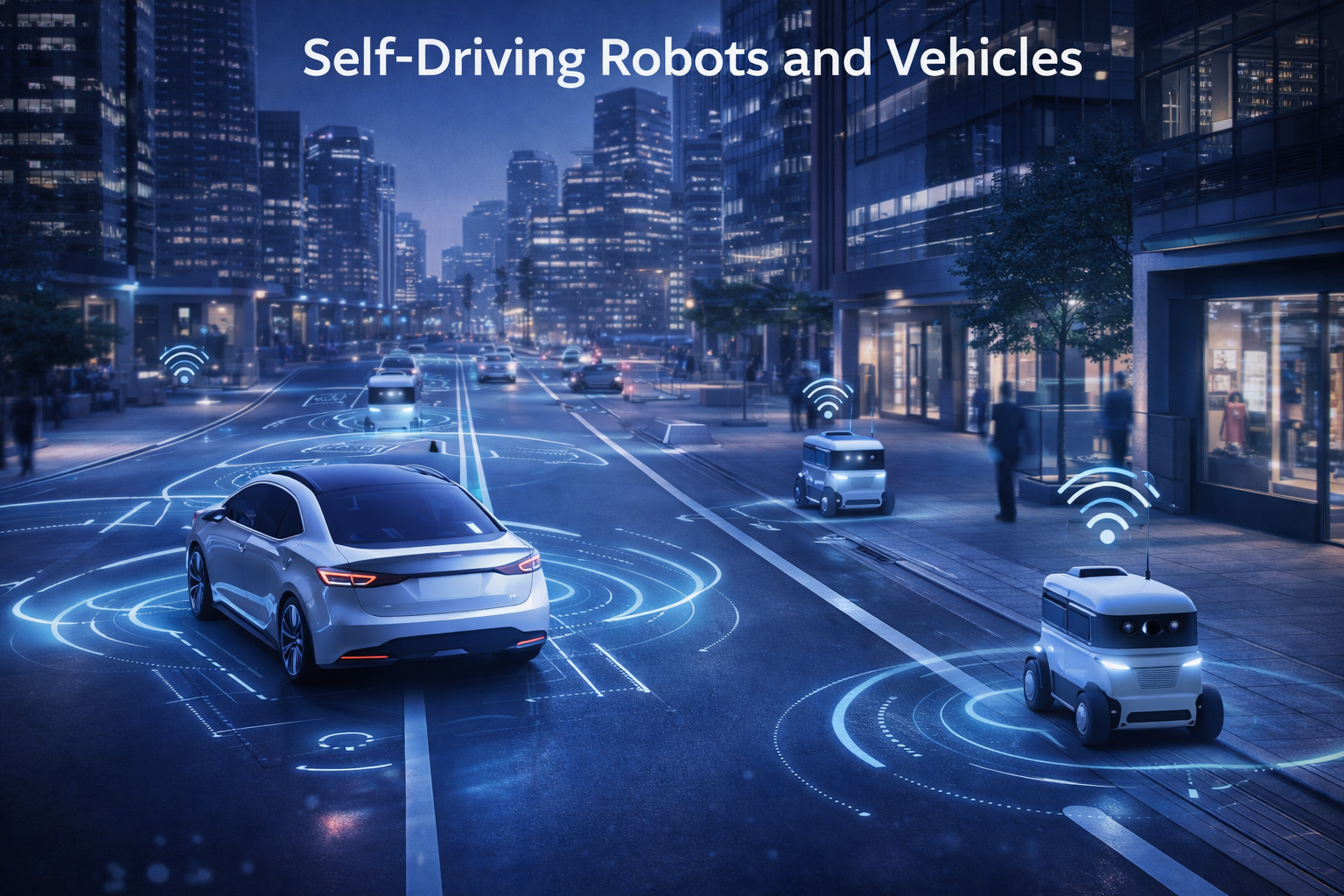
- Self-Driving Cars: Autonomous vehicles use edge AI to identify lanes, pedestrians, and traffic signals in real time. Any delay in this process could be life-threatening, making local processing non-negotiable.
- Drones: Drones use AI and edge computing to navigate, avoid obstacles, and track objects — even in areas with no Wi-Fi coverage. Delivery drones and surveillance drones both benefit from this capability.
- Healthcare Robots: Surgical robots and patient-care assistants use edge AI to move with high precision. In a medical setting, accuracy and speed are both critical, and local processing ensures neither is compromised.
The Technology Powering Edge AI in Robotics
Several hardware and software tools are making edge AI in robotics a practical reality:
- NVIDIA Jetson and Intel Movidius: Compact, powerful edge processors designed to run AI models directly on devices in real time
- TensorFlow Lite and ONNX Runtime: Lightweight versions of AI frameworks optimized to run efficiently on edge hardware with limited computing power
- ROS 2 (Robot Operating System): A widely used open-source framework that supports deploying AI models at the edge for robotic applications
These tools are becoming more affordable and accessible, which means edge AI is no longer limited to large corporations. Startups and research labs are also building next-generation robots using these platforms.
The combination of AI and edge computing is pushing robotics into a new phase — one where machines are not just following pre-programmed instructions but actively reasoning and responding to the world around them. As these technologies continue to mature, expect smarter factories, safer roads, more capable drones, and more precise medical robots to become part of everyday life.