Farming is entering a new era. Agriculture 5.0 is reshaping how food is grown, monitored, and harvested — replacing back-breaking manual work with intelligent machines, drones, and data-driven systems. From self-driving tractors to AI-powered crop monitoring, autonomous farms are setting a new standard for efficiency, sustainability, and productivity worldwide.
What Is Agriculture 5.0?
Agriculture 5.0 is the next generation of farming that relies on intelligent machines and advanced technologies to handle most farm operations with minimal human involvement. It brings together robots, unmanned aerial vehicles (UAVs), smart sensors, and artificial intelligence to plant, monitor, and harvest crops.
The core goals are straightforward:
- Increase crop output and quality
- Reduce dependence on manual labour
- Lower operational costs
- Make farming more environmentally sustainable
Unlike earlier agricultural revolutions that focused on mechanisation or digital tools, Agriculture 5.0 takes a fully integrated approach — where machines think, decide, and act on their own.
How Autonomous Farming Actually Works
Autonomous farms use machines that can operate without a human operator on-site. These systems rely on GPS navigation, soil and crop sensors, and AI decision-making engines to carry out complex tasks accurately.
Here is a quick look at how different technologies contribute:
| Technology | Function in Autonomous Farming |
|---|---|
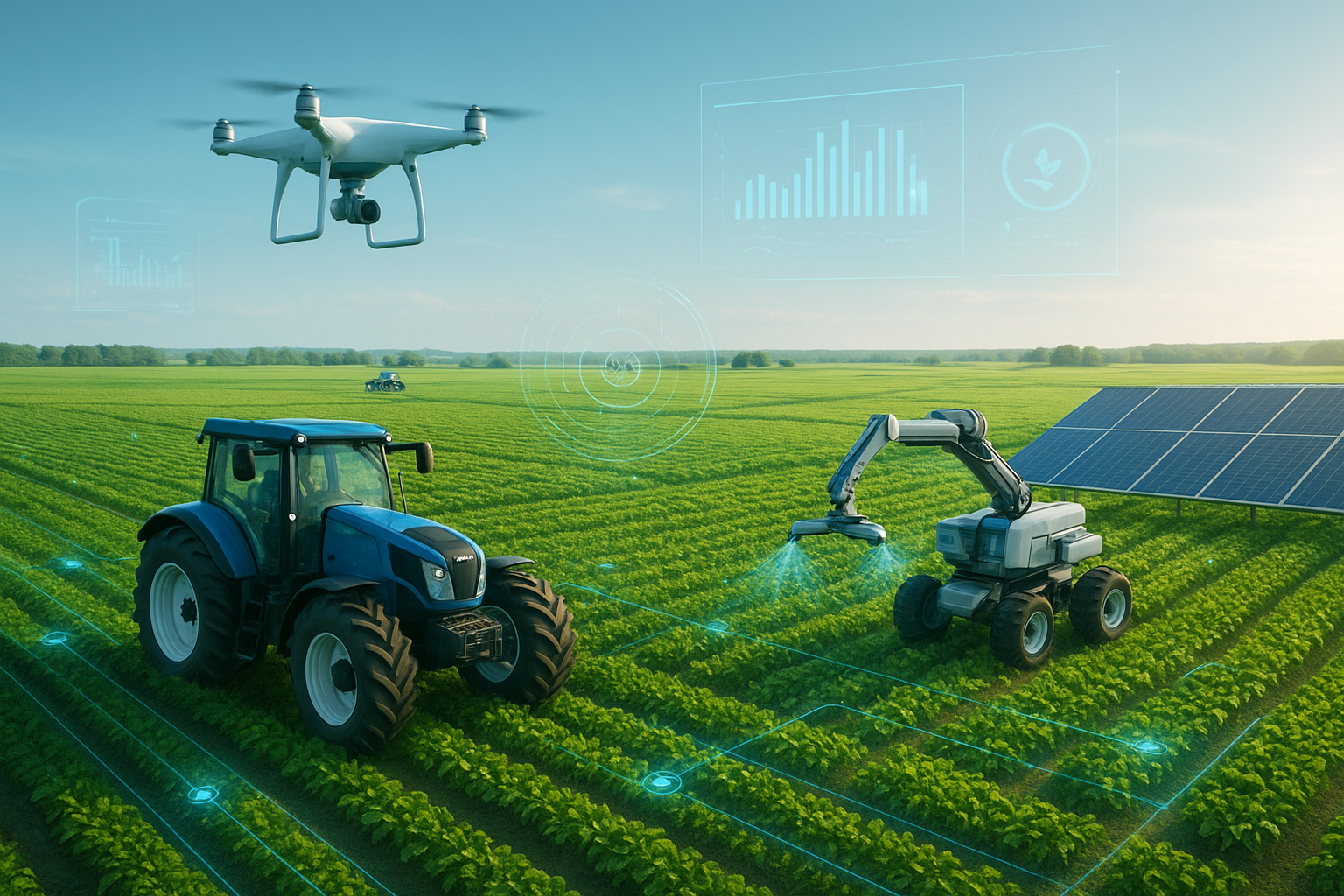
| Self-driving tractors | Ploughing and tilling fields without a driver |
| Seed-planting robots | Precise seed placement at optimal depth and spacing |
| Harvesting robots | Picking fruits and vegetables quickly and accurately |
| Agricultural drones | Aerial crop monitoring and spraying |
| Smart irrigation systems | Automated watering based on real-time soil data |
Companies like John Deere are already deploying self-driving tractors that complete fieldwork without any driver, demonstrating that this technology is not a distant concept — it is already in use.
AI and Drones: The Eyes of the Modern Farm
One of the most valuable aspects of Agriculture 5.0 is continuous, real-time crop monitoring. Drones fly over large fields, capturing high-resolution images that AI tools then analyse in detail. This gives farmers early warnings about:
- Pest infestations before they spread
- Crop diseases at early stages
- Nutritional deficiencies in the soil
- Uneven growth patterns across fields
What once required days of manual inspection can now be completed in minutes. Farmers receive actionable insights faster, which means they can respond to problems before they cause major crop losses. Strawberry farms, for example, are already using robotic arms that pick fruit faster than human workers — addressing the growing labour shortage in agriculture.
Smart Irrigation and Predictive Farming
Water management is one of the biggest challenges in modern agriculture. Smart irrigation systems use sensors placed in the soil to continuously measure moisture levels and temperature. The system automatically decides when and how much to water each section of the field — no human input needed.
This approach delivers two major benefits:
- Water conservation: Crops receive only the water they need, reducing waste significantly
- Cost savings: Farmers spend less on water and energy while maintaining healthy yields
Beyond irrigation, AI-powered predictive farming takes data from weather forecasts, historical soil records, and crop performance to advise farmers on the best times to plant, irrigate, or harvest. This reduces the risks that come with unpredictable weather and helps maximise yields season after season.
Why Agriculture 5.0 Matters for India and the World
Farmers across the world — including millions in India — face a combination of serious challenges: labour shortages, rising input costs, erratic monsoons, and growing food demand from an expanding population. Agriculture 5.0 directly addresses these problems.
Key reasons why this shift is important:
- Labour shortage solution: Robots and autonomous machines work around the clock without fatigue
- Climate resilience: AI systems adapt farming decisions based on changing weather patterns
- Higher productivity: Precision tools reduce waste and improve crop quality
- Sustainability: Reduced use of water, fertilisers, and pesticides lowers the environmental footprint
- Food security: More food of better quality can be produced with fewer resources
Looking ahead, the next phase of autonomous farming could include armies of small robots tending to individual plants, fully AI-controlled greenhouses, and automated vertical farms inside cities — making fresh produce available even in urban areas with limited land.
Conclusion
Agriculture 5.0 is not just a technological upgrade — it is a fundamental shift in how humanity grows food. By combining robotics, drones, smart sensors, and AI-driven data analysis, autonomous farms are becoming more productive, cost-efficient, and environmentally responsible. As these technologies become more accessible and affordable, they hold the potential to transform farming for smallholders and large-scale producers alike, ensuring food security for future generations without exhausting the planet’s resources.