
Humanoid robots are no longer confined to science fiction films or research labs. By 2025, these human-shaped machines are actively working in factories, warehouses, and service environments across the world. Companies like Tesla, Boston Dynamics, and Agility Robotics are leading this charge, and the impact on industrial automation is becoming impossible to ignore.
What Exactly Are Humanoid Robots?
Humanoid robots are machines designed to mimic the human body — complete with arms, legs, and a head. Unlike traditional robotic arms fixed to a single station, humanoid robots can walk, bend, lift objects, and operate tools. This physical similarity to humans means they can work in spaces originally built for people, without requiring businesses to redesign their entire infrastructure.
This adaptability is one of their biggest advantages. A humanoid robot can move through a warehouse aisle, pick up a package, and place it on a shelf — all in the same way a human worker would.
Key Reasons Industries Are Adopting Humanoid Robots
Several real-world pressures are pushing businesses toward humanoid robots:
- Labour Shortages: Many industries struggle to find enough workers for physically demanding or repetitive tasks. Humanoid robots fill this gap without requiring recruitment or training cycles.
- Advances in Artificial Intelligence: Smarter decision-making systems now allow robots to adapt to changing tasks in real time, making them far more capable than earlier generations.
- Better Hardware: Modern humanoid robots are lighter, stronger, and more energy-efficient than before, making them practical for daily industrial use.
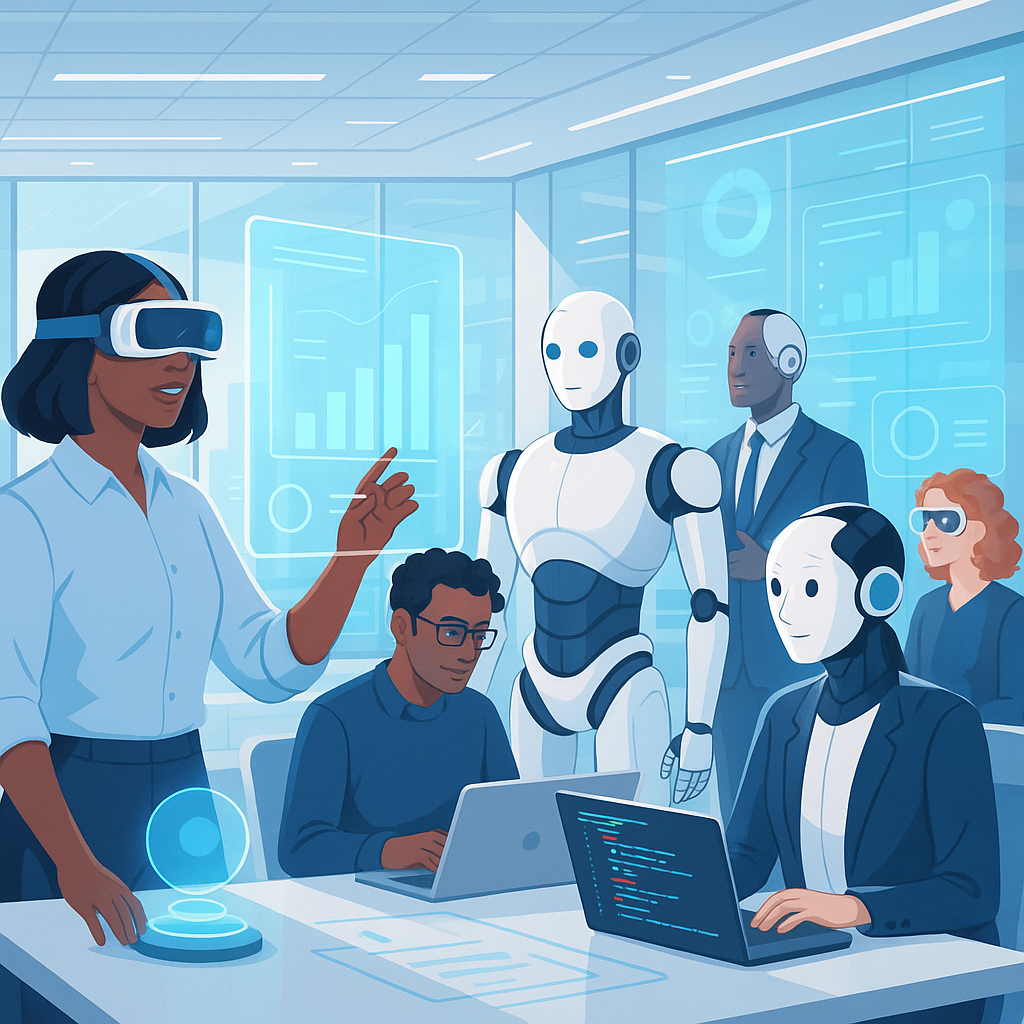
- Safe Human-Robot Collaboration: Today’s robots are designed to work alongside human employees, not replace them entirely. Improved sensors and safety protocols make this possible.
Real-World Humanoid Robots Already on the Job
Several humanoid robots are already deployed in real industrial settings:
- Boston Dynamics Atlas: Known for its impressive agility and balance, Atlas is being tested in warehouse and construction environments.
- Tesla Optimus: Designed specifically for repetitive manufacturing tasks inside Tesla’s own production facilities.
- Agility Robotics Digit: Currently working inside Amazon warehouses, helping move and sort packages at scale.
- South Korea’s K-Humanoid Alliance: A national initiative aimed at developing robots capable of lifting more than 20 kg by 2028, targeting heavy industrial use.
| Robot | Company | Primary Use |
|---|---|---|
| Atlas | Boston Dynamics | Warehouses, Construction |
| Optimus | Tesla | Factory Assembly |
| Digit | Agility Robotics | Amazon Warehouses |
| K-Humanoid | South Korea Alliance | Heavy Industrial Tasks |
Business Benefits of Deploying Humanoid Robots
For companies considering this technology, the practical advantages are significant:
- Easy Integration: They fit into existing human-designed workspaces without costly infrastructure changes.
- Non-Stop Productivity: Robots do not need breaks, sleep, or sick days, allowing round-the-clock operations.
- Multi-Task Capability: A single humanoid robot can handle assembly, packing, quality checks, and dispatch within the same shift.
- Long-Term Cost Savings: While upfront costs are high, businesses save significantly on labour expenses over time.
Challenges That Still Need to Be Solved
Despite the growing momentum, humanoid robots face real obstacles before they become truly mainstream:
- High Purchase Costs: Acquiring humanoid robots requires a large initial investment. However, newer models like Robotics-as-a-Service (RaaS) are making access more affordable through subscription-based rental models.
- Job Displacement Concerns: There is a genuine risk of human job losses if adoption is not managed responsibly. Governments and companies need clear policies to retrain and redeploy affected workers.
- Technical Limitations: Battery life, fluid movement in unpredictable environments, and real-time problem-solving are still areas where engineers are working to improve performance.
Addressing these challenges will determine how quickly humanoid robots move from pilot projects to full-scale industrial deployment.
Humanoid robots represent a significant step forward in how industries operate. As labour shortages grow and technology improves, businesses that begin integrating these machines now are likely to gain a competitive edge. The shift is already underway — and it is only expected to accelerate through the rest of this decade.
Frequently Asked Questions
Several humanoid robots are already deployed industrially. Boston Dynamics Atlas is being tested in warehouses and construction sites. Tesla Optimus works inside Tesla's manufacturing facilities. Agility Robotics Digit is actively sorting and moving packages in Amazon warehouses.
Robotics-as-a-Service, or RaaS, is a subscription-based model that allows businesses to rent humanoid robots instead of purchasing them outright. This significantly lowers the financial barrier for smaller companies that want to adopt automation without a large upfront investment.
Humanoid robots are designed to work alongside humans rather than fully replace them, especially in the short term. They are most effective at handling repetitive, physically demanding, or dangerous tasks. However, experts and policymakers agree that responsible adoption requires worker retraining programmes to manage any job displacement.