
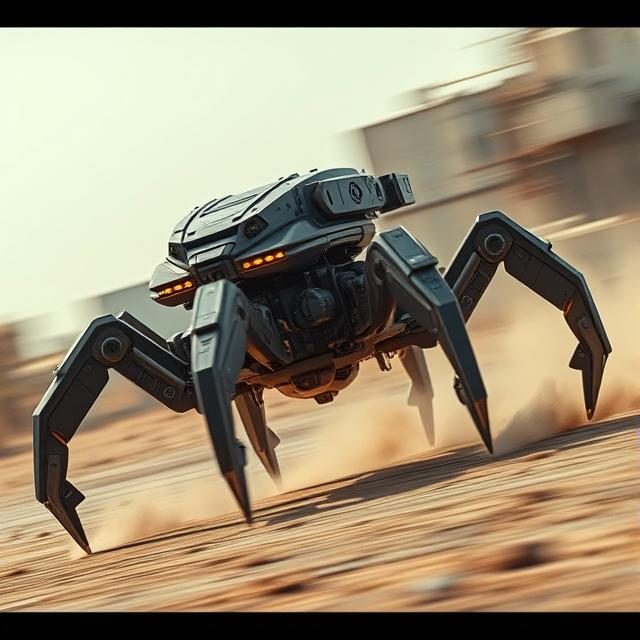
Swarm robotics is one of the most fascinating areas in modern technology. Inspired by how ants, birds, and fish work together in nature, this field uses large groups of small, simple robots that collaborate to complete complex tasks. Instead of relying on one powerful machine, swarm robotics distributes the work across many units — often achieving better results than any single robot could manage alone.
How Swarm Robotics Works
Understanding swarm robotics starts with four core principles that make the system effective:
- Decentralized Control: There is no single leader or controller. Each robot follows basic programmed rules and acts independently. Through these simple individual actions, the group collectively solves complex problems.
- Communication and Collaboration: Robots in a swarm constantly share information with each other. If one robot detects an obstacle or a change in the environment, it signals the others, keeping the entire group coordinated and efficient.
- Adaptability and Self-Organization: Swarm robots can adjust their behavior when conditions change unexpectedly. This self-organizing ability means the system continues to function well even in unpredictable situations.
- Scalability: Adding more robots to a swarm improves performance rather than creating complications. This makes swarm systems ideal for large-scale operations that require handling bigger and more demanding tasks.
Key Applications of Swarm Robotics
Swarm robotics has practical uses across a wide range of industries. Here are some of the most important areas where this technology is already making an impact:
- Search and Rescue: After natural disasters, swarm robots can cover large areas quickly to locate survivors. Their coordinated search patterns are faster and more thorough than what individual robots or humans can achieve alone.
- Agriculture: Robot swarms are being used to plant seeds, monitor crop health, irrigate fields, and even harvest produce. This reduces labor costs and helps farmers manage large areas more efficiently.
- Healthcare: Researchers are exploring the use of microscopic swarm robots to perform minimally invasive surgeries and deliver medication directly to targeted areas inside the human body.
- Environmental Monitoring: Swarm robots can track wildlife populations, measure pollution levels, and monitor climate-related changes in real time, providing valuable data for conservation efforts.
- Military and Defense: Defense agencies use swarm robots for surveillance, landmine detection, and scouting in dangerous zones, reducing the risk to human soldiers while still completing critical missions.
Why Swarm Robotics Stands Out
There are several strong reasons why industries are increasingly interested in swarm robotics over traditional single-robot systems:
| Advantage | What It Means |
|---|---|
| Reliability | If one robot fails, the rest continue working without interruption. |
| Cost-Effectiveness | Small, simple robots are cheaper to build and maintain than large complex machines. |
| Efficiency | Tasks are divided among robots, so the group finishes jobs faster. |
| Flexibility | Swarm robots can operate in diverse environments, from farms to disaster zones. |
Challenges That Still Need to Be Solved
Despite its promise, swarm robotics faces real technical and operational hurdles that researchers are actively working to address:
- Communication Problems: The entire swarm depends on reliable communication. Weak signals or interference can disrupt coordination and reduce the system’s effectiveness.
- Energy Limitations: Managing the power supply for dozens or hundreds of robots simultaneously remains a significant challenge. Keeping all units charged and operational in the field is an ongoing area of research.
- Complex Algorithms: Writing the rules that guide robot behavior in unexpected situations requires deep expertise. These algorithms must be carefully designed to handle a wide range of scenarios.
- Security Risks: Like any networked system, swarm robots are vulnerable to cyberattacks. Protecting these systems from hacking or signal interference is critical for safe deployment.
What the Future Holds for Swarm Robotics
The potential of swarm robotics continues to grow as computing power improves and miniaturization advances. Researchers expect to see swarm systems deployed in more industries, with smarter algorithms enabling even more complex collaborative behavior. From improving disaster response times to transforming precision agriculture and advancing medical procedures, swarm robotics is set to become a foundational technology in the broader field of automation.
As the technology matures, addressing current challenges around energy, security, and communication will be key to unlocking its full potential across both civilian and defense applications.
Swarm robotics represents a shift in how we think about machines — not as isolated powerful units, but as cooperative networks that are stronger together. This approach mirrors some of nature’s most efficient systems and could define the next generation of robotic solutions worldwide.
Frequently Asked Questions
Swarm robotics is a field where many small, simple robots work together as a group to complete complex tasks. Each robot follows basic rules and communicates with others in the swarm. There is no central controller — the group self-organizes and adapts based on the environment, similar to how ants or birds behave collectively in nature.
Swarm robotics is used in several industries including search and rescue operations after disasters, precision agriculture for planting and harvesting, healthcare for targeted drug delivery and surgery, environmental monitoring for tracking pollution and wildlife, and military applications such as surveillance and landmine detection.
The main challenges include maintaining reliable communication between robots in the swarm, managing energy supply for large numbers of units, designing complex algorithms that handle unexpected situations, and protecting swarm systems from cybersecurity threats such as hacking or signal interference.