Imagine seeing your heart rate, navigation directions, or real-time alerts without looking at a phone or screen — just through your contact lenses. What once seemed like science fiction is now a serious area of research and development. Smart contact lenses are slowly moving from lab prototypes to potential consumer products, and the progress is happening faster than most people realise.
What Are Smart Contact Lenses?
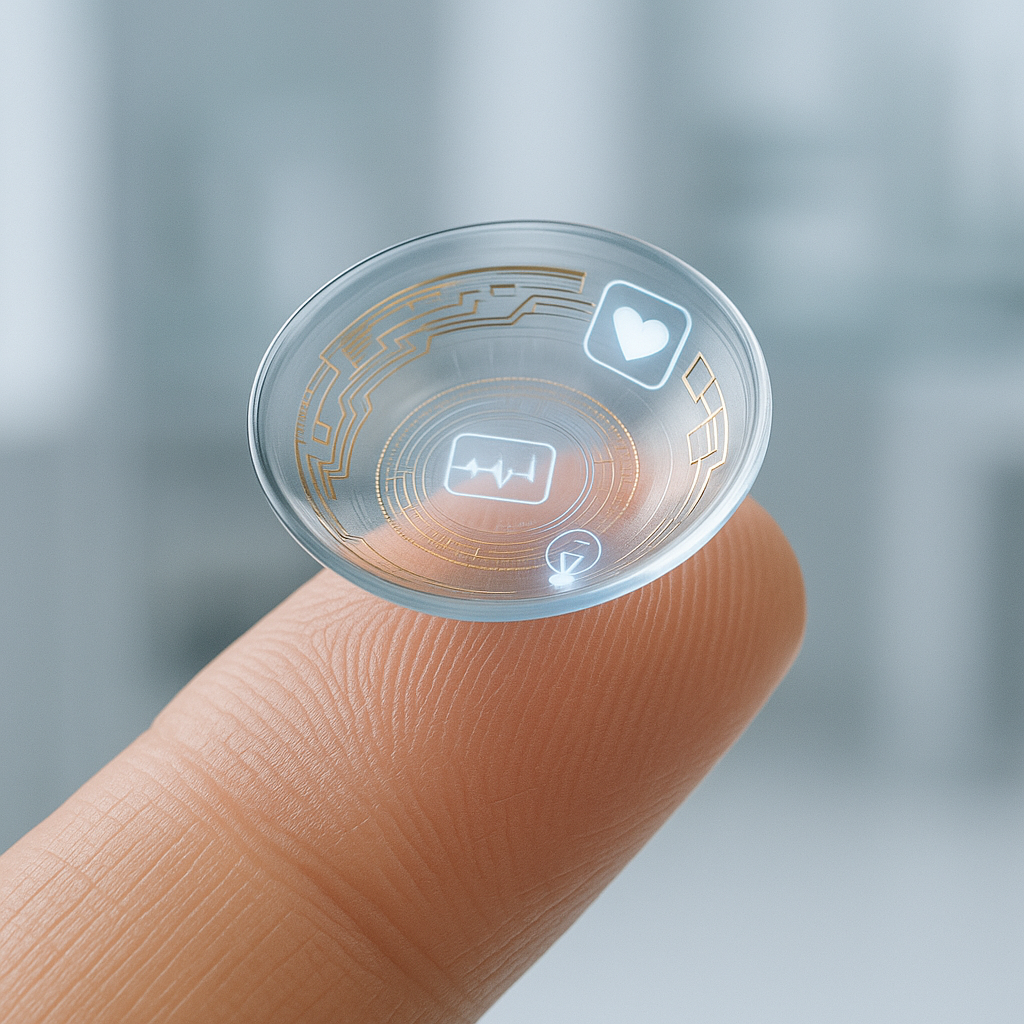
Smart contact lenses are regular-looking lenses embedded with advanced technology. Inside these thin, wearable devices, engineers are fitting microchips, biosensors, miniature displays, and wireless communication components.
Unlike traditional lenses that only correct vision, smart lenses are designed to serve a much broader purpose. They can potentially monitor your health, display digital information directly in your line of sight, and even enhance how you see the world around you — all without carrying any extra device.
Key Features Smart Contact Lenses Could Offer
Researchers and companies are exploring several practical applications for smart lenses. Here is what they could realistically do:
- Health Monitoring: Some lenses are being developed to track vital health data such as blood sugar levels for people with diabetes or intraocular pressure for glaucoma patients — continuously and non-invasively.
- Augmented Reality (AR) Display: Lenses could overlay GPS directions, notifications, or messages directly into your field of vision, removing the need for a phone screen or smart glasses.
- Vision Enhancement: Future versions may allow users to zoom in on objects, improve night vision, or auto-adjust focus based on surroundings.
- Hands-Free Operation: By replacing the need for screens and smart glasses for basic tasks, these lenses could offer true hands-free convenience in daily life.
Companies Leading Smart Lens Development
Several major technology and healthcare companies are actively working on smart contact lens prototypes. The competition is growing, and breakthroughs are being reported more frequently.
| Company | Focus Area | Current Status |
|---|---|---|
| Mojo Vision | AR data display in real time | Prototype stage |
| Google (Alphabet) | Glucose monitoring via tears | Early research explored |
| Samsung | Built-in camera and sensors | Patents filed |
| Sony | Camera-integrated lenses | Patents filed |
While most of these efforts are still in early or prototype stages, the pace of development suggests that commercial products are not far off.
When Can We Expect Smart Lenses in the Market?
Smart contact lenses are not available to consumers yet, but experts have offered some realistic timelines based on current progress:
- Health-monitoring smart lenses could reach the market within the next 2 to 3 years, particularly for medical use cases like diabetes management.
- Full-featured AR contact lenses are expected around 2028 or later, once miniaturisation technology, power solutions, and safety standards mature further.
Before any product reaches consumers, it must pass rigorous medical safety evaluations and receive regulatory approval from health authorities in each country.
Major Challenges That Still Need to Be Solved
Despite the exciting potential, smart contact lenses face several significant technical and regulatory hurdles:
- Power Supply: Fitting a reliable, safe power source — whether a micro-battery or wireless charging system — into a lens that sits on the human eye is an enormous engineering challenge.
- Comfort and Wearability: The lens must be comfortable enough for all-day wear without causing irritation, dryness, or eye damage.
- Data Privacy: Smart lenses could collect sensitive personal health data and visual information. Protecting this data from misuse or breaches is a critical concern.
- Regulatory Approval: Health-related lenses must clear strict safety standards set by medical regulators before they can be sold or prescribed to the public.
Solving these challenges will determine how quickly smart lenses move from research labs to everyday use.
Smart contact lenses represent one of the most ambitious frontiers in wearable technology. With companies like Mojo Vision, Google, Samsung, and Sony investing in this space, the technology is advancing steadily. While full consumer availability is still a few years away, the groundwork being laid today could change how humans interact with information, monitor their health, and experience the world — one blink at a time.