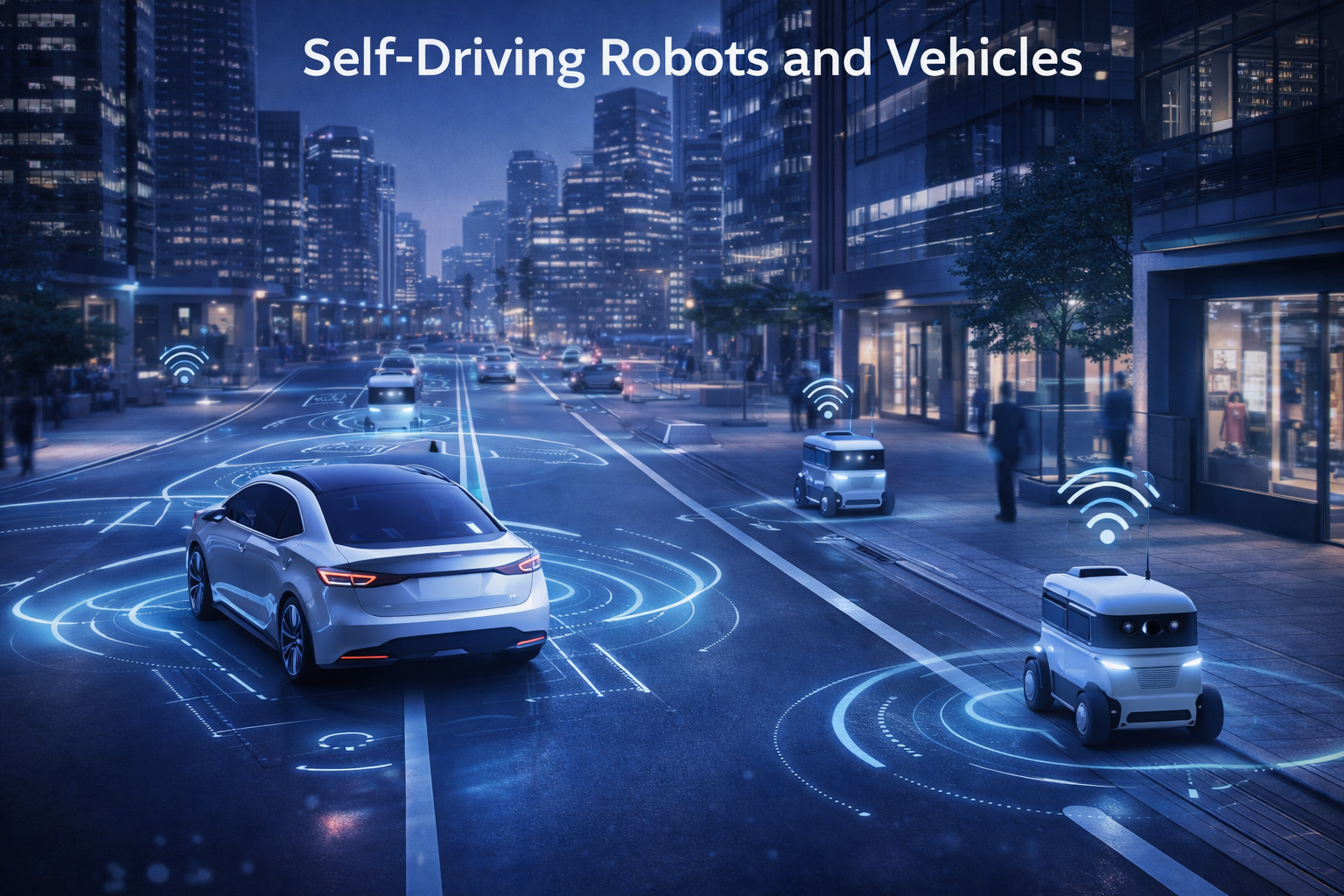
Self-driving cars have moved from science fiction to real roads faster than most people expected. Once a concept reserved for futuristic movies and cartoons, autonomous vehicles (AVs) are now being tested and deployed across the world. Here is a clear look at how they work, what powers them, and how they could change everyday life.
What Are Self-Driving Cars?
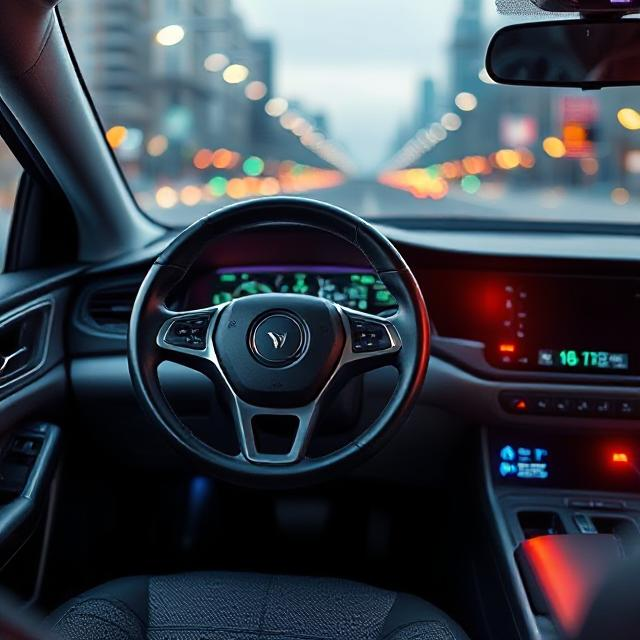
A self-driving car, also called an autonomous vehicle (AV), is a car that can navigate roads and reach a destination without a human controlling the steering wheel, brakes, or accelerator. The driver simply enters a destination, and the vehicle handles everything else.
These vehicles rely on a combination of hardware and software working together in real time. The goal is to make travel safer, more efficient, and accessible to more people — including those who cannot drive themselves.
The Technology That Powers Autonomous Vehicles
Self-driving cars use several layers of technology to understand and respond to their surroundings. Here are the key components:
- Cameras: Multiple cameras mounted around the car capture visual information about the road, traffic signals, pedestrians, and lane markings.
- Radar: Radar sensors detect the speed and distance of nearby objects, even in poor weather or low light conditions.
- Lidar: Lidar (Light Detection and Ranging) sends out laser pulses to create a detailed 3D map of the car’s surroundings in real time.
- GPS and Mapping: High-definition maps combined with GPS help the car understand exactly where it is and plan the best route.
- Onboard Computer System: All sensor data flows into a powerful central computer that processes the information and makes driving decisions within milliseconds.
Together, these systems act as the car’s eyes, ears, and brain — constantly gathering data and responding to changing road conditions.
How Does the Car’s Brain Make Decisions?
The onboard computer uses advanced software and machine learning to interpret sensor data. It identifies objects around the car, predicts how they might move, and calculates the safest path forward — all in a fraction of a second.
For example, if a pedestrian steps off a footpath, the system detects the movement, predicts the person’s path, and slows the car down before any human driver would even react. The system continuously updates its understanding of the environment, making adjustments as new information arrives.
Unlike a human driver, the system does not get tired, distracted, or emotionally affected by stress. This consistent alertness is one of the strongest arguments for why autonomous vehicles could eventually be safer than human-driven cars.
Key Benefits of Self-Driving Cars
Autonomous vehicles carry the potential to change transportation in meaningful ways. Here is a comparison of how self-driving cars differ from conventional vehicles across important areas:
| Factor | Human-Driven Cars | Self-Driving Cars |
|---|---|---|
| Reaction Time | 0.2 to 0.5 seconds on average | Milliseconds |
| Driver Fatigue | Common risk factor | Not applicable |
| Accessibility | Requires a licensed driver | Available to elderly and disabled users |
| Traffic Coordination | Limited, human-dependent | Vehicles can communicate with each other |
| Commute Productivity | Driver must focus on road | Passengers free to work or relax |
- Fewer Road Accidents: Human error — including distraction, fatigue, and impaired driving — causes the majority of road accidents. Autonomous vehicles eliminate these risks, potentially saving thousands of lives each year.
- Greater Accessibility: Elderly individuals, people with physical disabilities, and those who are unable to drive can gain independence through self-driving vehicles.
- Reduced Traffic Congestion: AVs can communicate with each other to coordinate speed and spacing, reducing bottlenecks and making traffic flow more smoothly.
- Stress-Free Commutes: Passengers can use travel time to read, work, rest, or simply enjoy the journey instead of focusing on the road.
Challenges and the Road Ahead
Despite the promise, self-driving cars still face real challenges. Regulatory frameworks in most countries are still catching up with the technology. Questions around liability in accidents, cybersecurity risks, and the ability of AVs to handle unpredictable real-world situations remain active areas of debate and research.
Companies like Waymo, Tesla, and several traditional automakers are investing heavily in autonomous driving technology. India, too, is beginning to explore the regulatory and infrastructure groundwork needed to support AVs in the future.
The technology is advancing rapidly, but widespread adoption on public roads is likely still several years away for most markets.
Self-driving cars represent one of the most significant shifts in personal transportation in over a century. As the technology matures and regulations evolve, autonomous vehicles could make roads safer, travel more accessible, and daily commutes far less stressful for millions of people.
Frequently Asked Questions
Self-driving cars use a combination of cameras, radar, and lidar sensors to detect their surroundings. These sensors continuously collect data about nearby vehicles, pedestrians, traffic signals, and road markings, which the car's onboard computer processes in real time.
Self-driving cars have the potential to be significantly safer because they eliminate human errors such as distraction, fatigue, and impaired driving, which are leading causes of road accidents. Their sensors react in milliseconds, much faster than the average human reaction time.
Fully autonomous vehicles are already being tested in several countries by companies like Waymo and Tesla. However, widespread public availability depends on regulatory approvals, infrastructure development, and further technology refinement, which may still take several years in most markets including India.