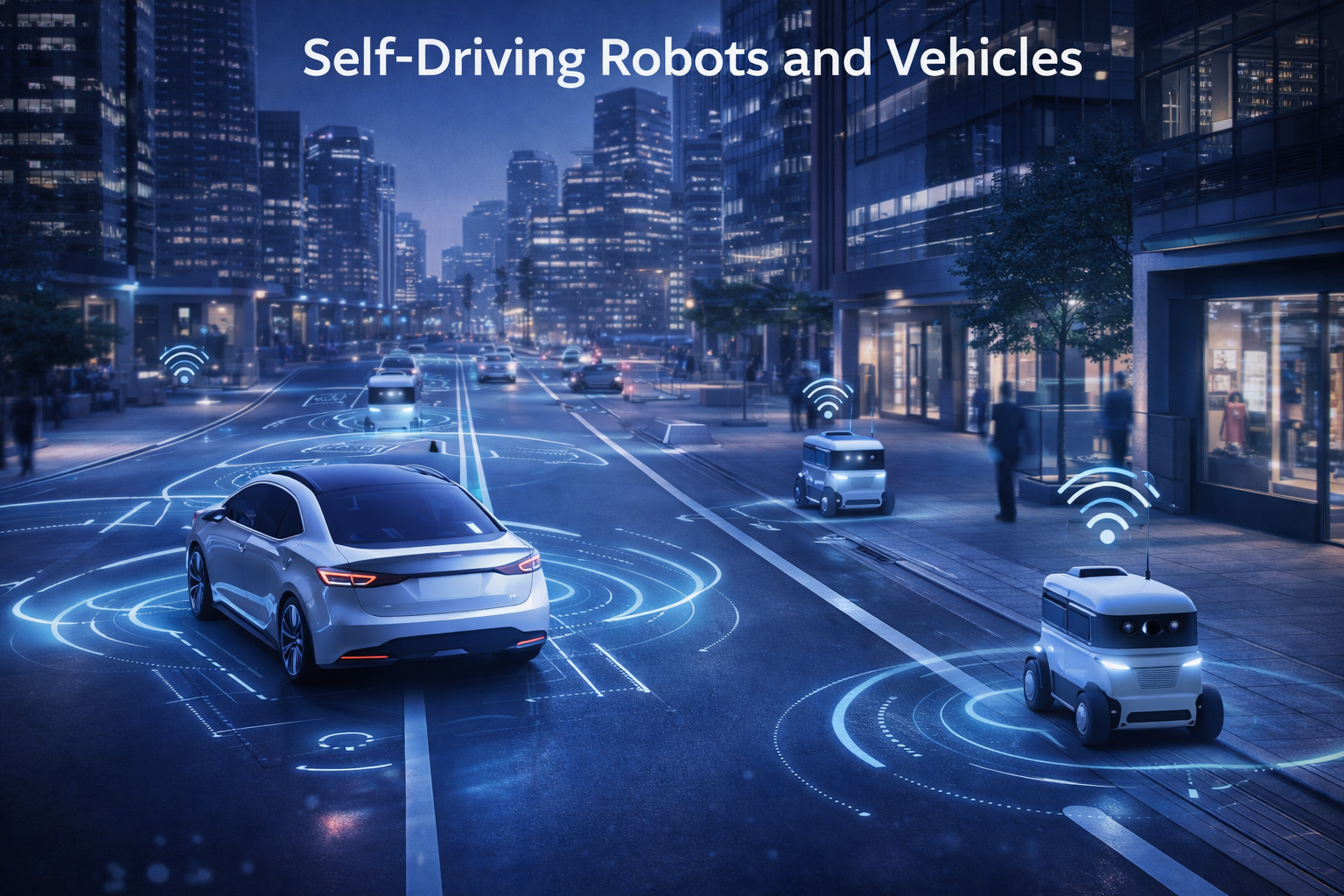

Robotic Process Automation, widely known as RPA, is rapidly changing how businesses operate across the world. By deploying software robots — commonly called bots — companies are automating repetitive, time-consuming tasks that once required significant human effort. These bots interact with digital systems and applications much like a human would, but with greater speed and far fewer errors.
What Is Robotic Process Automation?
RPA is a technology that uses software bots to mimic human actions within digital systems. These bots can log into applications, enter data, process transactions, and move information between systems — all without human intervention.
Unlike traditional automation tools, RPA does not require changes to existing IT infrastructure. It works on top of current systems, making it easier and faster to deploy. This is one of the key reasons businesses across sectors are adopting it at a rapid pace.
- Speed: Bots can complete tasks much faster than humans.
- Accuracy: Automated processes reduce human errors significantly.
- Cost savings: Fewer manual hours means lower operational costs.
- Scalability: Bots can be scaled up or down based on workload.
- Employee satisfaction: Staff can focus on meaningful, strategic work instead of repetitive tasks.
Benefits of RPA Across Key Industries
RPA is not limited to one sector. Its applications span healthcare, banking, insurance, human resources, and beyond. Here is a closer look at how different industries are benefiting.
Healthcare: Hospitals and clinics use RPA to manage patient records, schedule appointments, and handle billing processes. This reduces administrative errors, speeds up workflows, and allows doctors and nurses to dedicate more time to patient care — ultimately improving health outcomes.
Finance and Banking: Banks and financial institutions rely on RPA to automate fraud detection, regulatory compliance checks, and customer service operations. The result is faster transaction processing, reduced costs, and improved customer experience — all critical advantages in a highly competitive sector.
Insurance: The insurance industry uses RPA to handle claims processing, underwriting, and policy management. Automation helps insurers process claims faster, reduce manual errors, and deliver better service to policyholders.
Human Resources: HR departments use RPA to simplify employee onboarding, payroll processing, and performance tracking. With routine tasks handled by bots, HR professionals can focus on talent development, workforce planning, and company culture initiatives.
| Industry | Key RPA Applications | Primary Benefit |
|---|---|---|
| Healthcare | Patient records, billing, appointments | More time for patient care |
| Finance & Banking | Fraud detection, compliance, customer service | Faster processing, lower costs |
| Insurance | Claims processing, underwriting, policy management | Fewer errors, better service |
| Human Resources | Onboarding, payroll, performance tracking | Strategic focus for HR teams |
RPA Combined with Artificial Intelligence: A Powerful Pairing
One of the most significant developments in the RPA space is its integration with Artificial Intelligence. On its own, RPA handles rule-based, repetitive tasks well. But when combined with AI capabilities such as machine learning, natural language processing, and computer vision, RPA bots can handle far more complex tasks.
This combination — often called Intelligent Automation — allows bots to make decisions, interpret unstructured data, and adapt to changing conditions. For businesses, this means automation is no longer limited to simple data entry or form filling. It can extend to customer interactions, document analysis, and predictive decision-making.
Industries that adopt this integrated approach are seeing stronger productivity gains, better operational efficiency, and improved business outcomes compared to those using basic RPA alone.
The Future of RPA: What to Expect
The outlook for RPA is strong. As more organisations recognise the value of automation, adoption rates are expected to grow steadily across both large enterprises and small businesses.
Key trends shaping the future of RPA include:
- Smarter bots: Advances in machine learning will enable bots to handle increasingly complex tasks with minimal human oversight.
- Wider industry adoption: Sectors like retail, logistics, education, and government are beginning to explore RPA applications.
- Low-code and no-code platforms: These tools are making it easier for non-technical teams to build and deploy RPA bots without deep programming knowledge.
- Cloud-based RPA: Cloud deployment is making RPA more accessible and cost-effective for businesses of all sizes.
- Hyperautomation: A broader strategy that combines RPA with AI, analytics, and other technologies to automate end-to-end business processes.
As digital transformation accelerates globally, RPA is set to play a central role in helping businesses stay competitive, reduce costs, and deliver better experiences to customers and employees alike.
In conclusion, Robotic Process Automation is no longer a niche technology reserved for large corporations. It is a practical, proven tool that businesses across industries are using to work smarter. Whether it is managing healthcare records, detecting financial fraud, processing insurance claims, or streamlining HR workflows, RPA is delivering real, measurable value. As it continues to mature and integrate with advanced technologies, its impact on the way we work will only grow stronger.
Frequently Asked Questions
Robotic Process Automation, or RPA, is a technology that uses software bots to automate repetitive, rule-based tasks in digital systems. These bots can perform actions like data entry, form filling, and transaction processing without human involvement, helping businesses save time and reduce errors.
RPA is widely used in healthcare, banking and finance, insurance, and human resources. In healthcare, it manages patient records and billing. In banking, it handles fraud detection and compliance. In insurance, it speeds up claims processing. In HR, it simplifies onboarding and payroll.
Unlike traditional automation that requires changes to existing IT systems, RPA works on top of current applications without altering the underlying infrastructure. It is faster to deploy, more flexible, and can be combined with AI to handle more complex, decision-based tasks.