Open-ear earbuds are quietly changing how people listen to audio every day. Unlike traditional earbuds that sit inside your ear canal, these devices rest outside the ear, letting you enjoy music or calls while staying aware of your surroundings. Whether you are a runner, a remote worker, or someone with sensitive ears, open-ear earbuds offer a different kind of listening experience worth understanding.
What Are Open-Ear Earbuds and How Do They Work?
Open-ear earbuds are audio devices designed to sit on or near the ear rather than inside the ear canal. This design keeps your ears physically open, which means ambient sound can still reach you naturally while you listen to audio.
These earbuds use two main sound technologies:
- Air conduction: Sound waves are directed toward the outer ear without blocking the canal. The audio travels through the air and reaches the eardrum naturally.
- Bone conduction: Vibrations are sent through the bones of the skull directly to the inner ear, bypassing the ear canal entirely. Brands like Shokz are well known for this approach.
Both methods allow you to hear your audio content while still picking up sounds from the environment around you, such as traffic, conversations, or office alerts.
Why Are Open-Ear Earbuds Becoming More Popular?
The growing demand for open-ear earbuds comes down to a few practical reasons. People who spend long hours wearing earbuds often experience discomfort, ear fatigue, or even ear infections from in-canal devices. Open-ear designs remove that pressure entirely.
There is also a strong safety angle. Runners, cyclists, and walkers benefit from being able to hear approaching vehicles or people while still listening to music or podcasts. This situational awareness is something traditional earbuds with noise isolation simply cannot offer.
Remote workers and office employees also find these useful. During video calls or meetings, open-ear earbuds let users stay aware of people speaking nearby without having to remove their earbuds constantly.
Key Benefits of Open-Ear Earbuds
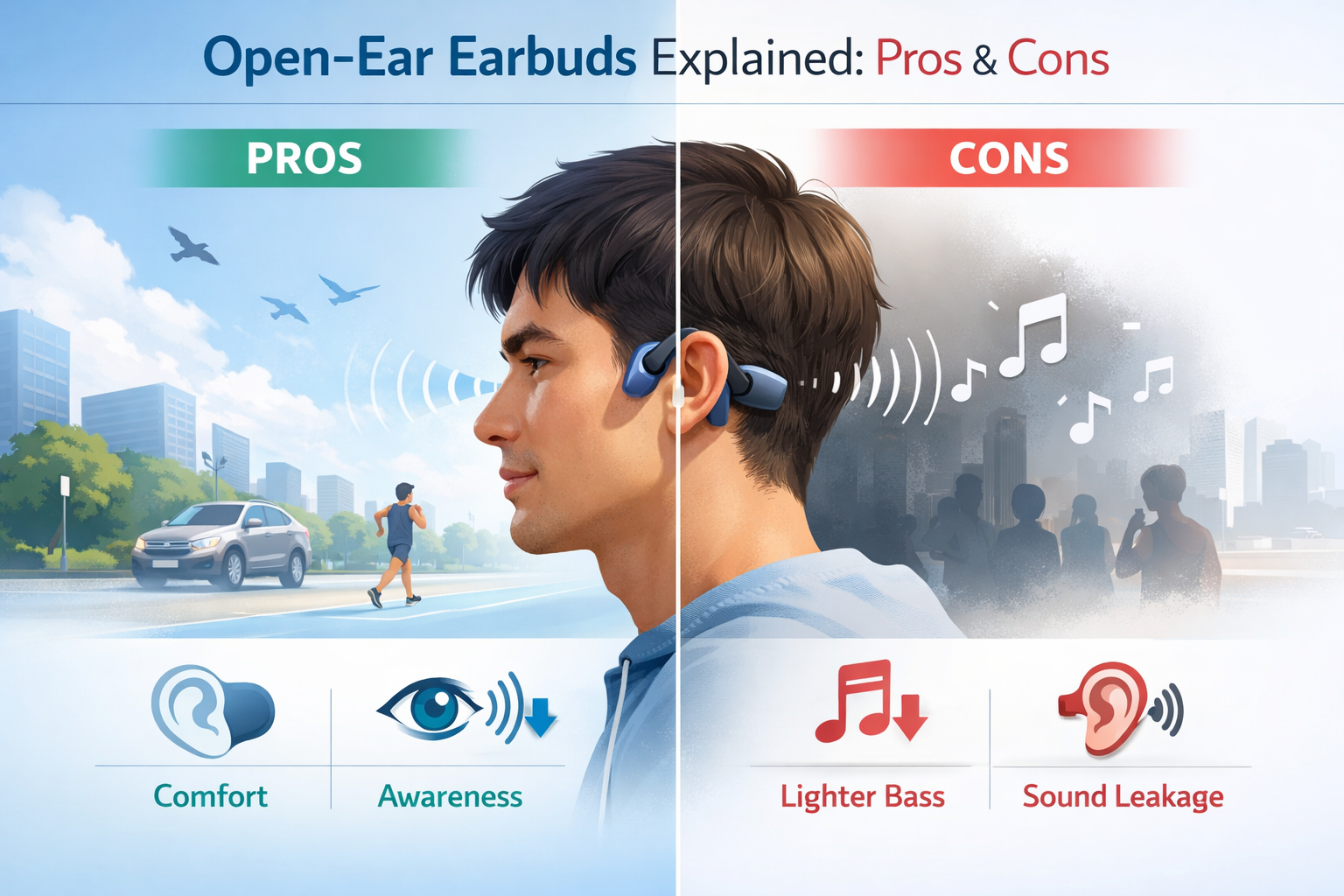
- Situational awareness: Your ears remain open, so you can hear traffic, people, and environmental sounds at all times.
- All-day comfort: Since nothing is inserted into the ear canal, extended wear feels much more natural and less tiring.
- Better ear hygiene: Reduced sweat buildup and less irritation make these ideal for people with sensitive ears.
- Suitable for calls: You can hold conversations through the earbuds while still hearing people around you in real time.
- No ear canal pressure: People who dislike the plugged feeling of traditional earbuds will find open-ear designs far more comfortable.
Drawbacks You Should Know Before Buying
Open-ear earbuds are not perfect for every situation. Here are the main limitations to consider:
- Weaker bass response: Because the ear canal is open, low-frequency sounds like bass do not feel as powerful or immersive as they do with in-ear models.
- Sound leakage: At higher volumes, people nearby may hear what you are listening to. This can be a concern in quiet offices or public spaces.
- No noise isolation: In very loud environments, background noise can overpower your audio, making it harder to focus on what you are listening to.
- Not ideal for audiophiles: If you prioritise deep, rich sound quality above everything else, traditional earbuds or over-ear headphones will serve you better.
| Feature | Open-Ear Earbuds | Traditional In-Ear Earbuds |
|---|---|---|
| Comfort for long use | High | Moderate |
| Situational awareness | Excellent | Poor to Moderate |
| Bass quality | Low to Moderate | High |
| Noise isolation | None | Moderate to High |
| Sound leakage risk | Moderate | Low |
Who Should Use Open-Ear Earbuds and Top Brands to Consider
Open-ear earbuds work best for:
- Runners, cyclists, and walkers who need to stay alert outdoors
- Remote workers and office employees who take frequent calls
- People with sensitive ears or those prone to ear infections
- Anyone who finds traditional earbuds physically uncomfortable
Several established brands have entered this space with strong offerings. Shokz leads in bone conduction technology. Sony, Bose, and Huawei have launched air conduction open-ear models with solid battery life and call quality. When choosing a pair, look for these key factors:
- Battery life and charging speed
- Water and sweat resistance rating
- Microphone quality for calls
- Fit and stability during physical activity
- Overall audio clarity at moderate volumes
Open-ear earbuds are a smart choice for people who value comfort and awareness over deep audio isolation. While they may not replace high-fidelity earbuds for serious music listening, they fill a genuine gap for everyday use, outdoor activities, and work-from-home scenarios. As wearable audio technology continues to advance, open-ear earbuds are becoming a practical and increasingly popular option for modern listeners.