Robotics and automation are no longer exclusive to large corporations with deep pockets. Small and medium-sized businesses (SMEs) across India and globally are discovering how these technologies can help them work smarter, reduce costs, and stay competitive. Whether it is managing inventory, packaging products, or handling repetitive data entry, robots are becoming practical tools for businesses of all sizes.
Affordable Automation Is Now Within Reach for Small Businesses
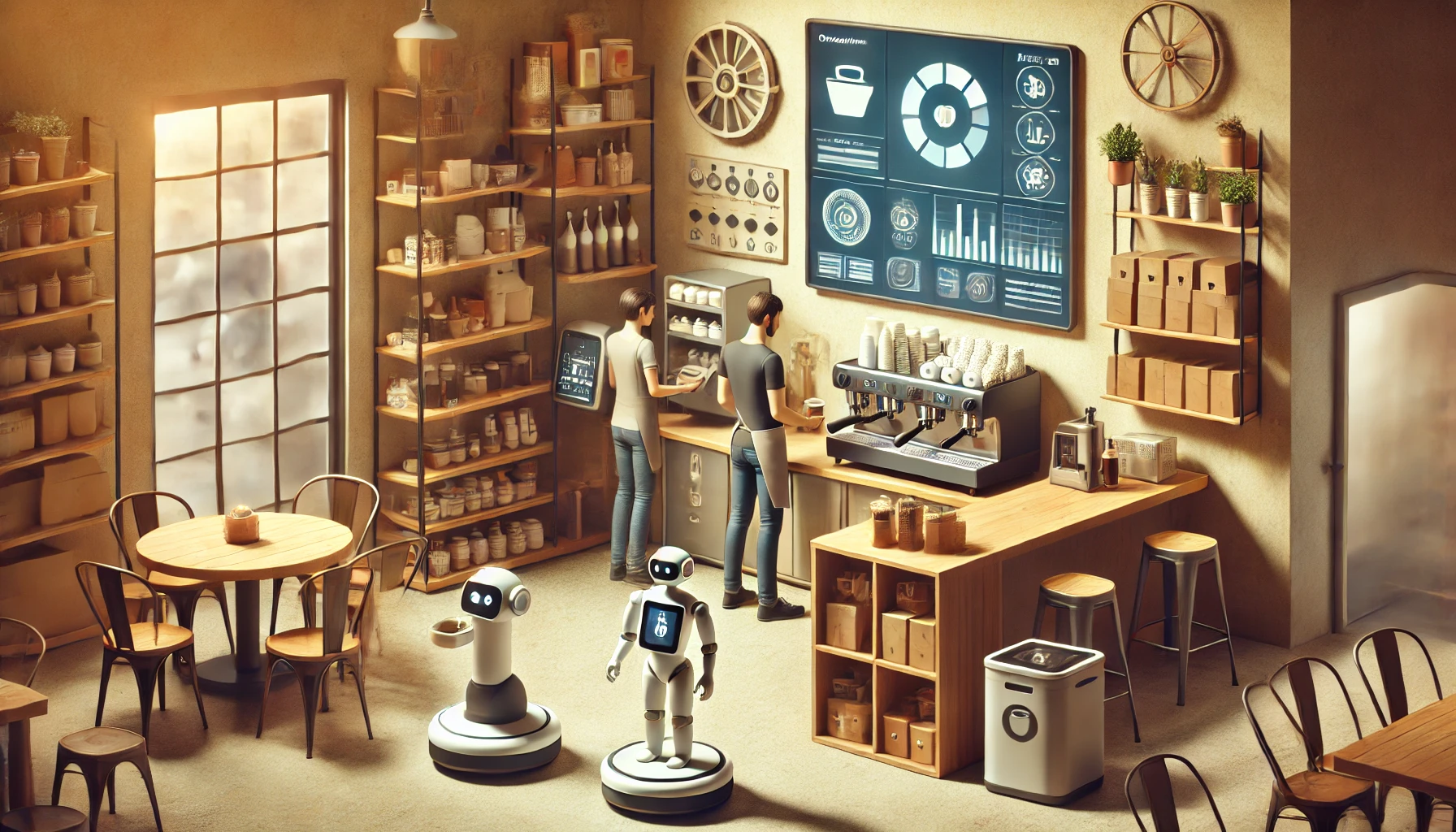
One of the biggest myths about robotics is that it is too expensive for small businesses. That is no longer true. Collaborative robots, commonly known as cobots, have changed the equation entirely. These machines are designed to work alongside human employees, handling repetitive and time-consuming tasks without requiring a massive investment in infrastructure.
Unlike traditional industrial robots that need dedicated spaces and complex setups, cobots are compact, flexible, and relatively affordable. Small businesses can start with one or two cobots for specific tasks and expand gradually as their needs grow. This makes automation accessible even for businesses operating on tight budgets.
Productivity and Accuracy Gains That Make a Real Difference
Time is one of the most valuable resources for any small business. Robots can take over routine tasks such as:
- Data entry and order processing
- Inventory tracking and management
- Product packaging and assembly
- Quality checks on production lines
By handling these jobs, robots free up employees to focus on higher-value work like customer service, product development, and business strategy. The result is faster turnaround times and better overall output.
Accuracy is another major advantage. Robots perform tasks with consistent precision, significantly reducing human errors. In manufacturing, packaging, or assembly operations, this means fewer defective products, less waste, and higher customer satisfaction. When quality improves consistently, businesses build stronger reputations over time.
Scalability, Cost Savings, and Workplace Safety
As a small business grows, its operational demands increase. Robots offer a scalable solution that can expand alongside the business. A company can begin by automating just a handful of tasks and gradually add more robots or expand their roles as volumes increase. Modern robots are highly adaptable and can be reprogrammed for different functions without significant additional cost.
On the cost side, robots are not about replacing every worker. They are about handling specific repetitive jobs that would otherwise require additional staff, especially during peak seasons. This reduces overtime expenses and the need for temporary hires, leading to meaningful savings on labour costs over time.
Workplace safety is another area where robotics delivers clear benefits. Robots can take on physically demanding or hazardous tasks such as lifting heavy loads or working in environments with extreme temperatures or chemicals. When these risks are removed from human workers, businesses see fewer workplace injuries, lower workers’ compensation claims, and a healthier work environment overall.
Return on Investment and Competitive Advantage
The upfront cost of purchasing and setting up robotic systems is a genuine concern for small business owners. However, many businesses find that the return on investment (ROI) comes faster than expected. Improved productivity, reduced errors, and lower labour costs combine to recover the initial investment within months in many cases.
Here is a simple comparison of manual operations versus robotic automation for small businesses:
| Factor | Manual Operations | Robotic Automation |
|---|---|---|
| Error Rate | Higher due to human fatigue | Consistently low |
| Speed | Limited by human capacity | Faster and continuous |
| Labour Cost | Ongoing and rising | Reduced over time |
| Scalability | Requires more hiring | Flexible and modular |
| Workplace Safety | Higher injury risk | Reduced human exposure |
Beyond savings, robotics gives small businesses a genuine competitive edge. Companies that automate can complete jobs faster, with fewer mistakes, and at lower costs than competitors still relying entirely on manual processes. This creates room to invest more in customer experience, product innovation, and business expansion.
Easy Integration with Existing Business Systems
A major concern for small business owners is disruption during the transition to automation. The good news is that modern robots are designed to integrate smoothly with existing software and operational systems. Many robotic solutions are compatible with popular inventory management platforms, ERP systems, and e-commerce tools that small businesses already use.
This means businesses do not have to overhaul their entire operation to get started. They can introduce automation gradually, beginning with one process, measuring the results, and then expanding at a pace that suits their capacity and budget. This step-by-step approach reduces risk and makes the transition manageable even for businesses with limited technical expertise.
Robotics is no longer a distant technology reserved for large factories. For small businesses willing to take the first step, it represents a practical path to greater efficiency, lower costs, and long-term growth. Starting small with cobots or targeted automation tools can make a measurable difference without overwhelming the business or its budget.