
Generative AI has moved well beyond creating text, images, and music. It is now playing a significant role in robotics — helping engineers design better machines, train them faster, and make them capable of adapting to real-world situations. This shift is changing how robots are built, tested, and deployed across industries.
What Is Generative AI and Why Does It Matter for Robotics?
Generative AI refers to models that can produce new content or solutions based on patterns learned from large amounts of existing data. Most people are familiar with tools like ChatGPT for text or DALL·E for images. But the same underlying technology can also generate strategies, behaviors, and physical designs — which is exactly what makes it valuable in robotics.
Instead of following only pre-written instructions, a robot powered by generative AI can explore multiple approaches to a problem, evaluate outcomes, and choose the best path forward. This makes machines far more capable than traditional rule-based systems.
Faster and Smarter Robot Design
Designing a robot used to involve long cycles of trial and error. Engineers would build a prototype, test it, find flaws, and start over. Generative AI is changing that process significantly.
Generative design software can now propose hundreds or even thousands of robot component designs — such as robotic arm configurations — each optimized for a specific goal like speed, flexibility, or load capacity. Engineers can then evaluate these options quickly and pick the most suitable one, cutting down development time considerably.
- Automated generation of mechanical part designs
- Optimized movement paths for robotic arms
- Faster iteration from concept to working prototype
Robots That Learn Behaviors on Their Own
One of the most important contributions of generative AI to robotics is enabling machines to learn behaviors without being explicitly programmed for every scenario. Using a combination of reinforcement learning and generative models, robots can now:
- Run thousands of virtual simulations of different tasks
- Learn from mistakes made during those simulations
- Develop new strategies to complete a task more efficiently
A practical example is a robot vacuum cleaner. Instead of following a fixed cleaning path, it can generate and evaluate multiple movement plans, then pick the one that covers the most area in the least time. Over repeated use, it continues to improve.
Natural Language Understanding in Robots
Generative AI models like GPT are being integrated directly into robotic systems, giving machines a much better ability to understand and respond to human language. This has real-world applications that are already being used today.
Hotel service robots and customer help desk machines can now hold natural conversations, understand complex requests, and provide relevant responses in real time. This makes human-robot interaction feel far less mechanical and more intuitive.
Key capabilities this enables include:
- Following multi-step verbal instructions
- Answering questions from users on the spot
- Adjusting responses based on context
Smarter Factory Automation and Industrial Use
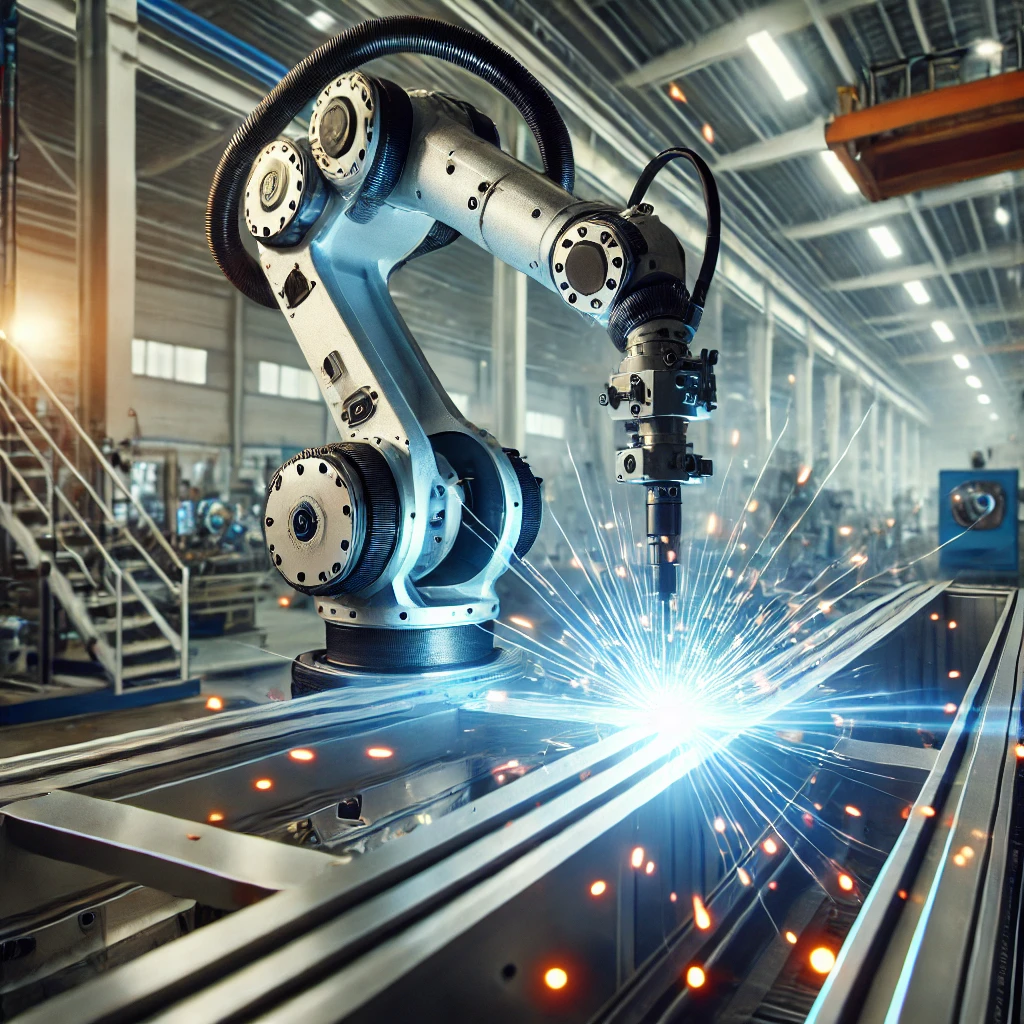
In manufacturing, generative AI is helping robots become more effective on the production floor. Machines can now learn from computer-generated data to detect defects, handle new types of tasks, and suggest process improvements without human intervention.
Beyond day-to-day operations, generative AI can also predict potential equipment failures and propose fixes before problems occur. This reduces downtime and lowers maintenance costs — two major concerns for large-scale industrial operations.
| Application Area | How Generative AI Helps |
|---|---|
| Factory Automation | Defect detection, process optimization, predictive maintenance |
| Medical Robotics | Adapting to different surgical procedures and patient conditions |
| Space Exploration | Navigating unknown terrain with minimal human guidance |
| Drone Technology | Planning energy-efficient and safe flight routes |
| Service Robots | Natural language interaction with customers and users |
Large-Scale Testing and Continuous Learning
Robot research labs are now using generative AI to run large numbers of simulations simultaneously. These tests help researchers understand how a robot might move, react, or make decisions across a wide range of environments — all before the physical robot is even built.
This approach is especially useful for:
- Space robots that need to navigate unpredictable terrain
- Medical robots that must adapt to different surgical conditions
- Drones that need to plan routes that are both safe and energy-efficient
Beyond testing, one of the strongest advantages of generative AI in robotics is continuous learning. Robots can update their own behavior in real time using fresh data, making them more resilient and better suited to changing environments over time.
What the Future Holds for AI-Powered Robots
The combination of generative AI and robotics is still in its early stages, but the direction is clear. Researchers and engineers expect this technology to lead to:
- Much faster robot development cycles
- Machines that can adapt to new tasks without reprogramming
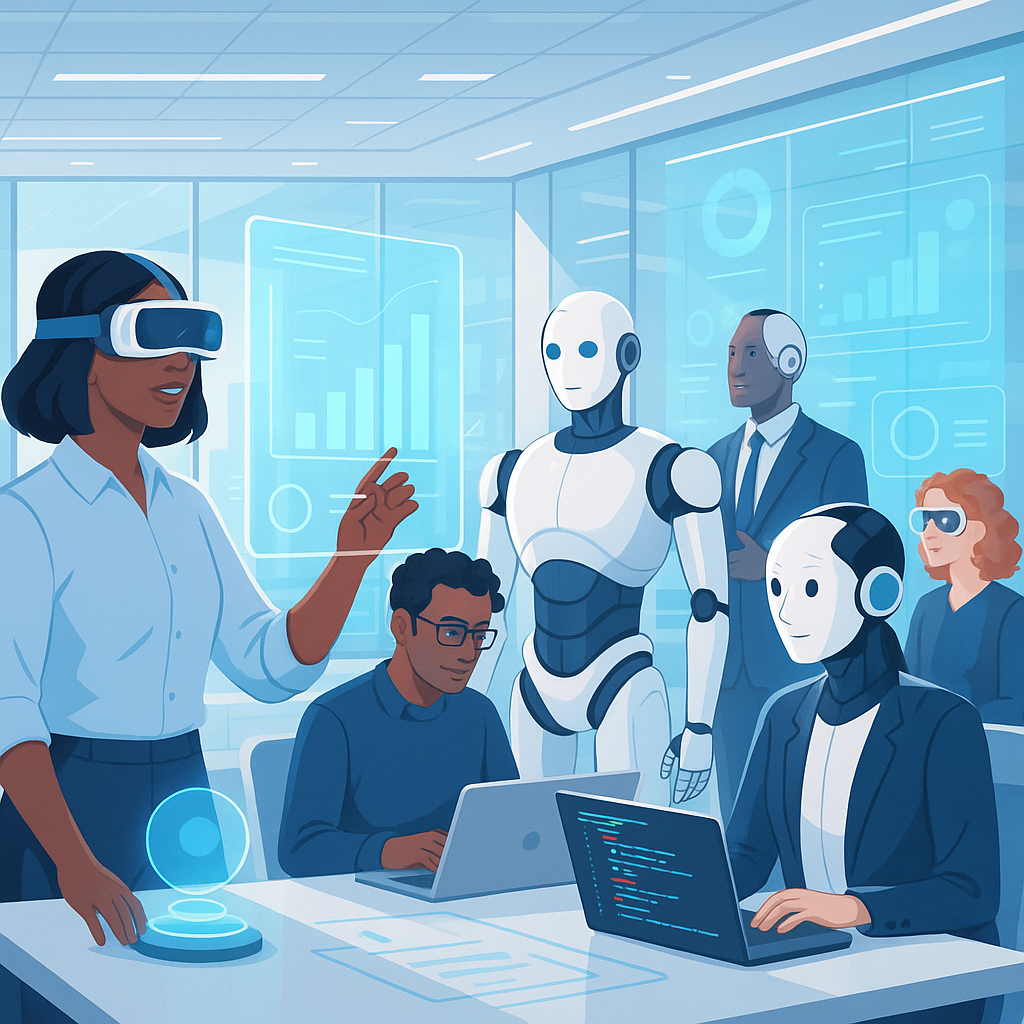
- Better collaboration between humans and robots in shared workspaces
- Wider use in healthcare, logistics, defense, education, and homes
As the technology matures, robots may soon be capable of independently solving complex problems, proposing creative solutions, and fitting naturally into everyday life — not just in factories or labs, but in homes, hospitals, and public spaces.
The integration of generative AI into robotics is not a distant possibility. It is already happening, and its impact on how we design, train, and use robots will only grow stronger in the years ahead.