Agriculture is changing fast. Across the world, farmers are turning to robots, drones, and smart machines to grow more food with less effort, lower costs, and a smaller environmental footprint. From self-driving tractors to robotic fruit pickers, agricultural robotics is no longer a distant idea — it is already reshaping how food reaches our plates.
Precision Farming: Data-Driven Decisions for Better Crops
Precision farming uses sensors, machines, and real-time data to monitor crop health, soil moisture, and weather conditions. This approach helps farmers give their plants exactly what they need — no more, no less.
- Robotic irrigation systems deliver the right amount of water to each plant, reducing waste.
- Automatic fertilizer spreaders apply nutrients precisely, avoiding chemical overuse.
- Soil sensors track ground conditions continuously, helping farmers respond quickly to changes.
The result is healthier crops, lower input costs, and better yields — all driven by data rather than guesswork.
Self-Driving Tractors and Harvesters: Farming Around the Clock
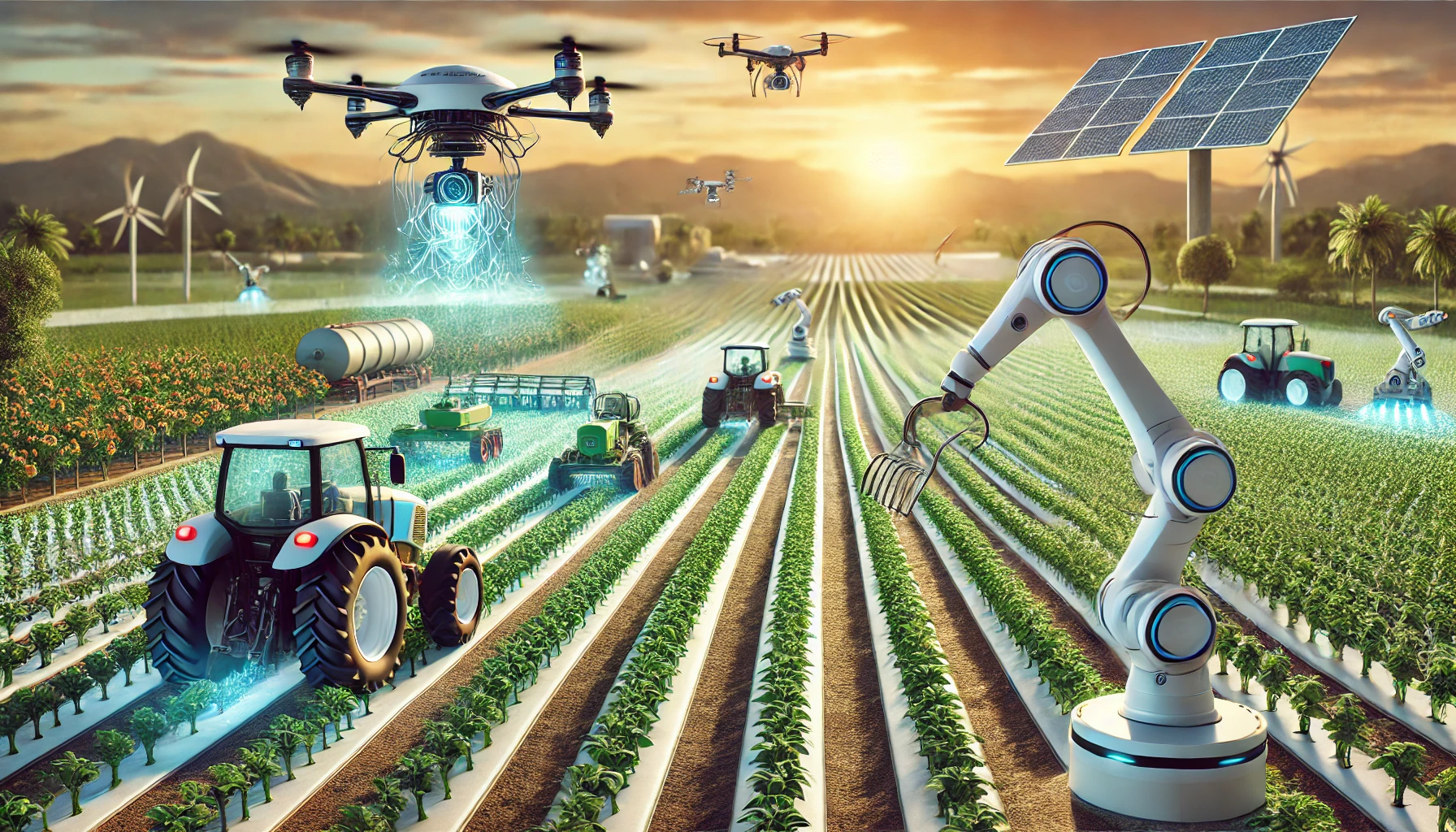
Autonomous tractors and harvesters are among the most significant advances in modern agriculture. These machines can plant seeds, water fields, and collect produce without a human operator sitting in the cab.
Farmers program these vehicles to follow precise routes and carry out specific tasks. Because they can operate continuously — day and night — they dramatically increase farm output. Labour costs drop, and farmers can redirect their attention to planning and management rather than manual fieldwork.
Companies developing autonomous farm equipment are making these machines smarter with each generation, improving their ability to navigate uneven terrain and adapt to changing field conditions.
Drones: A Bird’s-Eye View of Every Field
Agricultural drones fitted with high-resolution cameras and multispectral sensors give farmers a detailed aerial view of their land. This visibility helps identify problems early — before they spread and cause serious crop losses.
- Drones can detect pest infestations in specific zones, allowing targeted treatment.
- They identify dry patches where irrigation is insufficient.
- They flag diseased plants that need immediate attention.
- Some drones also carry out precision spraying, applying pesticides or fertilizers only where needed.
By catching issues early, farmers save both crops and money. Drone technology has become one of the most accessible robotic tools for farms of all sizes.
Robotic Harvesters: Picking Produce with Precision
Harvesting delicate crops like strawberries, tomatoes, and apples has always required skilled human hands. Robotic harvesters are now capable of doing this work with impressive accuracy.
These machines use cameras and sensors to identify ripe produce and pick it gently without causing damage. This is especially valuable in regions facing farm labour shortages, where crops can go unpicked and go to waste.
| Technology | Primary Use | Key Benefit |
|---|---|---|
| Robotic Harvester | Picking fruits and vegetables | Reduces crop waste and labour dependency |
| Autonomous Tractor | Planting, tilling, watering | 24/7 operation, lower labour costs |
| Agricultural Drone | Crop monitoring and spraying | Early problem detection, targeted treatment |
| Precision Irrigation Robot | Water management | Reduces water waste significantly |
Robotics and Sustainable Farming: Good for the Planet
Beyond productivity, agricultural robots are helping make farming more environmentally responsible. By applying water, fertilizers, and pesticides only where and when needed, robots cut down on chemical runoff that can pollute rivers and groundwater.
Healthier soil is another benefit. When chemicals are used sparingly and precisely, the natural balance of the soil is preserved over time. Many farm robots also consume less power than traditional heavy machinery, reducing the overall carbon footprint of agricultural operations.
For a country like India, where agriculture supports hundreds of millions of livelihoods and water scarcity is a growing concern, sustainable robotic farming holds enormous potential.
Challenges Farmers Face When Adopting Robotic Technology
Despite the clear benefits, widespread adoption of agricultural robotics faces real obstacles:
- High upfront cost: Advanced robotic systems remain expensive, putting them out of reach for small and marginal farmers.
- Technical skills gap: Operating and maintaining robots requires training that many farmers currently lack.
- Infrastructure limitations: Reliable internet connectivity and power supply are essential for smart farm equipment but are not always available in rural areas.
- Repair and support: Access to technical support and spare parts can be difficult in remote farming communities.
However, as technology matures and production scales up, costs are expected to fall. Government subsidies and cooperative farming models could also help smaller farms access robotic tools in the years ahead.
The future of farming is increasingly automated. As robotic systems become more affordable and easier to use, they will move from large commercial farms to smaller operations. Fully automated farms — where machines handle everything from sowing to harvesting — are no longer science fiction. They represent a practical path toward feeding a growing global population while using fewer natural resources. For farmers, researchers, and policymakers, investing in agricultural robotics today is an investment in food security for tomorrow.