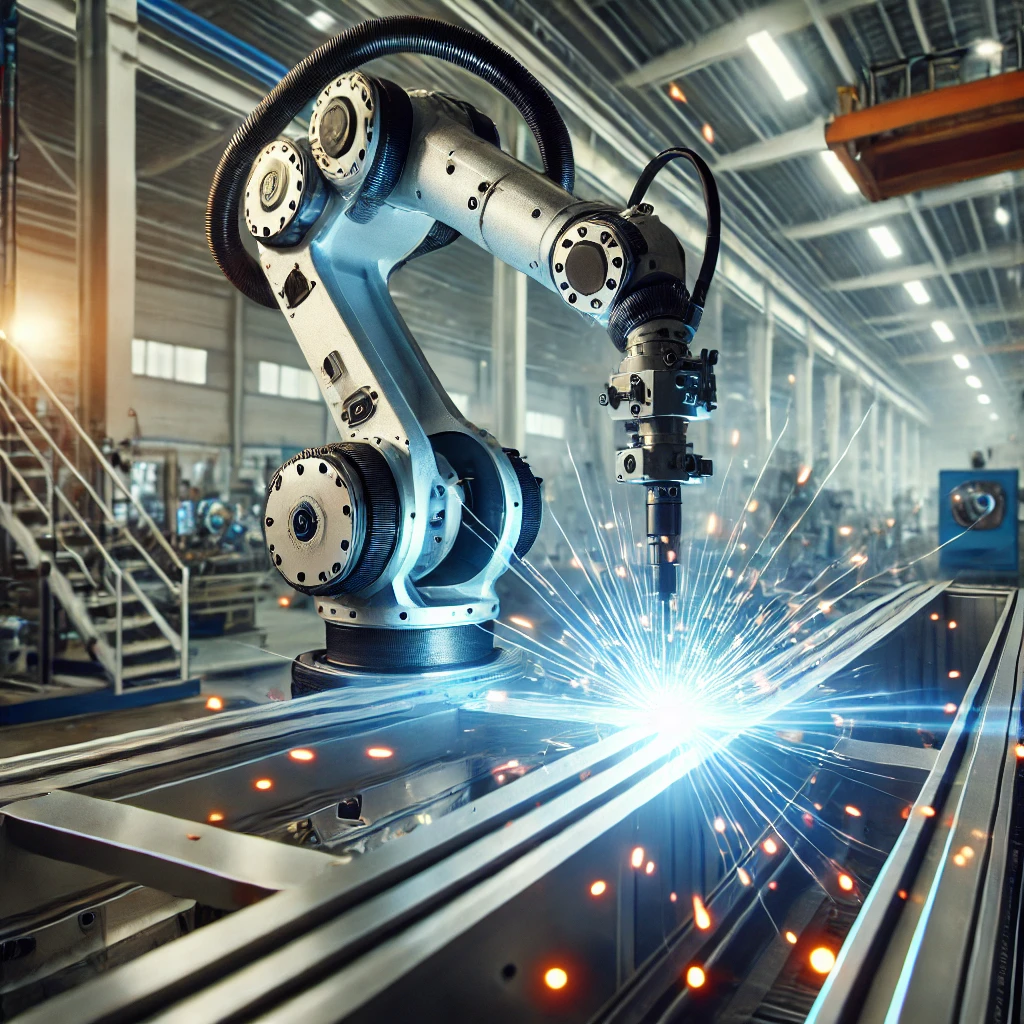

Collaborative robots, widely known as cobots, are reshaping how humans and machines work together on the factory floor and beyond. Unlike traditional industrial robots that operate behind safety cages, cobots are designed to share workspaces with people safely and efficiently. With rising labor costs and growing demand for automation, cobots are fast becoming a practical solution for businesses of all sizes across India and globally.
The Rise of Cobots in Modern Industry
The demand for cobots has grown sharply in recent years. As technology becomes more advanced and labor costs continue to climb, companies are looking for automation solutions that boost output without requiring massive capital investment.
What makes cobots particularly attractive is their accessibility. Small and mid-sized businesses, which often cannot afford large-scale industrial automation, can now deploy cobots to stay competitive. This democratization of automation is one of the biggest shifts happening in manufacturing and related sectors today.
How Collaborative Robots Actually Work
Cobots rely on a combination of advanced sensors and intelligent software algorithms to detect and respond to their surroundings in real time. This allows them to work safely alongside human workers without the need for physical barriers.
Here is what makes cobots technically distinct:
- Real-time obstacle detection: Sensors continuously scan the environment and adjust robot movement to avoid collisions.
- Easy programming: Many cobots can be taught new tasks by physically guiding the robot arm through the desired motion — no complex coding required.
- Integration-friendly design: Cobots are built to fit into existing production setups with minimal disruption.
- Task handling: They take over repetitive, physically demanding, or hazardous tasks, freeing human workers to focus on higher-value activities.
Key Benefits of Using Cobots
Cobots offer a range of practical advantages that make them appealing across industries:
- Enhanced Safety: Cobots adjust their movements in real time to prevent accidents, making shared workspaces safer for everyone.
- Flexibility: They can be reprogrammed quickly for different tasks, which is ideal for production lines that change frequently.
- Cost-Effective Automation: Compared to traditional industrial robots, cobots are significantly cheaper to install and maintain, lowering the barrier for smaller companies.
- Higher Productivity: By handling repetitive jobs, cobots allow human workers to focus on problem-solving, quality oversight, and innovation.
| Feature | Traditional Industrial Robot | Collaborative Robot (Cobot) |
|---|---|---|
| Safety Barriers Required | Yes | No |
| Ease of Programming | Complex | Simple, hand-guided |
| Cost | High | Moderate to Low |
| Flexibility | Limited | High |
| Human Collaboration | Not designed for it | Core feature |
Where Are Cobots Being Used?
Cobots are finding applications across a wide range of industries, improving efficiency, accuracy, and worker safety in each one:
- Manufacturing: Cobots assist with assembly lines, quality control checks, and packaging operations.
- Healthcare: They support surgical procedures, assist in patient rehabilitation, and safely handle hazardous or sterile materials.
- Logistics and Warehousing: Cobots handle picking, packing, and sorting tasks, speeding up order fulfillment in warehouses.
- Agriculture: They assist with planting, harvesting, and crop monitoring, helping farmers improve yield and reduce manual labor.
Types of Collaborative Robots
Not all cobots work the same way. There are four main types, each suited to different workplace needs:
- Power and Force Limiting Cobots: These stop immediately upon contact with a person or object, preventing injury.
- Speed and Separation Monitoring Cobots: These adjust their speed based on how close a human is, maintaining a safe working distance at all times.
- Hand-Guided Cobots: Workers physically guide these robots through tasks to teach them new movements, making programming intuitive and fast.
- Safety-Rated Monitored Stop Cobots: These pause all movement when a person enters their working zone and resume only when the area is clear again.
As industries across India and the world continue to adopt automation, cobots represent a practical, affordable, and human-friendly path forward. They do not replace workers — they work with them, handling the tasks that are repetitive or risky so that people can focus on work that truly requires human judgment and creativity. For businesses looking to scale operations without losing the human touch, cobots offer a compelling and increasingly accessible solution.