Wearable technology has already changed how we track fitness, stay connected, and manage health. But the next big shift may go far beyond smartwatches and fitness bands. Brain-Computer Interfaces, commonly known as BCIs, are emerging as a technology that lets people control devices using only their thoughts — no hands, no voice, no touch required.
What Is a Brain-Computer Interface?
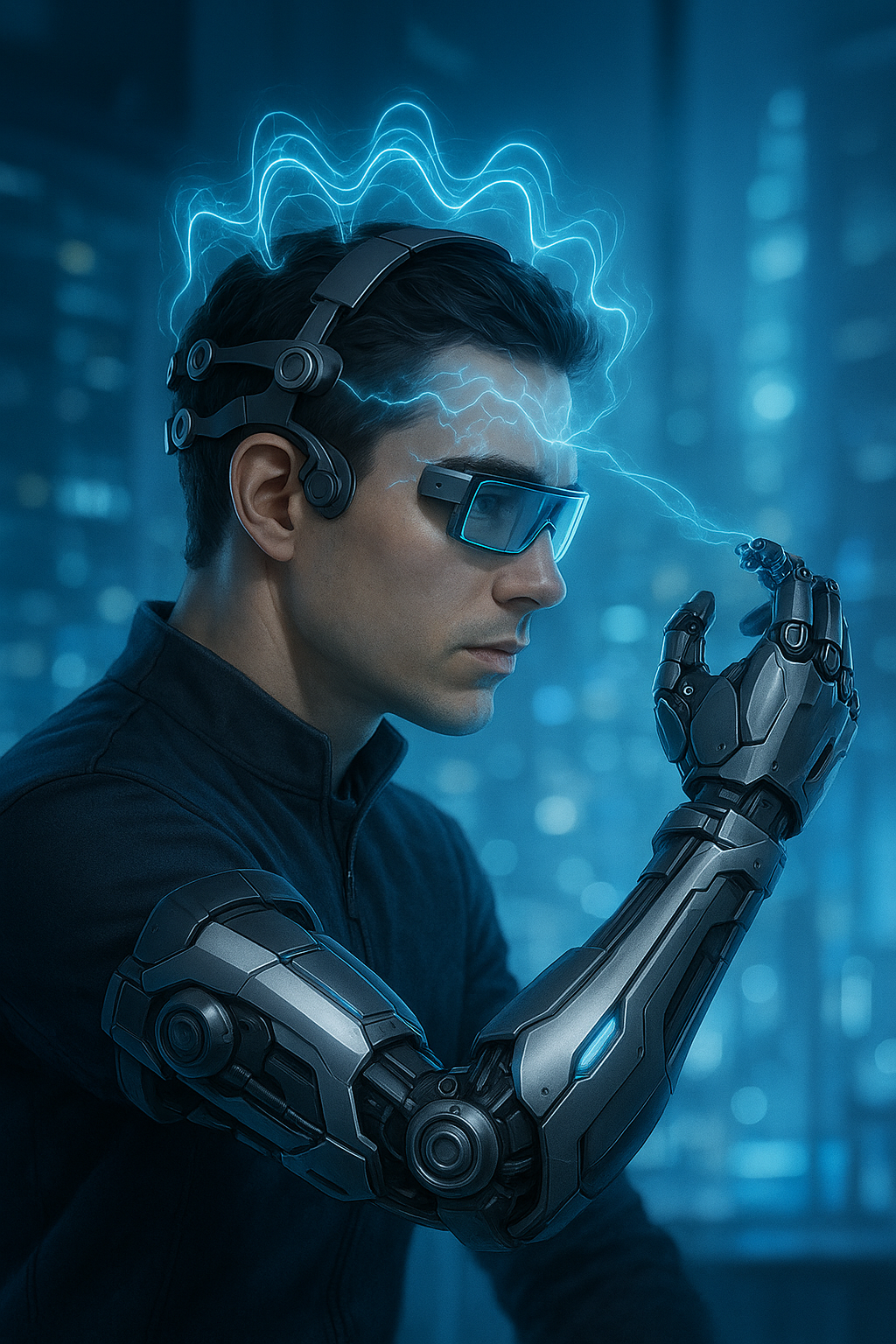
A Brain-Computer Interface is a system that builds a direct link between the human brain and a digital device. Instead of pressing buttons or swiping screens, a BCI reads electrical signals produced by your brain and converts them into commands that a device can follow.
Think of it this way — typing without a keyboard, moving a cursor without a mouse, or scrolling through a screen without lifting a finger. All of it happens through thought alone.
BCIs detect these brain signals using sensors, process them through software, and translate them into real-world actions. The technology is not science fiction anymore. It is being tested and used in real environments today.
How Do BCIs Actually Work?
Every time you think or plan a movement, your brain produces electrical signals. BCIs capture these signals using sensors placed on or inside the skull. Software then reads and decodes the signals and turns them into specific actions — like moving a robotic arm, selecting a word on a screen, or navigating a menu.
There are two main types of BCIs:
- Non-invasive BCIs: These use external headsets, such as EEG (electroencephalography) caps, placed on the scalp to detect brainwaves. They are safer and easier to use but may pick up less precise signals.
- Invasive BCIs: These involve small chips or electrodes surgically implanted inside the brain. They provide much more accurate readings but carry medical risks associated with surgery.
Each type has its own use case depending on the level of precision needed and the user’s medical condition.
The Role of Machine Learning in Brain-Tech
One of the key reasons BCIs are becoming more capable is the use of machine learning and signal processing software. These systems learn how an individual’s brain behaves over time and get better at recognising patterns with repeated use.
The more a person uses a BCI, the more accurately the system can interpret their brain signals. It works in a way similar to how a smartphone keyboard learns your typing habits and starts predicting words more accurately. This personalisation makes BCIs faster and more reliable for each individual user.
Where Are BCIs Being Used Right Now?
BCIs are no longer limited to research labs. They are already making a real difference in several areas:
- Medical rehabilitation: People with paralysis are using BCIs to control wheelchairs and robotic arms, giving them greater independence in daily life.
- Communication for non-verbal individuals: BCIs allow people who cannot speak due to conditions like ALS or locked-in syndrome to communicate by forming words through thought.
- Gaming and virtual reality: Several companies are exploring mind-controlled gaming experiences where players interact with virtual environments using brain signals instead of controllers.
- Mental health monitoring: Researchers are studying how BCIs could detect early signs of stress, anxiety, or depression by reading brain activity patterns.
| BCI Type | Method | Best Use Case |
|---|---|---|
| Non-invasive | External EEG headset | Gaming, mental health, consumer wearables |
| Invasive | Implanted brain chip | Medical rehabilitation, paralysis treatment |
Could BCIs Replace Today’s Wearables?
The possibility of controlling a smartwatch, smartphone, or smart glasses purely through thought is no longer far-fetched. If BCIs become widely available, they could reshape how people interact with all kinds of technology.
Potential benefits include:
- Faster and more direct control of devices without physical input
- Greater accessibility for people living with physical disabilities
- More responsive and personalised technology experiences
- Hands-free operation in situations where physical interaction is not possible
This would represent a significant leap beyond what current wearables can offer.
Key Challenges and Concerns Around BCIs
Despite the promise, BCIs come with serious concerns that need to be addressed before the technology can become mainstream:
- Privacy of brain data: Brain signals are among the most personal forms of data. Protecting this information from misuse or unauthorised access is a major challenge.
- Ethical questions: Should companies be allowed to collect and analyse a person’s thought patterns? Clear consent and regulation frameworks are needed.
- High cost and limited access: Advanced BCI devices are currently expensive and not widely available to the general public.
- Medical risks for invasive devices: Implanted BCIs carry surgical risks and long-term health unknowns that require careful study.
These challenges must be resolved through strong regulation, ethical guidelines, and continued research before BCIs can be safely adopted at scale.
Brain-Computer Interfaces hold genuine potential to change how humans interact with technology. From helping paralysed patients regain independence to enabling thought-controlled consumer devices, BCIs are moving from concept to reality. However, privacy, ethics, and cost remain real barriers. As the technology matures, the decisions made around its regulation and accessibility will determine how widely — and how safely — it reaches everyday users.