The metaverse and cryptocurrency are two of the most talked-about developments in the digital world right now. Separately, each carries significant weight. Together, they are building a new kind of economy — one where people can live, work, trade, and earn entirely in virtual spaces. Here is a clear breakdown of what this means and why it matters.
What Is the Metaverse?
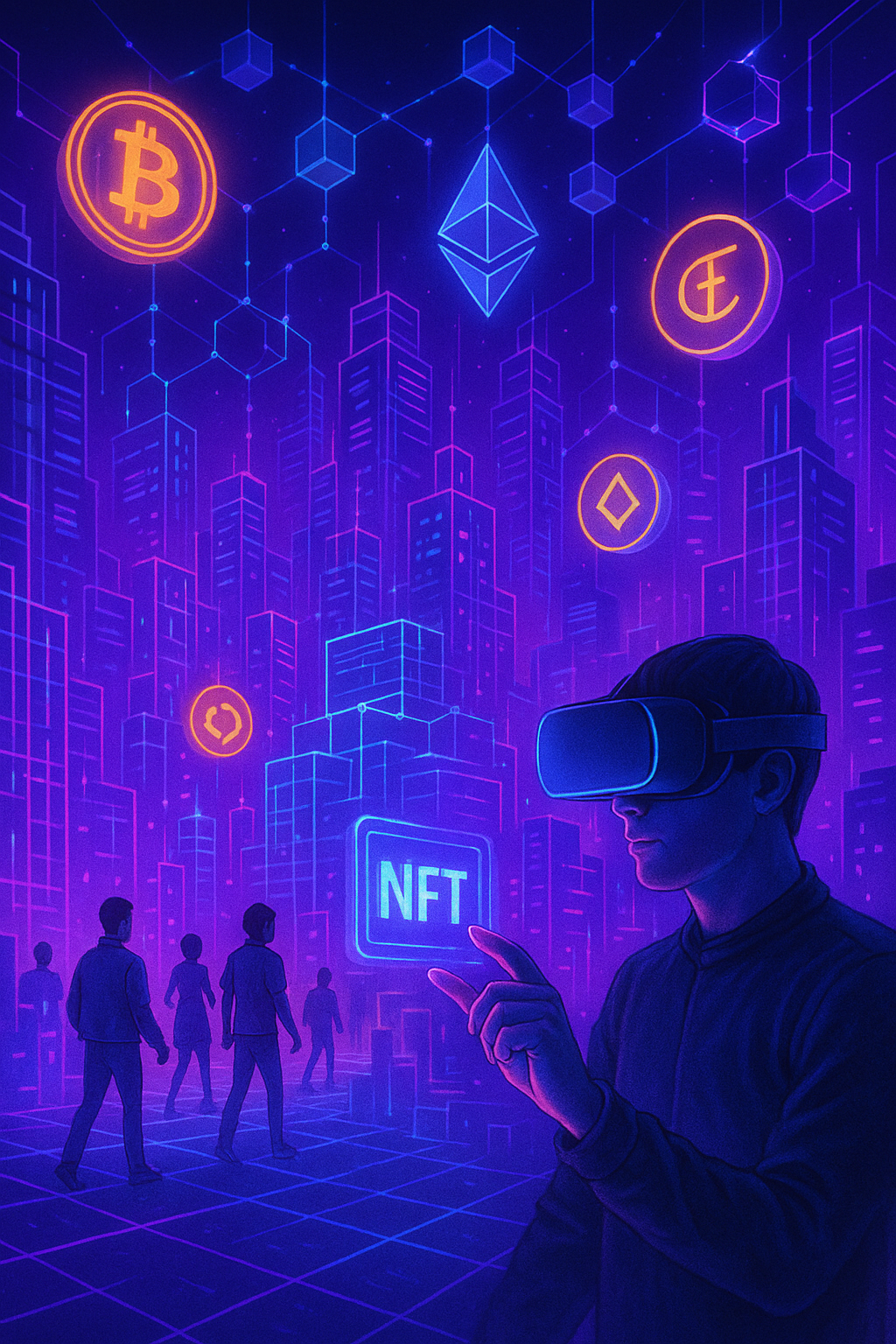
The metaverse is a shared virtual universe where people interact using digital avatars. It goes beyond browsing a website — users actually step inside a 3D digital world where they can socialize, attend events, play games, shop, and even run businesses.
Some of the most well-known metaverse platforms currently active include:
- Decentraland — a blockchain-based virtual world where users buy and develop digital land
- The Sandbox — a gaming platform where players create, own, and monetize virtual experiences
- Meta’s Horizon Worlds — Meta’s social virtual reality platform built for immersive interaction
These platforms are still in early stages, but they already give a clear picture of where the internet is heading — toward fully immersive, interactive digital environments.
How Cryptocurrency Powers the Metaverse
Cryptocurrency acts as the native currency of the metaverse. Unlike traditional money issued by banks or governments, crypto runs on blockchain technology — a decentralized digital ledger that records transactions securely and transparently.
Inside metaverse platforms, users spend and earn cryptocurrencies to carry out real economic activity. Some of the most commonly used tokens include:
- Ethereum (ETH) — widely used for transactions and NFT purchases across platforms
- MANA — the native currency of Decentraland, used to buy virtual land and goods
- SAND — The Sandbox’s token, used for in-game purchases and governance
Just as you would swipe a card at a physical store, users spend these tokens to buy digital items, access events, or trade assets inside virtual worlds.
Virtual Economies Are Already Functioning
What makes this combination particularly significant is that real economic activity is already happening inside the metaverse. People are not just playing games — they are building businesses and earning income.
Here is what users are actively doing inside metaverse platforms today:
- Buying and selling virtual land — digital plots that hold real monetary value
- Opening virtual shops and art galleries — businesses that serve other users in the metaverse
- Hosting concerts, conferences, and events — ticketed experiences paid for with crypto
- Trading NFTs and digital services — creators earn directly from their work
Designers, developers, artists, and event organizers are among those already generating income through these virtual spaces.
NFTs: Proof of Ownership in the Digital World
Non-Fungible Tokens, or NFTs, are a critical part of how the metaverse economy works. An NFT is a unique digital asset recorded on the blockchain. It can represent a virtual outfit, a piece of artwork, a song, or even a plot of virtual land.
What makes NFTs valuable is that they give users verifiable ownership. If you buy a digital jacket for your avatar using an NFT, the blockchain confirms it belongs to you. Nobody can copy it or take it away. This creates genuine scarcity and ownership in a space where digital files can otherwise be duplicated endlessly.
| Feature | Traditional Digital Asset | NFT-Based Asset |
|---|---|---|
| Ownership Proof | None | Blockchain-verified |
| Duplicability | Easily copied | Unique, cannot be duplicated |
| Transferability | Limited | Freely tradeable |
| Monetary Value | Rarely holds value | Can appreciate in value |
Key Benefits and Challenges of This Combination
The merging of the metaverse and cryptocurrency brings real advantages, but it also comes with challenges that users and regulators are still working through.
Benefits:
- Decentralization — No single company controls the entire system, giving users more power over their assets
- Global access — Anyone with an internet connection and a crypto wallet can participate, regardless of location
- New income streams — Creators, developers, and entrepreneurs can earn real money in virtual environments
- True digital ownership — Blockchain and NFTs ensure users genuinely own what they buy
Challenges:
- Price volatility — Cryptocurrency values can swing sharply, making virtual assets unpredictable in worth
- Security risks — Crypto wallets and NFTs can be targeted by hackers if not properly secured
- Low adoption — Many people are still unfamiliar with how the metaverse and crypto work together
- Regulatory uncertainty — Governments around the world are still figuring out how to handle taxation and digital rights in virtual economies
These are not small hurdles. But as technology matures and awareness grows, many of these barriers are expected to reduce over time.
The combination of the metaverse and cryptocurrency is not a distant concept — it is already shaping how people interact, trade, and earn online. While challenges remain, the foundation of a functioning digital economy is clearly being laid. For anyone curious about where the internet is heading, understanding this relationship is a strong starting point.
Frequently Asked Questions
Different metaverse platforms use different cryptocurrencies. Decentraland uses MANA, The Sandbox uses SAND, and Ethereum is widely used across multiple platforms for transactions and NFT purchases.
Yes. People are already earning real income in the metaverse by selling virtual land, trading NFTs, running virtual businesses, and hosting paid events. The earnings are made in cryptocurrency, which can be converted to real-world currency.
The main risks include cryptocurrency price volatility, security threats like hacking of crypto wallets and NFTs, and regulatory uncertainty as governments are still developing rules around digital assets and virtual economies.