Bone conduction headphones are gaining popularity among fitness enthusiasts, commuters, and people with hearing difficulties. Unlike traditional earbuds or over-ear headphones, they work in a completely different way — and for many users, that difference is a big advantage.
What Are Bone Conduction Headphones?
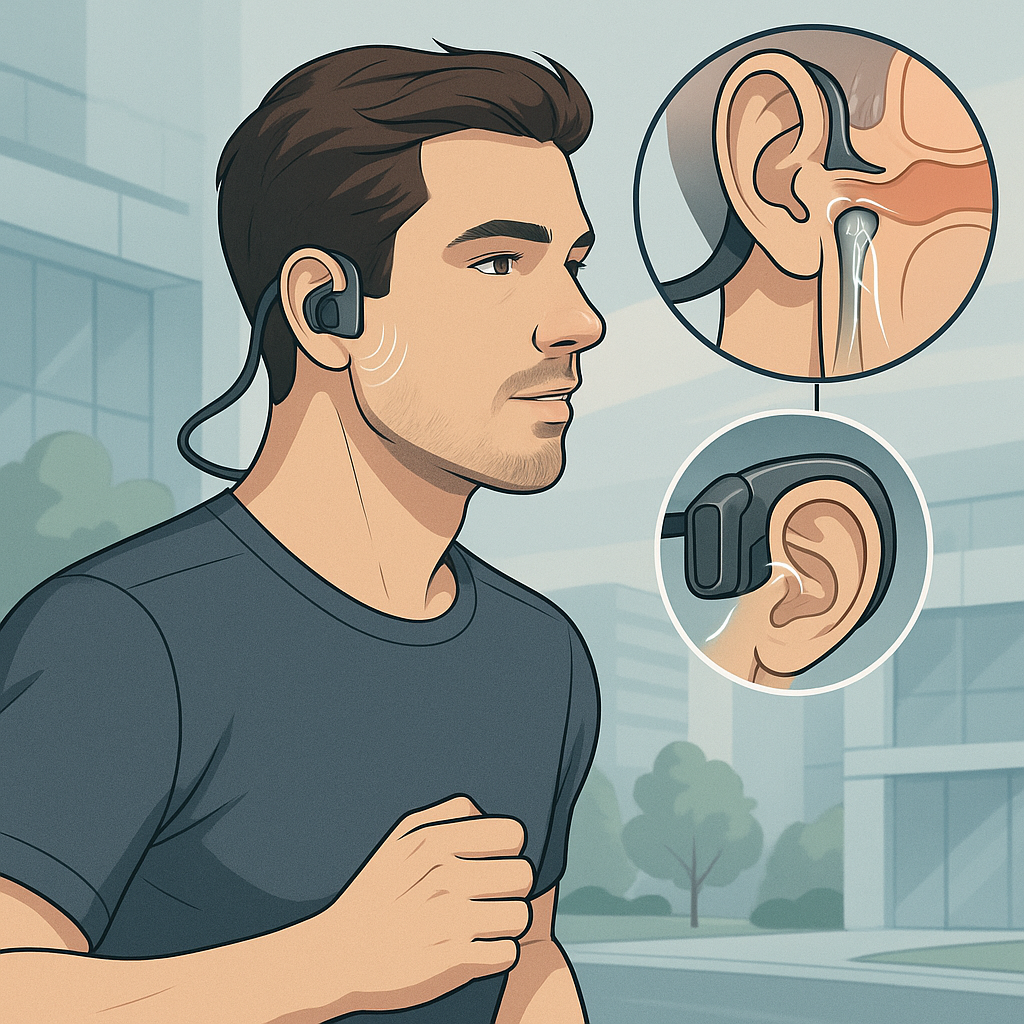
Bone conduction headphones do not sit inside or over your ears. Instead, they rest on your cheekbones, just in front of your ears. They send sound directly to your inner ear through vibrations that travel through your facial bones — completely bypassing the eardrum.
This technology is not entirely new. It has been used in hearing aids and military communication devices for years. Now, it is available in consumer-friendly wearables for everyday use.
How Does Bone Conduction Technology Work?
The process is straightforward but fascinating. Here is how sound reaches your brain with bone conduction headphones:
- Your phone or music player sends an audio signal to the headphones.
- The headphones convert that signal into tiny, precise vibrations.
- These vibrations travel through your cheekbones directly to the cochlea in your inner ear.
- Your brain processes the vibrations as sound — just as it normally would.
Because the eardrum plays no role in this process, bone conduction headphones can be genuinely useful for people who have hearing loss caused by outer or middle ear conditions. The inner ear still receives the sound signal clearly.
Key Benefits of Bone Conduction Headphones
There are several strong reasons why people are switching to or adding bone conduction headphones to their daily routine:
- Situational awareness: Since your ears remain completely open, you can hear traffic, conversations, and environmental sounds while listening to music or taking calls. This is especially important for runners, cyclists, and walkers on busy roads.
- All-day comfort: Without anything pressing into or over your ears, these headphones feel light and cause far less fatigue during extended use.
- Hearing accessibility: People with conductive hearing loss — caused by outer or middle ear problems — may still be able to enjoy audio content through bone conduction, where standard earbuds fail them.
- Built for active lifestyles: Most bone conduction headphones are sweat-resistant or waterproof, making them suitable for workouts, hiking, outdoor jobs, and even swimming in some models.
- No ear canal pressure: Users who find in-ear headphones uncomfortable or painful due to ear canal sensitivity find bone conduction headphones a practical alternative.
Drawbacks You Should Know About
Bone conduction headphones are not perfect for every situation. Before buying, consider these limitations:
- Audio quality: Bass and low-frequency sounds tend to feel less rich and full compared to traditional over-ear headphones or premium earbuds. Audiophiles may find the sound quality underwhelming.
- Noise in loud environments: Because your ears stay open, background noise can interfere with what you are listening to. They are not ideal for noisy offices, crowded trains, or construction zones.
- Vibration sensation: At high volumes, some users notice a mild vibration feeling on their cheekbones, which can be distracting.
- Privacy: Sound can leak slightly to people nearby, especially at higher volumes.
| Feature | Bone Conduction Headphones | Traditional Headphones |
|---|---|---|
| Ear Blockage | None — ears stay open | Partial or full blockage |
| Situational Awareness | High | Low to moderate |
| Sound Quality | Moderate | High |
| Comfort for Long Use | Very comfortable | Varies by type |
| Suitable for Hearing Loss | Yes (conductive hearing loss) | Limited |
Who Should Consider Buying Bone Conduction Headphones?
These headphones are not for everyone, but they are an excellent fit for specific users:
- Runners, cyclists, and walkers who want music without losing awareness of their surroundings.
- People with outer or middle ear hearing loss who cannot use standard earbuds effectively.
- Office workers and commuters who need to stay available for announcements or conversations while listening to audio.
- Fitness enthusiasts who need sweat-proof, durable headphones for intense workouts.
- Anyone with ear canal sensitivity who finds in-ear headphones painful or uncomfortable over time.
Bone conduction headphones represent a practical and thoughtful audio solution for people who prioritise safety, comfort, and accessibility over pure sound performance. If you spend time outdoors, exercise regularly, or have specific hearing needs, they are well worth considering as your next pair of headphones.
Frequently Asked Questions
Yes, bone conduction headphones are generally safe for daily use. Since they do not block the ear canal, they reduce the risk of ear canal irritation. However, listening at very high volumes for extended periods can still affect hearing health, so moderate volume use is recommended.
Bone conduction headphones can benefit people with conductive hearing loss, which is caused by problems in the outer or middle ear. Since the sound bypasses the eardrum and travels directly to the inner ear, these users may still hear audio clearly. However, they may not help those with sensorineural hearing loss affecting the inner ear.
Bone conduction headphones generally offer moderate sound quality. They may lack the deep bass and rich audio detail that premium over-ear or in-ear headphones provide. They are best suited for calls, podcasts, and casual music listening rather than high-fidelity audio experiences.