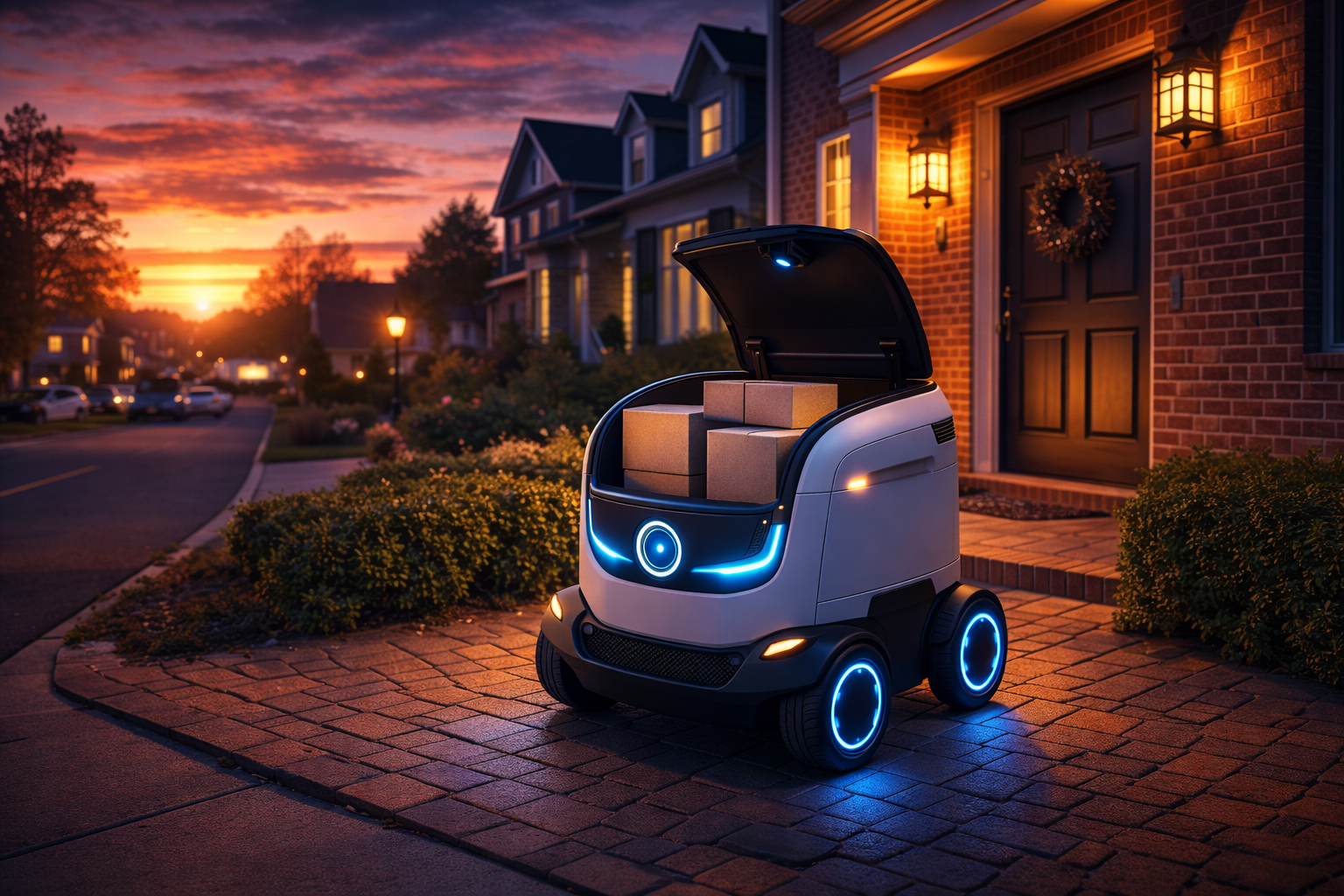
Fast delivery has become a basic expectation for millions of online shoppers and food delivery customers. But getting a package from a local hub to someone’s doorstep — the so-called last mile — remains one of the most expensive and complex parts of the entire supply chain. Autonomous delivery robots are now stepping in to solve this problem, and companies like Starship Technologies, Nuro, and Amazon are already leading the way.
What Are Autonomous Delivery Robots?
Autonomous delivery robots are self-driving machines built to transport goods without any human involvement. They navigate streets and sidewalks using a combination of technologies:
- Computer vision to identify and interpret surroundings
- Lidar sensors to detect obstacles and measure distances
- GPS navigation for route planning and location tracking
- AI decision-making systems to respond to real-world situations in real time
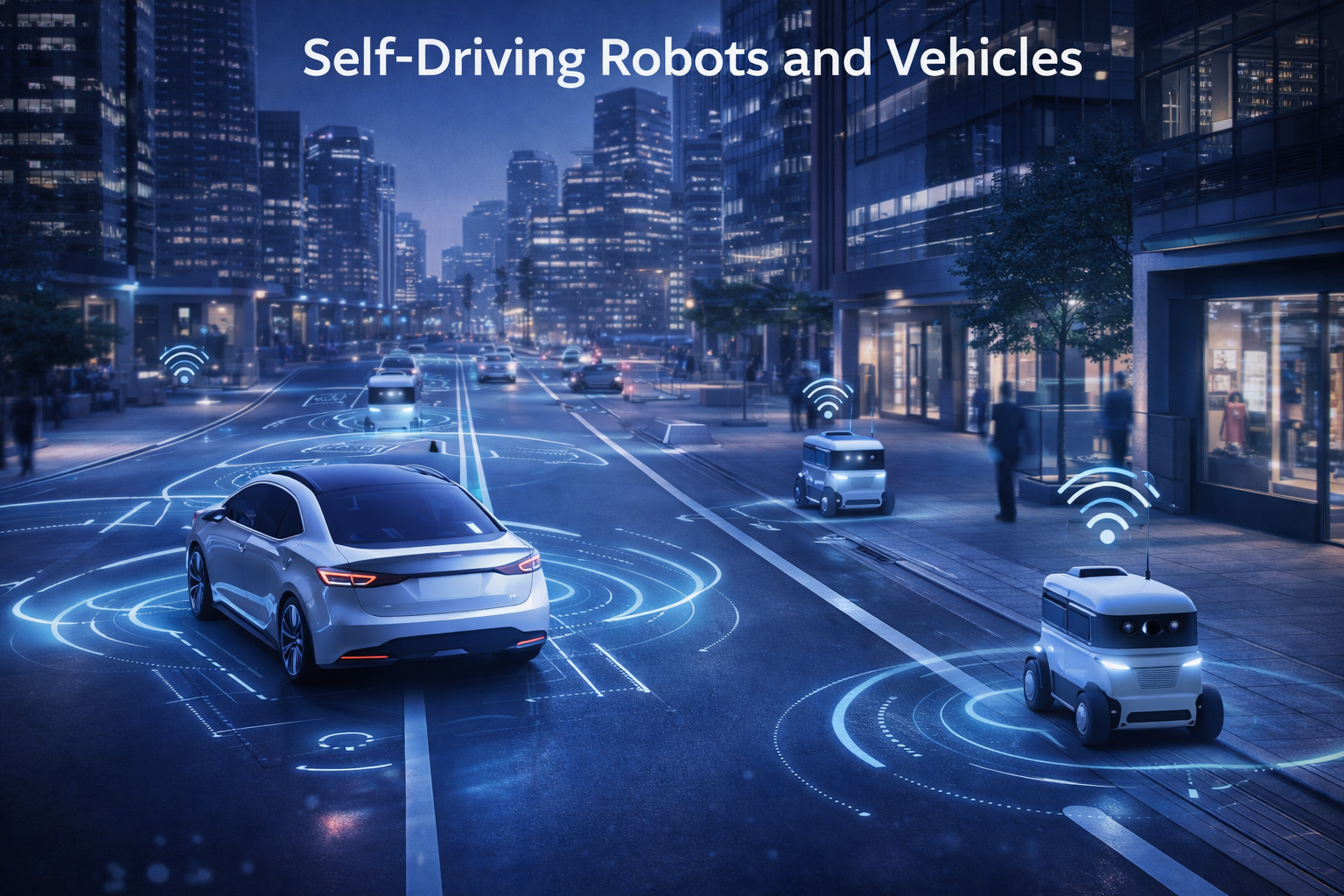
These robots can detect pedestrians, avoid obstacles, cross streets safely, and deliver packages directly to a customer’s door. Some operate on sidewalks, while others function as compact autonomous road vehicles designed for urban environments.
Why Last-Mile Delivery Costs So Much
The last mile accounts for a significant share of total shipping costs. Traffic congestion, rising fuel prices, labor expenses, and failed delivery attempts all push operational costs higher — especially in densely populated cities.
Autonomous delivery robots help reduce these costs in several key ways:
- Operating without human drivers eliminates labor costs
- Electric power replaces expensive fuel
- Robots can run continuously without shift limitations or breaks
- AI algorithms optimize delivery routes to save time and energy
For businesses, this translates directly into faster deliveries at lower cost — a competitive advantage in the crowded e-commerce and food delivery market.
Why Smart Cities Are Ideal for Robotic Delivery
Smart cities are built around connected infrastructure — IoT systems, digital traffic monitoring, intelligent road networks, and real-time data sharing. This environment is well-suited for autonomous delivery robots that rely on accurate mapping and live data to function effectively.
Urban areas in countries like the United States and Estonia have already run successful pilots of autonomous delivery services. University campuses and tech-forward neighborhoods are often among the first to adopt these systems because they offer controlled environments with high delivery demand and pedestrian-friendly layouts.
As urban infrastructure becomes more connected, robotic delivery systems will integrate more naturally with traffic management platforms and city-wide mapping networks.
How AI Makes Delivery Robots Smarter Over Time
Artificial intelligence is the core technology powering these delivery robots. AI systems analyze the robot’s surroundings in real time, predict pedestrian movement, and adjust routes dynamically based on changing conditions.
Machine learning allows each robot to improve its navigation with every trip it completes. The more deliveries a robot makes, the better it gets at handling complex situations — narrow paths, busy intersections, or unexpected obstacles.
Cloud connectivity enables centralized fleet management, real-time tracking for customers, and remote supervision by operators. The result is a data-driven logistics network that becomes more efficient over time without requiring constant human oversight.
Environmental Impact and Challenges Ahead
Most autonomous delivery robots run on electric power, which means lower carbon emissions and reduced noise pollution compared to traditional petrol or diesel delivery vans. By optimizing routes and cutting idle time, these systems can also help reduce traffic congestion in busy city centers — a meaningful benefit for urban sustainability goals.
However, widespread adoption still faces real obstacles:
- Regulations vary significantly by country and city — some regions restrict sidewalk robots or autonomous road vehicles entirely
- Public safety concerns require cities to verify that robots can operate without endangering pedestrians
- Harsh weather conditions like heavy rain or snow can affect robot performance
- Competition from drone delivery systems, being tested by companies like Zipline, adds another dimension to the logistics race
Ground-based robots currently face fewer airspace restrictions than drones, which may give them a scaling advantage in dense urban areas in the near term.
| Feature | Ground Delivery Robots | Drone Delivery |
|---|---|---|
| Operating Environment | Sidewalks and roads | Airspace |
| Regulatory Hurdles | Moderate | High (airspace rules) |
| Weather Sensitivity | Moderate | High |
| Payload Capacity | Higher | Lower |
| Urban Scalability | High | Limited in dense areas |
What the Future of Urban Delivery Could Look Like
Autonomous delivery robots are expected to become a common sight in cities within the next decade. The urban logistics landscape could soon include:
- Dedicated robotic delivery lanes on city streets
- Smart lockers integrated with robotic delivery fleets
- AI-powered logistics hubs that coordinate multiple delivery methods
- Hybrid systems combining ground robots and drones for different delivery needs
As technology improves and city regulations catch up with innovation, robotic delivery will shift from a novelty to a standard part of urban life. Consumers may soon receive their groceries or online orders from a compact, self-navigating robot rolling up to their front door.
Autonomous delivery robots address real, pressing problems — high delivery costs, urban congestion, and environmental impact. With strong investment from major technology companies and growing acceptance in smart cities worldwide, last-mile automation is picking up speed. The next package you order online might just arrive on wheels, with no driver in sight.