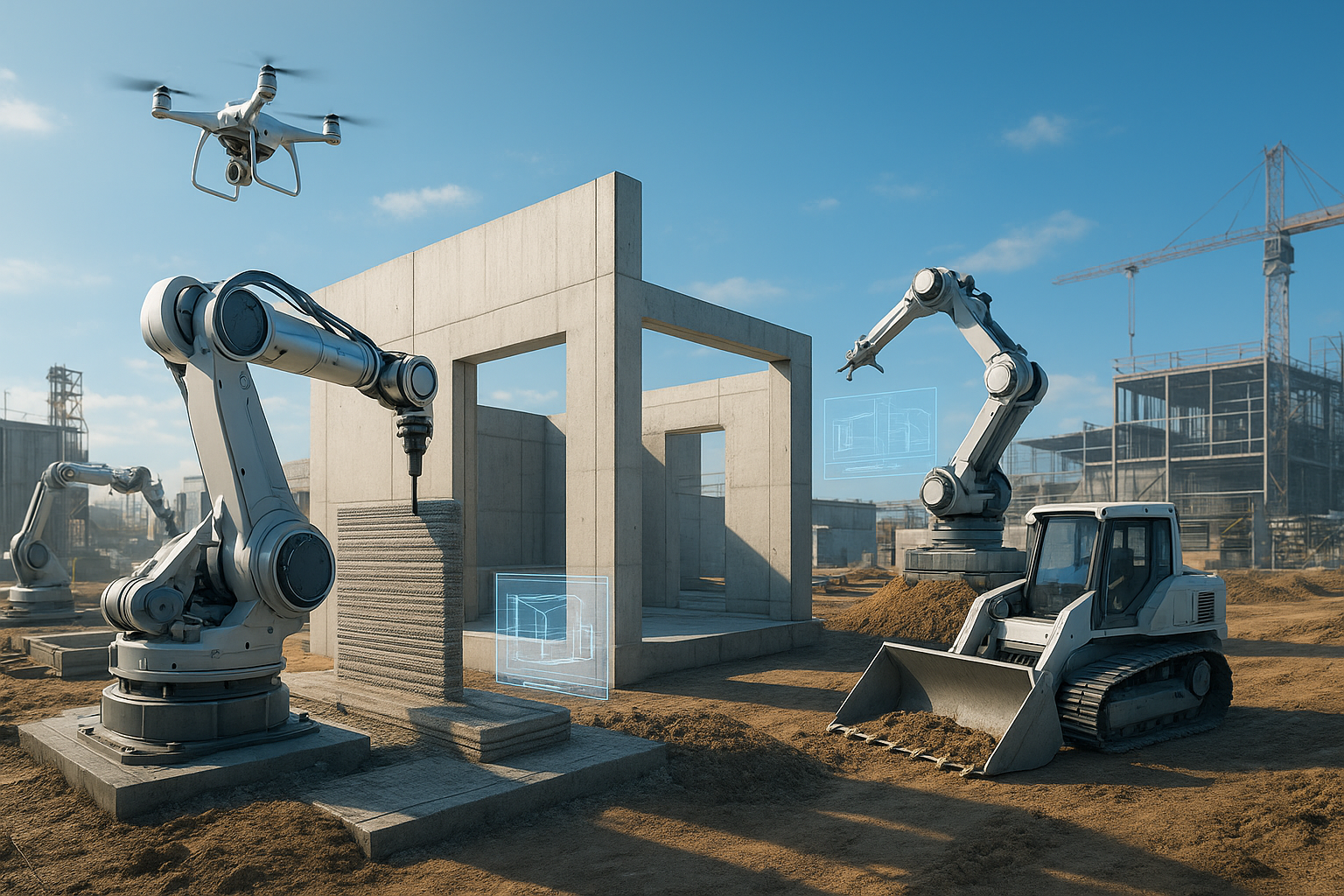
The construction industry is going through one of its biggest shifts in decades. Robots, large-scale 3D printers, drones, and intelligent software are now working together to build structures with minimal human involvement. This approach — known as autonomous construction engineering — is making job sites faster, safer, and more efficient than ever before.
How Robotics Is Changing Construction Sites
Robots are becoming a common presence on modern construction sites. They are no longer just experimental tools — they are actively performing tasks that were once considered too dangerous or physically demanding for workers.
Here is what construction robots can do today:
- Print concrete walls layer by layer using large robotic arms
- Load and unload bricks and heavy building materials without human help
- Scan terrain using sensors to prepare land before construction begins
- Lift heavy objects with precision using automated machinery
- Monitor job sites through drones that capture aerial footage and track progress
These robotic systems reduce human error, improve safety on hazardous sites, and speed up the overall building process significantly.
The Rise of 3D Printing in Building Projects
Large-scale 3D printing — also called additive manufacturing — has become one of the most talked-about technologies in construction. Giant printers can now create walls, floors, and structural components by depositing concrete or specially formulated materials in precise layers.
The key advantages of 3D printing in construction include:
- Ability to build a basic house structure in just 1 to 2 days
- Significant reduction in material waste compared to traditional methods
- Lower labour costs due to reduced workforce requirements
- Freedom to create complex and custom architectural designs
- High structural accuracy since the printer follows a digital blueprint exactly
Several countries have already used this technology to print functional homes and even bridges, proving that 3D printing is no longer just a concept — it is a working reality.
What Happens When Robotics and 3D Printing Work Together
The real power of autonomous construction comes when robotics and 3D printing are combined into a single integrated workflow. In a fully automated construction system, different machines handle different stages of the project simultaneously.
| Technology | Role in Autonomous Construction |
|---|---|
| Ground Preparation Robots | Level and prepare the site before building begins |
| 3D Construction Printers | Build walls and structural components layer by layer |
| Drones | Monitor accuracy and track construction progress from above |
| AI Control Software | Manage and coordinate the entire operation in real time |
| Autonomous Utility Machines | Install pipes, cables, and other internal systems |
This kind of coordinated system creates a construction workflow that is highly precise, significantly faster, and requires very little human intervention at any stage.
Key Benefits of Autonomous Construction Engineering
Shifting to autonomous construction methods offers clear advantages across multiple areas:
- Faster project completion: Tasks that once took months can now be finished in weeks, cutting down project timelines dramatically.
- Lower overall costs: Fewer workers and less material waste mean reduced expenses for developers and clients.
- Higher precision and quality: Robots and 3D printers follow digital designs exactly, leaving little room for human error.
- Improved worker safety: Dangerous tasks like heavy lifting and working at heights are handled by machines, keeping human workers out of harm’s way.
- Eco-friendly outcomes: 3D printing uses only the material needed for each layer, producing far less waste than conventional construction methods.
What the Future of Fully Automated Construction Sites Looks Like
The construction industry is moving steadily toward fully automated job sites. In the near future, we can expect to see:
- Teams of robots working in coordination across large construction zones
- Self-driving construction vehicles that transport materials without human drivers
- Intelligent software systems managing entire project workflows from start to finish
- Buildings designed digitally and constructed directly from those templates with custom architecture
This shift will make construction faster, safer, and more sustainable — addressing long-standing challenges like labour shortages, rising material costs, and environmental impact.
Autonomous construction engineering is not a distant future concept. It is already happening in various parts of the world, and its adoption is expected to grow rapidly as the technology becomes more affordable and accessible to builders of all scales.