
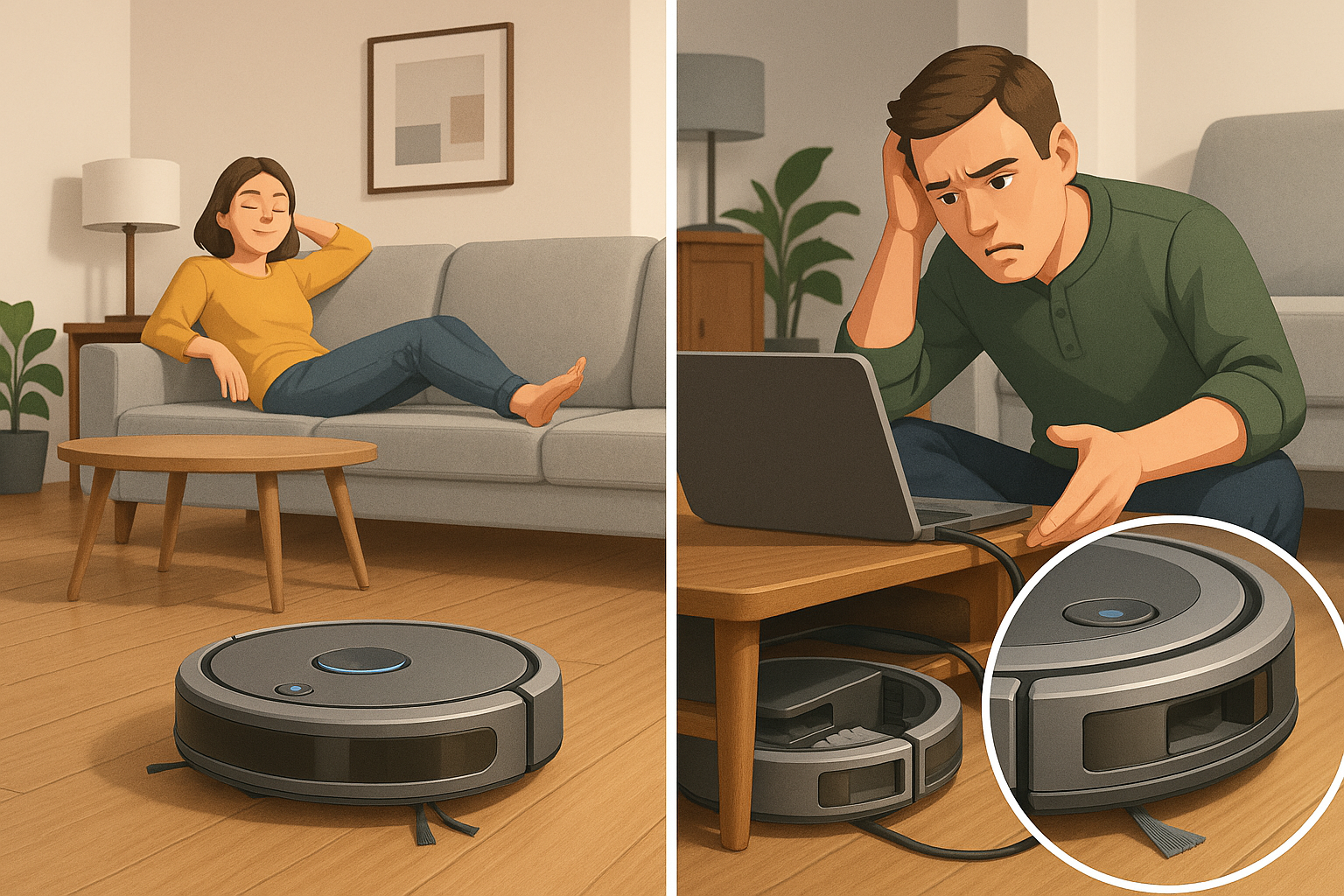
Robot vacuums have gone from being a novelty gadget to a serious contender in the smart home space. With promises of hands-free cleaning and app-based control, they sound like a dream. But before you spend your money, it helps to understand exactly what these devices can and cannot do.
What Is a Robot Vacuum and How Does It Work?
A robot vacuum is a compact, disc-shaped device that cleans your floors automatically. It uses built-in sensors to navigate around furniture, avoid stairs, and map out your home. Most models connect to a smartphone app, letting you set cleaning schedules, choose specific rooms, or start a session remotely. When the battery runs low, many models return to their charging dock on their own.
Higher-end models from brands like iRobot Roomba, Roborock, Ecovacs, and Shark come with advanced features such as:
- LiDAR or camera-based home mapping
- Automatic dirt detection
- Voice assistant support via Amazon Alexa or Google Assistant
- Self-emptying dustbins
- Mopping functions combined with vacuuming
Key Benefits of Owning a Robot Vacuum
There are several genuine advantages that make robot vacuums appealing to a wide range of households.
- Hands-free convenience: Set a schedule and let it clean while you work, sleep, or spend time with family.
- Daily maintenance made easy: For homes with pets or children, daily cleaning keeps hair, crumbs, and dust under control without effort.
- Reaches tight spots: Their low-profile design allows them to clean under beds, sofas, and other furniture that standard vacuums struggle to reach.
- Smart home integration: Many models work with voice commands and can be controlled through popular smart home platforms.
- Time savings: Automating routine floor cleaning frees up meaningful time each week.
Drawbacks You Should Consider Before Buying
Robot vacuums are not perfect for every home or every situation. Here are the honest limitations:
- Higher upfront cost: A reliable robot vacuum typically costs more than a standard corded vacuum. Budget models often compromise on navigation and suction power.
- Not a replacement for deep cleaning: On thick carpets or heavily soiled areas, robot vacuums may not perform as well as a traditional upright or canister vacuum.
- Can get stuck: Loose cables, thick rugs, and cluttered floors can trap the device mid-clean, especially on cheaper models without smart obstacle detection.
- Regular maintenance needed: You still need to empty the dustbin frequently, clean the brushes, and occasionally replace filters or side brushes.
- Battery limitations: Smaller or older models may not cover a large home in a single session and may need to recharge before finishing.
Robot Vacuum vs Regular Vacuum: A Quick Comparison
| Feature | Robot Vacuum | Regular Vacuum |
|---|---|---|
| Automation | Fully automatic | Manual operation |
| Deep Cleaning | Limited on thick carpets | Strong performance |
| Cost | Higher upfront cost | Generally more affordable |
| Tight Spaces | Excellent reach under furniture | Limited by size and hose |
| Maintenance | Bin emptying, brush cleaning | Bag or bin replacement |
| Smart Features | App control, scheduling, voice commands | None typically |
Who Should Buy a Robot Vacuum?
A robot vacuum makes the most sense for certain types of households. It works best if:
- You have a busy schedule and want daily floor maintenance without effort
- Your home has mostly hard floors like tile, hardwood, or low-pile carpet
- You have pets that shed regularly
- Your living spaces are relatively clutter-free
- You want a smart home device that integrates with your existing setup
On the other hand, if your home has thick carpets, many obstacles, or tight budgets, a traditional vacuum may still be the better primary tool. Many households find the best results by using both — a robot vacuum for daily upkeep and a regular vacuum for periodic deep cleaning.
In the end, a robot vacuum is a worthwhile investment for the right home. It will not replace every cleaning task, but it can significantly reduce the time and effort you spend keeping your floors tidy every day.
Frequently Asked Questions
Not entirely. Robot vacuums are great for daily maintenance and keeping floors tidy, but they may struggle with deep cleaning on thick carpets or heavily soiled areas. Most experts recommend using both for the best results.
For most homes, running a robot vacuum daily or every other day is ideal, especially if you have pets or children. You can set a schedule through the companion app so it cleans automatically without any manual effort.
You need to empty the dustbin regularly, clean the side brushes and main roller brush, and occasionally replace filters. Some premium models have self-emptying docks that reduce how often you need to handle the bin manually.