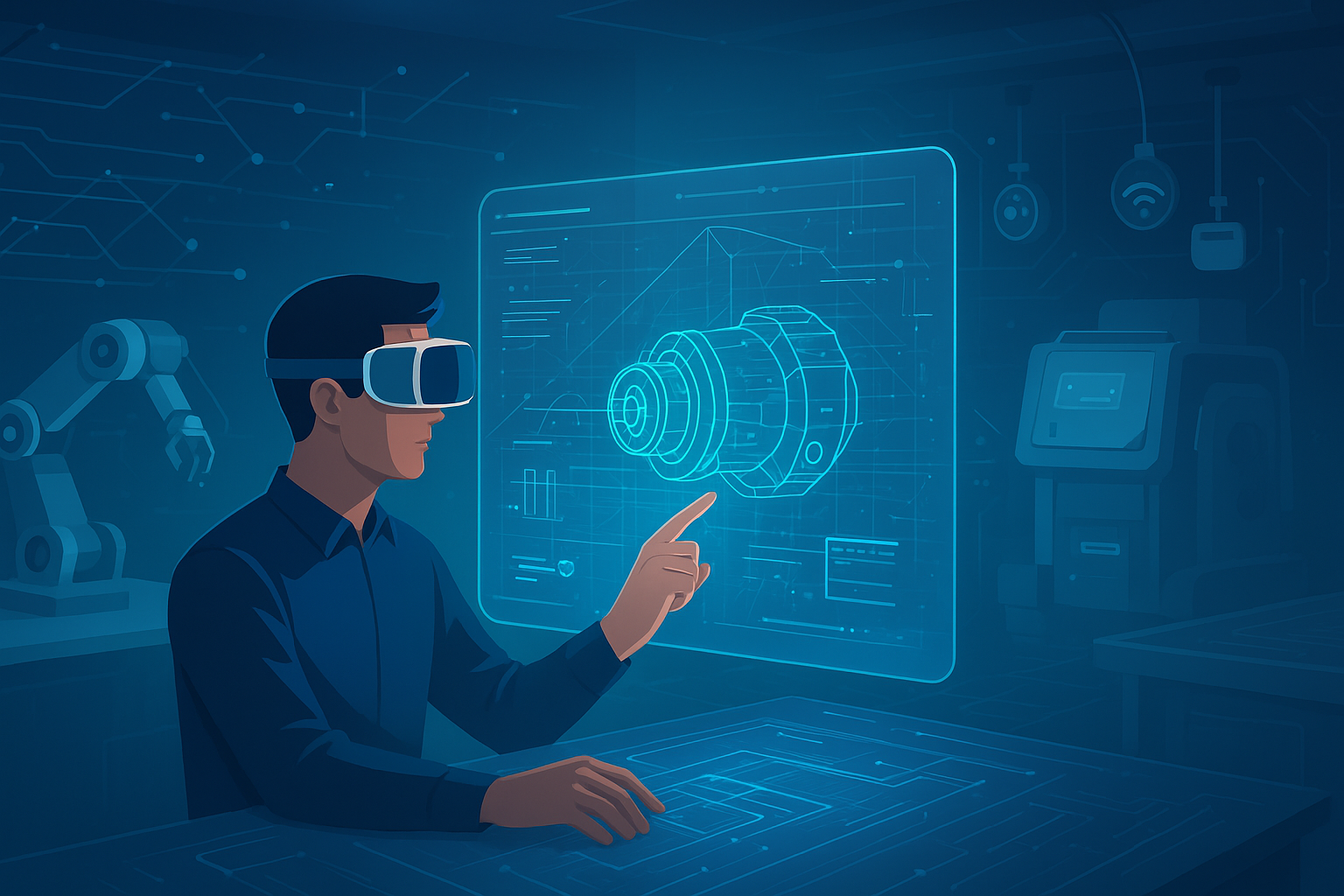
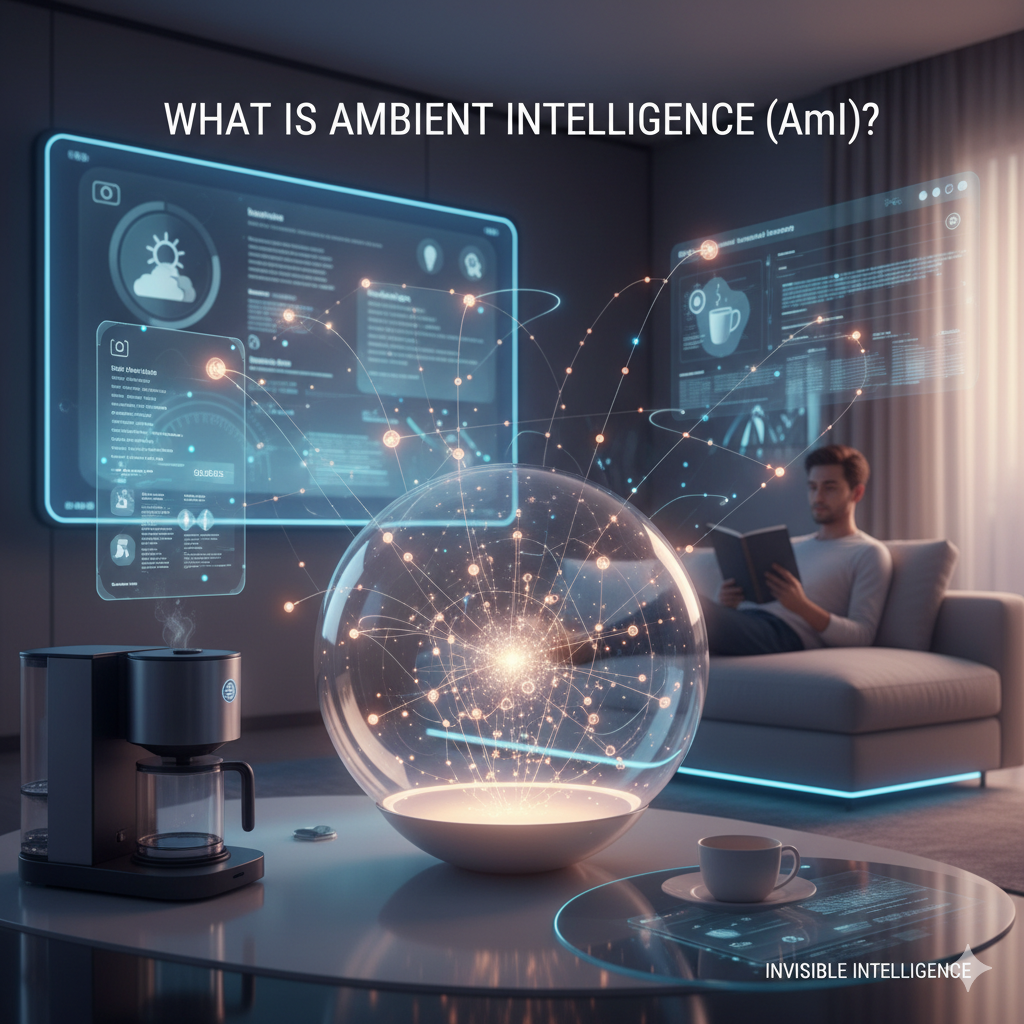
Ambient Intelligence, often called Invisible Intelligence, is quietly changing the way we interact with our surroundings. From homes that adjust lighting on their own to hospitals that monitor patients without human intervention, this technology works silently in the background to make life easier, safer, and more efficient.
What Is Ambient Intelligence?
Ambient Intelligence (AmI) refers to smart environments embedded with sensors, devices, and intelligent systems that understand human needs and respond to them automatically — without requiring any manual input from the user.
Whether it is your home, your office, or an entire city, AmI-powered spaces are designed to sense, learn, and act. The technology blends into the background so naturally that users often do not even notice it working.
In simple terms: it is technology that helps you without you ever asking for it.
How Does Ambient Intelligence Actually Work?
AmI is not a single technology. It is a combination of several systems working together:
- Sensors and IoT Devices: These detect movement, temperature, sound, light, and other environmental factors in real time.
- Artificial Intelligence: The system learns your daily routines and predicts what you might need next.
- Smart Devices: Lights, air conditioners, speakers, and appliances that can operate independently based on data inputs.
- Edge and Cloud Computing: Data is processed instantly — either on the device itself or through cloud servers — so responses happen without noticeable delay.
A practical example: You walk into your bedroom after a long day. The lights turn on at your preferred brightness, your favourite playlist starts playing, and the air conditioner adjusts to your ideal temperature — all without you touching a single button. That is Ambient Intelligence in action.
Real-Life Applications of Ambient Intelligence
AmI is already being used across several sectors. Here is a look at where it is making a real difference:
| Area | How AmI Is Used |
|---|---|
| Smart Homes | Lights and fans activate automatically when someone enters a room. |
| Healthcare | Sensors monitor patients continuously and alert doctors when readings are abnormal. |
| Offices | Systems adjust lighting and air quality automatically to improve employee focus and comfort. |
| Retail Stores | Cameras and sensors analyse customer movement to help optimise store layouts. |
| Smart Cities | Traffic signals adapt in real time to reduce road congestion. |
Why Is It Called Invisible Intelligence?
Traditional smart gadgets require you to give commands — through your phone, a remote, or your voice. Ambient Intelligence is different. It operates entirely in the background, observing patterns and acting on them without waiting for instructions.
This is why it earns the label “invisible.” The technology is present everywhere but demands nothing from the user.
Key benefits of Ambient Intelligence include:
- Creating personalised and comfortable living and working spaces
- Reducing energy consumption and supporting sustainability goals
- Enhancing personal safety and enabling continuous health monitoring
- Bridging the gap between human behaviour and technology responses
Challenges and Privacy Concerns Around AmI
Despite its clear advantages, Ambient Intelligence raises important concerns that cannot be ignored:
- Privacy Risks: Constant sensing means large amounts of personal data are being collected, often without users being fully aware.
- Cybersecurity Threats: Smart systems connected to networks can be vulnerable to hacking if not properly secured.
- Bias and Fairness: The AI systems powering AmI must be designed to make fair decisions for all users, regardless of background or behaviour patterns.
Building ethical, secure, and transparent systems is essential for Ambient Intelligence to earn public trust and deliver on its promise.
What the Future Holds for Ambient Intelligence (2025–2030)
The next five years are expected to bring significant advances in how AmI integrates with other emerging technologies:
- Spatial Computing and Augmented Reality (AR): Digital information will be layered over the physical world, making environments even more responsive.
- Autonomous AI Agents: Devices will be capable of making small but meaningful decisions on your behalf.
- Edge AI Chips: Compact, fast processors embedded in everyday objects will enable real-time intelligence without relying on cloud connectivity.
By 2030, experts believe our physical environments will function as active assistants — helping people live smarter, stay healthier, and work more productively.
Ambient Intelligence represents a significant shift in how technology fits into daily life. Rather than demanding attention, it quietly adapts to human needs. As this technology matures, the focus must remain on balancing convenience with privacy, and capability with ethical responsibility.