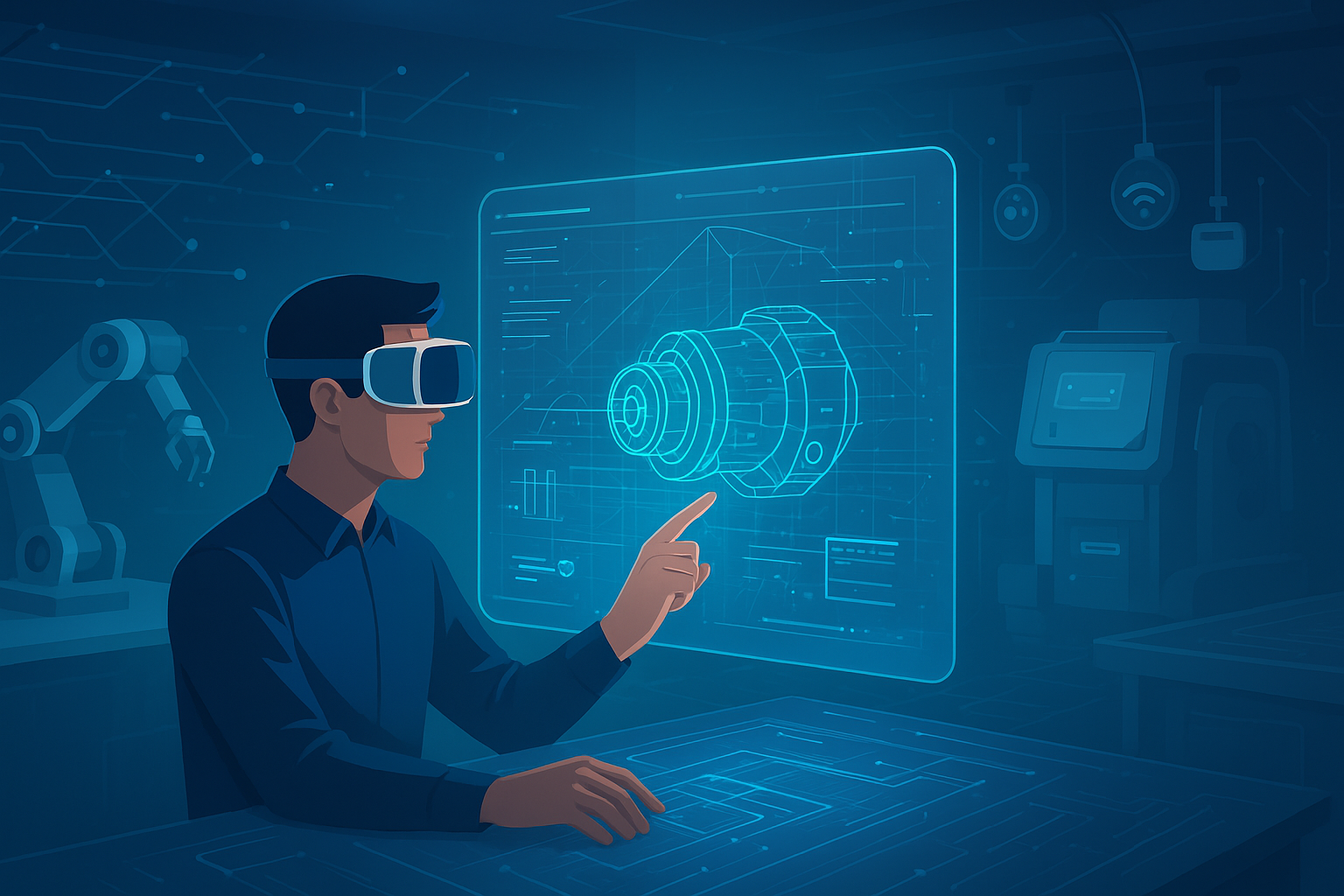
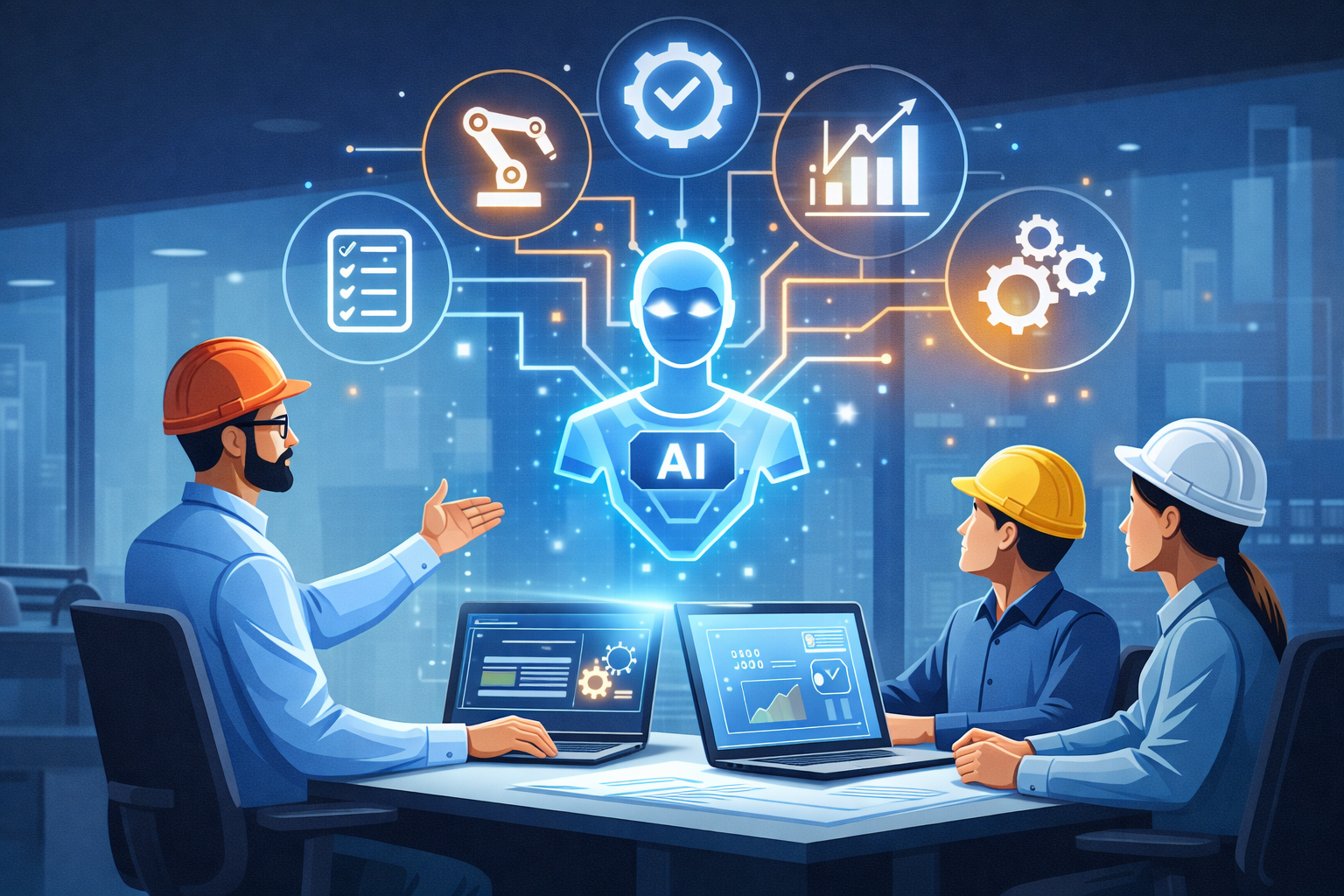
Engineering management has always been a demanding role — balancing project timelines, team performance, budgets, and quality standards. Now, Artificial Intelligence (AI) is stepping in as a powerful support system, helping engineering managers work with greater precision, speed, and confidence. From smarter scheduling to predictive maintenance, AI is reshaping how engineering projects are planned and delivered.
AI Helps Engineering Managers Make Faster, Smarter Decisions
One of the biggest challenges in engineering management is making the right call under pressure. AI systems process large volumes of project data, historical performance records, and real-time conditions to suggest the most effective course of action.
Instead of spending hours on manual analysis, engineering managers can now rely on data-backed recommendations. This leads to faster decisions with fewer errors — a critical advantage when project stakes are high.
For example, AI can review past successful projects and recommend a project plan that closely mirrors what worked before, saving both time and guesswork.
Smarter Project Planning, Scheduling, and Resource Allocation
Planning an engineering project involves juggling dozens of variables — timelines, team availability, equipment, and shifting requirements. AI tools simplify this by building intelligent schedules that account for all these factors at once.
- If a task gets delayed, AI automatically recalculates the schedule and suggests corrective steps.
- AI checks engineer skills, current workload, and availability before assigning tasks.
- Resources — both human and mechanical — are distributed more efficiently, reducing waste and burnout.
The result is a team that stays productive without being overloaded, and projects that are far more likely to meet their deadlines.
Budget Control, Risk Detection, and Cost Overrun Prevention
Financial overruns are one of the most common reasons engineering projects fail. AI tracks spending in real time and compares it against the planned budget, flagging unnecessary expenses before they spiral out of control.
Beyond budgets, AI is also a powerful tool for early risk detection. By identifying patterns in project data, it can warn managers about potential issues — equipment failures, design flaws, safety concerns, or schedule slippages — before they become serious problems.
| Challenge | How AI Helps |
|---|---|
| Budget overruns | Real-time expense tracking and early cost alerts |
| Equipment failure | Predictive maintenance using sensor data |
| Schedule delays | Automatic rescheduling and solution suggestions |
| Resource misallocation | Skill-based and workload-aware task assignment |
| Poor team communication | Real-time updates and AI-powered chat assistants |
Automation of Routine Tasks and Improved Team Communication
Engineering managers often find themselves buried in reports, documentation, and progress tracking — tasks that consume valuable time but don’t require strategic thinking. AI automates these routine activities, freeing managers to focus on leadership, innovation, and high-level planning.
At the same time, AI-powered platforms provide real-time project updates to all team members, keeping everyone aligned. Some tools even use AI chat assistants to answer common queries instantly, reducing back-and-forth communication and minimising misunderstandings between departments.
The combined effect is a more efficient, better-coordinated team that spends less time on administrative work and more time on meaningful engineering tasks.
Predictive Maintenance and the Future of Engineering Management
In engineering operations, unexpected equipment downtime can be costly and dangerous. AI addresses this through predictive maintenance — continuously monitoring machines and systems using sensor data to identify signs of wear or potential failure before they occur.
This approach allows maintenance teams to act proactively rather than reactively, extending equipment life and reducing unplanned stoppages.
Looking ahead, AI’s role in engineering management will only grow. As projects become more complex and data-driven, managers who adopt AI tools will be better equipped to handle larger workloads, tighter deadlines, and higher expectations. AI is set to become an indispensable digital assistant for engineering leaders across industries.
In conclusion, AI is not replacing engineering managers — it is making them significantly more effective. By supporting smarter decisions, tighter budgets, safer operations, and stronger teams, AI gives engineering organisations a clear competitive edge. Companies that invest in AI-driven management tools today are building the foundation for more successful, resilient projects tomorrow.
Frequently Asked Questions
No, AI does not replace engineering managers. It acts as a support system that handles data analysis, routine tasks, and risk detection, allowing managers to focus on leadership, strategy, and innovation.
The key benefits include faster and more accurate decision-making, smarter project scheduling, better resource allocation, real-time budget tracking, early risk detection, and automated reporting — all of which lead to more successful project outcomes.
AI monitors equipment and machines using sensor data to identify early signs of wear or potential failure. This allows maintenance teams to act before a breakdown occurs, reducing downtime and extending the life of assets.