
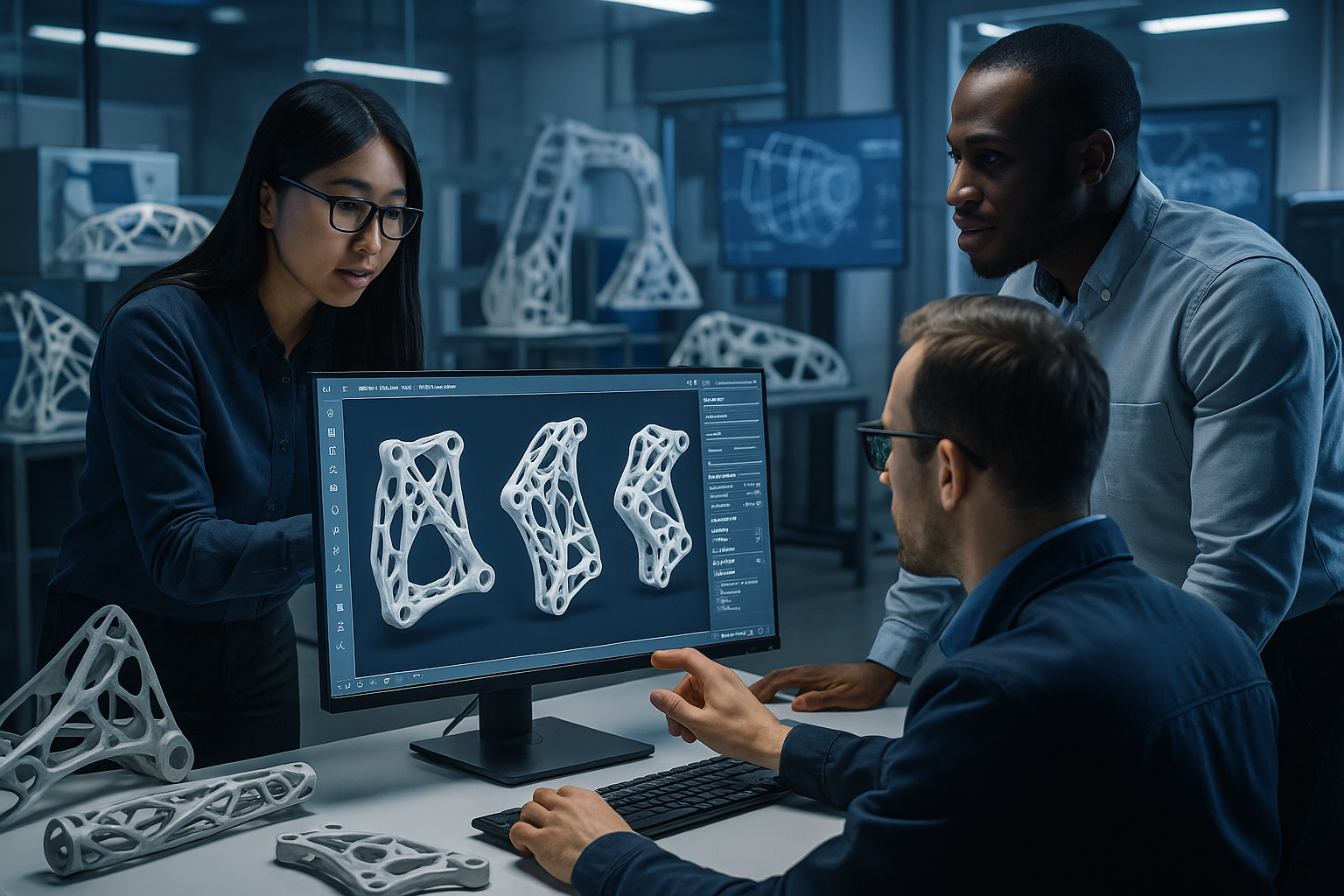
Mechanical engineering has always demanded a careful balance of creativity, logic, and hands-on experience. Now, a powerful technology called generative design is reshaping how engineers approach complex problems — helping them build smarter, lighter, and more efficient products faster than ever before.
What Is Generative Design?
Generative design is a computer-aided approach where engineers define specific goals and constraints — such as weight limits, material choices, load requirements, and size boundaries — and feed them into specialized software. The software then uses AI algorithms to automatically generate hundreds or even thousands of design options that satisfy those rules.
Unlike traditional design methods where an engineer starts with a single concept and refines it, generative design explores a vast solution space simultaneously. This means engineers can discover shapes and structures that would be nearly impossible to imagine manually.
Why Generative Design Matters for Engineers
Traditional design workflows are time-consuming and often limit how many options a team can realistically explore. Generative design changes that equation significantly. By automating the early stages of design exploration, it allows engineers to:
- Reduce material waste by producing optimized structures that use only what is necessary
- Improve product performance by finding designs that better handle stress, heat, or load
- Speed up project timelines by cutting down the hours spent on manual iteration
- Lower production costs by minimizing raw material consumption and rework
With computers handling the initial design generation, engineers can focus their expertise on evaluating, refining, and validating the most promising solutions.
How the Technology Actually Works
The process begins when an engineer sets up the design parameters inside a generative design platform. These parameters include the forces the part must withstand, the materials available, manufacturing methods, and any physical space restrictions.
Once the inputs are defined, the software uses AI and cloud computing to run through thousands of design iterations rapidly. Each iteration is tested against the defined constraints, and the best-performing designs are surfaced for the engineer to review. This back-and-forth optimization process balances performance, cost, and manufacturability — all at once.
Popular platforms supporting generative design include Autodesk Fusion 360, Siemens NX, and PTC Creo, which have integrated these capabilities into their existing engineering toolsets.
Real-World Applications Across Industries
Generative design is already making a measurable impact across several sectors of mechanical engineering:
| Industry | Application | Key Benefit |
|---|---|---|
| Automotive | Lightweight structural components | Improved fuel efficiency |
| Aerospace | Aircraft brackets and frames | Reduced weight with maintained strength |
| Industrial Machinery | Optimized load-bearing structures | Longer lifespan using less material |
These examples highlight how generative design addresses real engineering challenges — not just theoretical ones. In the automotive sector, lighter parts directly translate to better mileage. In aerospace, every kilogram saved has a significant impact on operating costs and emissions.
Challenges Engineers Need to Consider
Despite its advantages, generative design comes with practical challenges that teams must plan for:
- Software investment: Specialized platforms can be expensive, and teams require training to use them effectively.
- Manufacturing compatibility: Some AI-generated designs feature complex organic shapes that may require advanced manufacturing methods like 3D printing or CNC machining to produce.
- Validation requirements: Engineers must rigorously test and verify AI-generated designs before they go into production to ensure real-world safety and reliability.
- Learning curve: Shifting from traditional CAD workflows to generative design requires a change in mindset and process.
Addressing these challenges upfront is essential for any organization looking to adopt generative design at scale.
The Road Ahead for Mechanical Engineering
Generative design is not about replacing engineers — it is about expanding what they can achieve. By working alongside AI-powered tools, engineers can explore a broader design space, identify innovative solutions faster, and ultimately deliver better products to market.
As cloud computing becomes more accessible and AI algorithms grow more sophisticated, generative design is expected to become a standard part of the mechanical engineering toolkit. Companies that adopt it early are likely to gain a meaningful competitive edge in product development speed and quality.
The future of mechanical engineering belongs to those who combine deep technical expertise with the ability to harness powerful computational tools — and generative design sits right at that intersection.
Frequently Asked Questions
Generative design is a technology where engineers input design goals and constraints into specialized software, which then uses AI algorithms to automatically generate and evaluate multiple design options that meet those requirements.
Generative design is widely used in automotive engineering for lightweight parts, aerospace for weight-optimized aircraft components, and industrial machinery for durable structures that use less material.
The main challenges include the high cost of specialized software, the need for advanced manufacturing methods like 3D printing to produce complex designs, and the requirement for thorough engineering validation before production.