Space robots were once the stuff of science fiction — villains in comic books, mechanical monsters in movies, and fantasy machines drifting through imaginary galaxies. Today, they are very real, very capable, and absolutely essential to how humanity explores the Solar System. From Mars rovers to robotic arms on the International Space Station, these machines are doing jobs that humans simply cannot.
The Real Story Behind Space Robots
Most people picture space robots as dangerous, human-like machines — think the Daleks from Doctor Who or the droids from Star Wars. But real space robots look and behave nothing like their fictional counterparts.
Real space robots are not villains or invaders. They are tools — highly sophisticated tools built to assist astronauts and scientists in ways that make space exploration safer, more productive, and more achievable. They go where humans cannot, survive conditions that would kill a person instantly, and send back data that shapes our understanding of the universe.
What Jobs Do Space Robots Actually Perform?
Space robots handle a wide range of tasks, many of which are too dangerous, too complex, or too expensive for human astronauts to carry out directly. Here are the key roles they play:
- Taking Measurements: Space robots collect precise data on temperature, radiation levels, air pressure, and other environmental factors in locations where no human could survive. This information helps scientists make informed decisions during missions.
- Collecting Samples: Robots gather soil from Mars, rocks from asteroids, and other materials that could reveal secrets about the origins of our Solar System or the possibility of life on other planets.
- Maintaining Equipment and Structures: On the International Space Station (ISS), robots assist with repairs and help set up new equipment. This reduces the need for risky spacewalks and lowers the chance of human error during complex operations.
- Exploring Distant Worlds: Equipped with cameras and sensors, space robots travel to planets, moons, and asteroids that humans cannot reach. They act as our eyes and ears in the farthest corners of the Solar System, sending back images and data from places no person has ever seen.
Types of Space Robots and How They Work
Space robots are not one-size-fits-all. They come in different forms, each designed for specific tasks and environments.
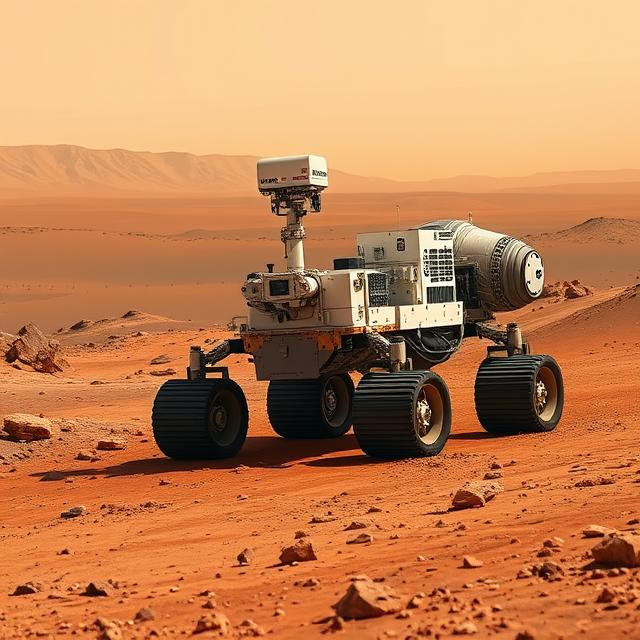
Remotely Operated Vehicles (ROVs) are among the most well-known types. These machines are built to withstand extreme heat and cold, intense radiation, and rough terrain — conditions that would be fatal to humans. Operators on Earth control ROVs from great distances, directing them to collect samples, survey landscapes, or carry out repairs in environments like the surface of Mars where the atmosphere is unbreathable.
Autonomous Robots take things a step further. NASA’s Curiosity rover on Mars is a prime example. These robots use onboard systems to make decisions and complete tasks without constant human input. This independence is critical when a robot is so far from Earth that real-time communication is impossible. Autonomous robots have explored the Martian surface, discovered new geological features, and captured images of landscapes never seen before.
Robotic Arms and Drones serve a different but equally important purpose. On the ISS, the Canadarm2 — a robotic arm developed by Canada — helps astronauts move equipment, support experiments, and carry out repairs with remarkable precision. It can operate without a human at the controls, making it invaluable during complex station operations. Looking ahead, space drones could one day survey planetary surfaces or photograph distant asteroids in high detail.
Comparing Key Types of Space Robots
| Type | Example | Primary Role | Control Method |
|---|---|---|---|
| Remotely Operated Vehicle (ROV) | Mars Exploration Rovers | Surface exploration, sample collection | Remote, by operators on Earth |
| Autonomous Robot | NASA Curiosity Rover | Independent exploration and data collection | Self-directed with onboard systems |
| Robotic Arm | Canadarm2 on ISS | Equipment handling, repairs, experiments | Remote or semi-autonomous |
| Space Drone | Future concept | Aerial surveys, photography | Remote or autonomous |
Why Space Robots Are Essential for the Future of Exploration
Space robots are not replacing astronauts — they are making human space exploration possible in the first place. Without them, many of the missions that have expanded our knowledge of the Solar System would never have happened.
They protect human lives by taking on the most dangerous tasks. They extend the reach of science by going to places no person can. And they work continuously, without rest, in environments that would destroy a human body within minutes.
As space agencies and private companies plan missions to the Moon, Mars, and beyond, robots will play an even bigger role. They may build habitats before astronauts arrive, survey landing sites, and maintain equipment across long missions. The future of space exploration is a partnership between humans and machines — and that partnership is already well underway.
Space robots have come a long way from their fictional origins. They are no longer fantasy. They are the frontline of human curiosity, doing the hard work that makes discovery possible.
Frequently Asked Questions
Space robots are designed to assist astronauts and scientists by performing tasks that are too dangerous, complex, or expensive for humans. They collect samples, take measurements, repair equipment, and explore distant planets and moons where humans cannot travel.
A Remotely Operated Vehicle (ROV) is controlled by operators on Earth who direct its movements and actions from a distance. An autonomous robot, like NASA's Curiosity rover, uses onboard systems to make its own decisions and complete tasks without constant human input — which is essential when real-time communication with Earth is not possible.
Canadarm2 is a robotic arm on the International Space Station that helps astronauts move equipment, support scientific experiments, and carry out repairs. It operates with high precision and can function without a human directly at the controls, making it a critical part of station operations.