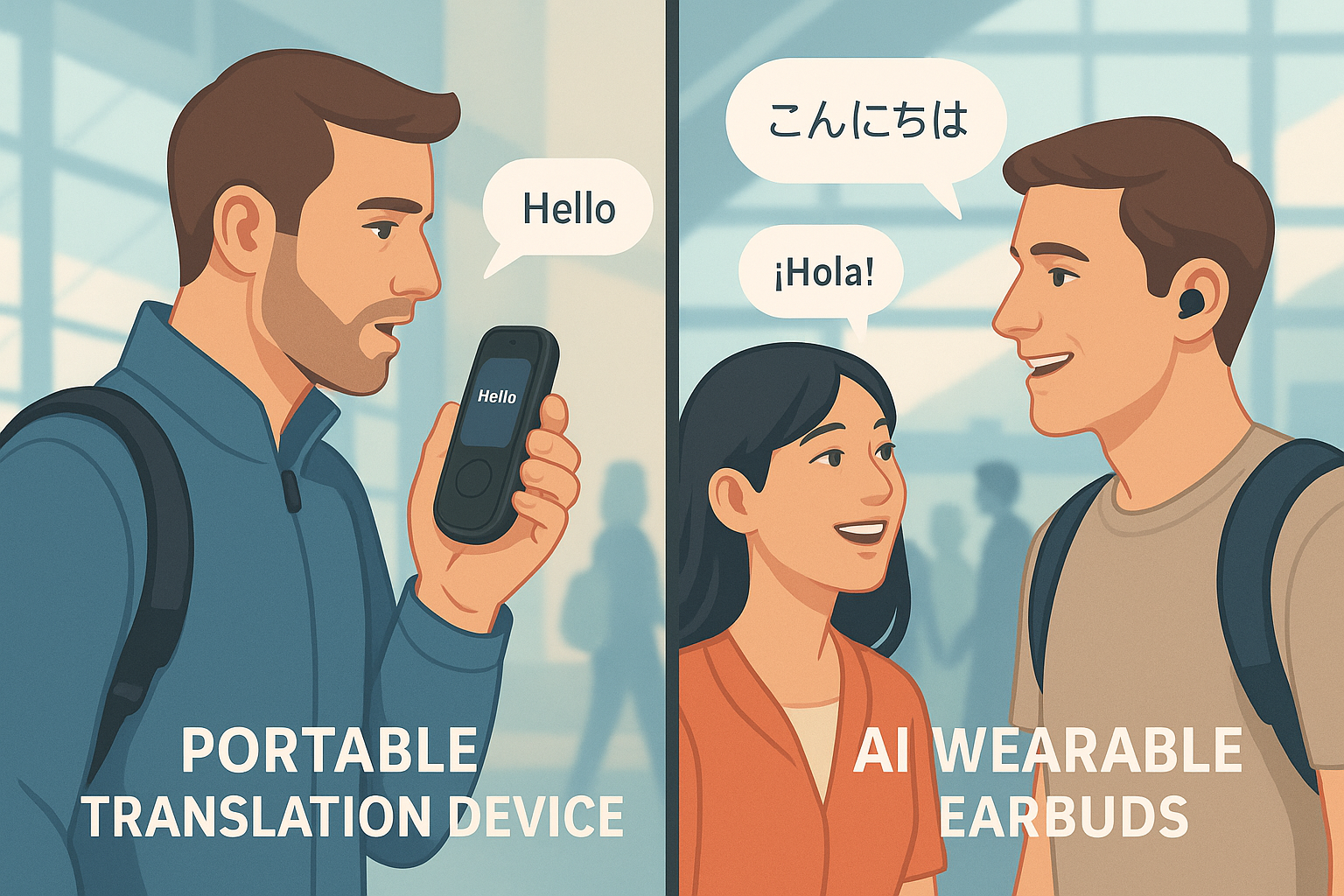
Travelling abroad or meeting someone who speaks a different language can be tricky without the right tool. Two popular options have emerged for real-time language translation — portable translation devices and AI-powered wearable earbuds. Both work well, but they serve different needs. Here is a clear breakdown to help you decide which one suits your lifestyle best.
What Are Portable Translation Devices?
Portable translation devices are compact, standalone gadgets built specifically for language translation. You speak into them, and they convert your words into another language through a built-in speaker. They do not need to be paired with a smartphone to work.
Key features of portable translation devices:
- Work independently without connecting to a phone
- Support a wide range of languages
- Some models offer offline translation mode
- Long battery life for extended use during travel
Pros:
- Accurate and reliable in face-to-face conversations
- Ideal for business travel and professional meetings
- No need for additional apps or paired devices
Cons:
- Slightly bulky compared to earbuds
- Requires you to hold the device — not hands-free
- Fewer smart features compared to AI earbuds
What Are AI Wearable Earbuds?
AI wearable earbuds are smart earphones that deliver real-time speech translation directly into your ear. They connect to a companion phone app and offer a hands-free experience. Many popular earbuds today come with built-in translation features alongside music playback and call support.
Key features of AI wearable earbuds:
- Hands-free translation delivered directly to your ear
- Two-way conversation support across multiple languages
- Multi-purpose — music, calls, and translation in one device
- Active noise cancellation for clearer audio
Pros:
- Compact and easy to carry anywhere
- Offers functionality well beyond just translation
- Sleek, modern design that blends into daily use
Cons:
- Requires a stable internet connection for best performance
- Shorter battery life compared to dedicated translation devices
- May struggle to pick up speech accurately in very noisy environments
Side-by-Side Comparison
| Situation | Best Choice |
|---|---|
| Business Meetings and Travel | Portable Translation Device |
| Casual Use and Daily Commute | AI Wearable Earbuds |
| Tech Enthusiasts | AI Earbuds with Smart Features |
| Areas with No Internet Access | Portable Device with Offline Mode |
| Lightweight Travel | AI Earbuds (Easy to Carry) |
Which One Should You Choose?
Your decision really comes down to how and where you plan to use the device. Here is a simple way to think about it:
- If you travel frequently for work, attend international meetings, or visit areas with poor internet connectivity, a portable translation device is the more dependable choice.
- If you want a single device that handles music, calls, and translation during your daily routine or casual travel, AI wearable earbuds offer great value.
- If you are a tech enthusiast who wants the latest wearable experience, smart translation earbuds are a strong pick.
- If offline reliability matters most, go with a portable device that supports offline language packs.
Practical Tips Before You Buy
Before spending money on either device, keep these points in mind:
- Check how many languages the device supports and whether your required languages are included.
- Look at battery life ratings, especially if you plan long trips.
- For earbuds, confirm whether the translation feature works natively or only through a third-party app.
- Read user reviews specifically about translation accuracy, not just audio quality.
- Consider your typical environment — noisy places can affect earbud performance more than a handheld device.
Both portable translation devices and AI wearable earbuds are strong tools for breaking language barriers. The right choice depends on your specific needs, travel habits, and how much you value convenience versus reliability. Assess your priorities carefully before making a purchase, and you will find the option that works best for you.