Smart rings, AI glasses, intelligent earbuds, and advanced smartwatches are no longer just accessories. AI wearables are quietly becoming capable enough to handle many tasks we once relied on smartphones for. Here is a closer look at how these devices work, what they can do today, and where they are headed.
What Are AI Wearables and How Do They Work?
AI wearables are devices you wear on your body that use artificial intelligence to understand your voice, movements, and daily habits. Common examples include smart rings, AI-powered glasses, intelligent earbuds, and smartwatches.
Unlike traditional gadgets, these devices do not just collect data. They process it intelligently to give you useful responses, reminders, and assistance without you needing to touch a screen. They connect to your phone or cloud services in the background, keeping you informed and productive throughout the day.
Key Things AI Wearables Can Already Do
Today’s AI wearables are capable of handling a surprising range of daily tasks. Here is what many current devices already support:
- Hands-free calls and messaging: Smart earbuds and AI glasses let you make calls, reply to messages, and listen to notifications using only your voice — while walking, driving, or working.
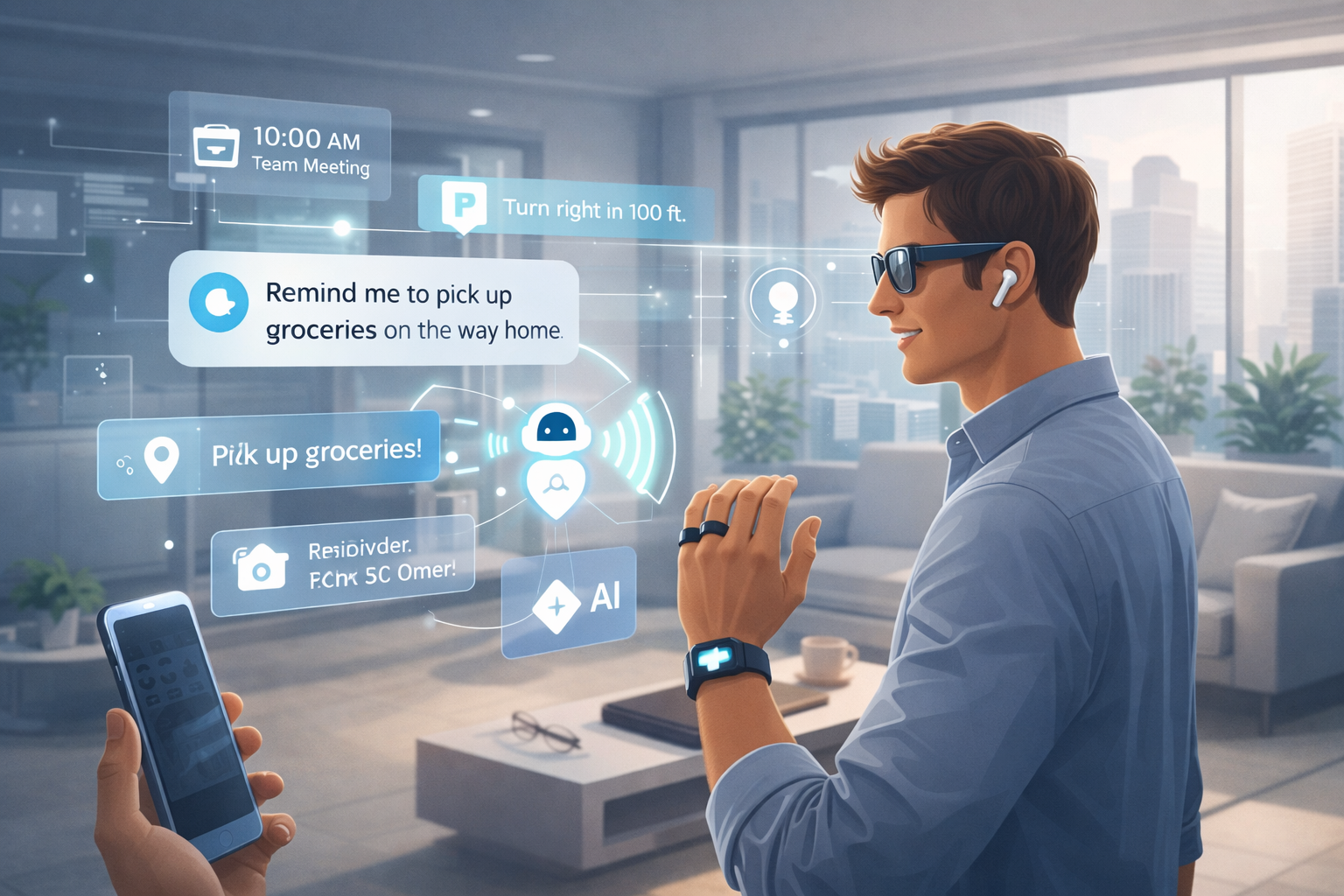
- Reminders and scheduling: You can ask your wearable to set alarms, schedule meetings, or add items to your to-do list without opening any app.
- Voice notes and meeting summaries: Some wearables can record voice notes and even summarize conversations, making them useful for professionals.
- Real-time navigation: AI glasses and audio wearables can deliver turn-by-turn directions through voice or a small heads-up display, so you never have to look down at your phone while traveling.
- Language translation: Certain wearables can translate spoken language in real time, which is helpful during travel or international meetings.
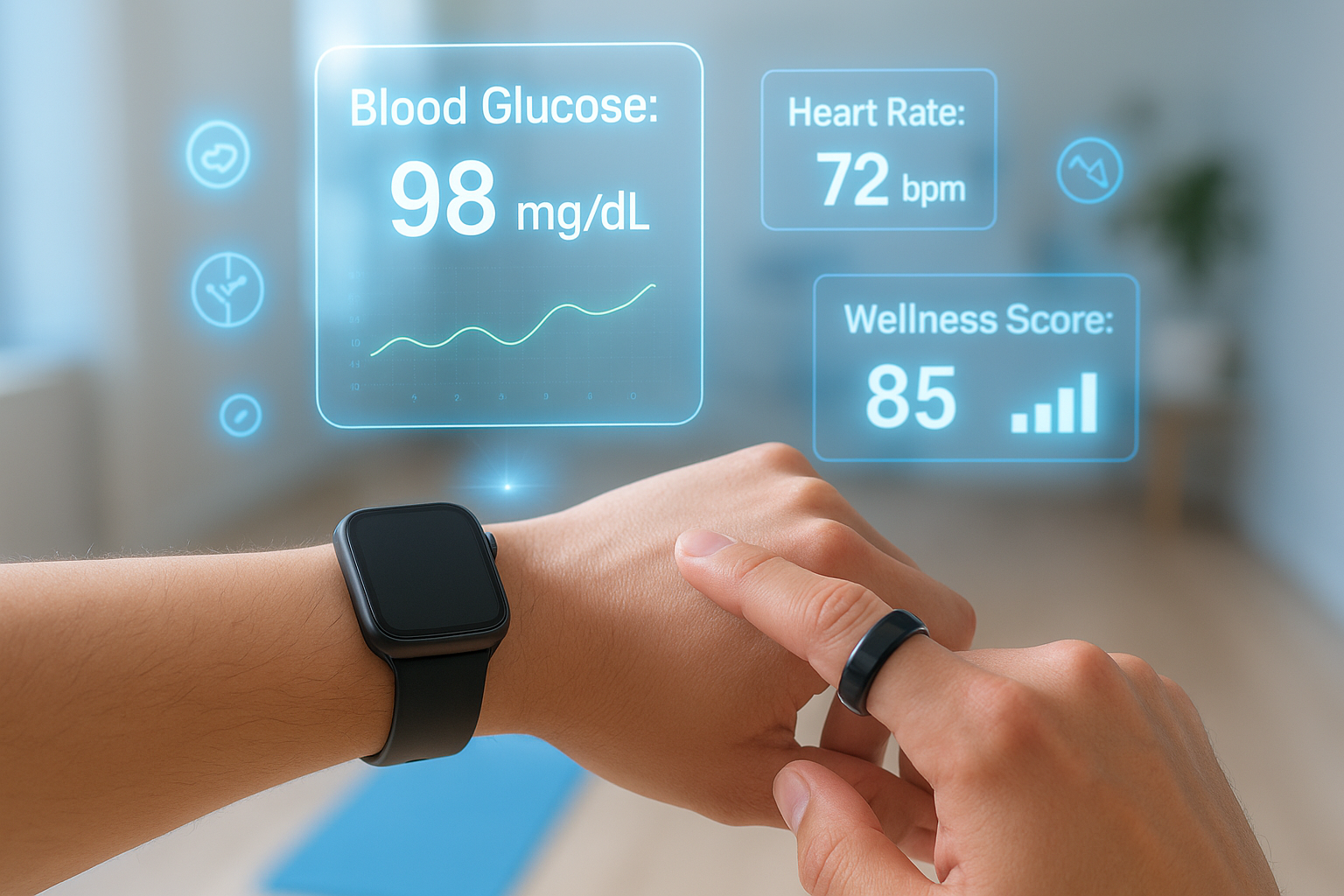
- Health monitoring: Wearables track heart rate, sleep quality, stress levels, and physical activity. They use AI to offer personalized health tips based on your data.
AI Wearables vs Smartphones: A Quick Comparison
| Feature | AI Wearables | Smartphones |
|---|---|---|
| Hands-free use | Yes | Limited |
| Screen size | Minimal or none | Large display |
| Video streaming | Not ideal | Excellent |
| Health tracking | Advanced | Basic |
| Navigation | Voice and display | Screen-based |
| Complex app use | Limited | Full support |
The Real Benefit: Less Screen Time and Better Focus
One of the strongest arguments for AI wearables is the reduction in screen dependency. Instead of constantly pulling out your phone, you receive information through voice alerts or subtle haptic feedback. This shift helps people stay more present in their surroundings and reduces the mental fatigue that comes from constant screen exposure.
For people who work in physically demanding environments, drive frequently, or simply want to be less distracted, wearables offer a practical alternative to reaching for a phone every few minutes.
Current Limitations and What Still Needs Improvement
AI wearables are improving rapidly, but they are not ready to fully replace smartphones just yet. Some clear limitations include:
- They are not suitable for long typing tasks or detailed text input.
- Watching videos, browsing social media, or using complex apps still requires a phone screen.
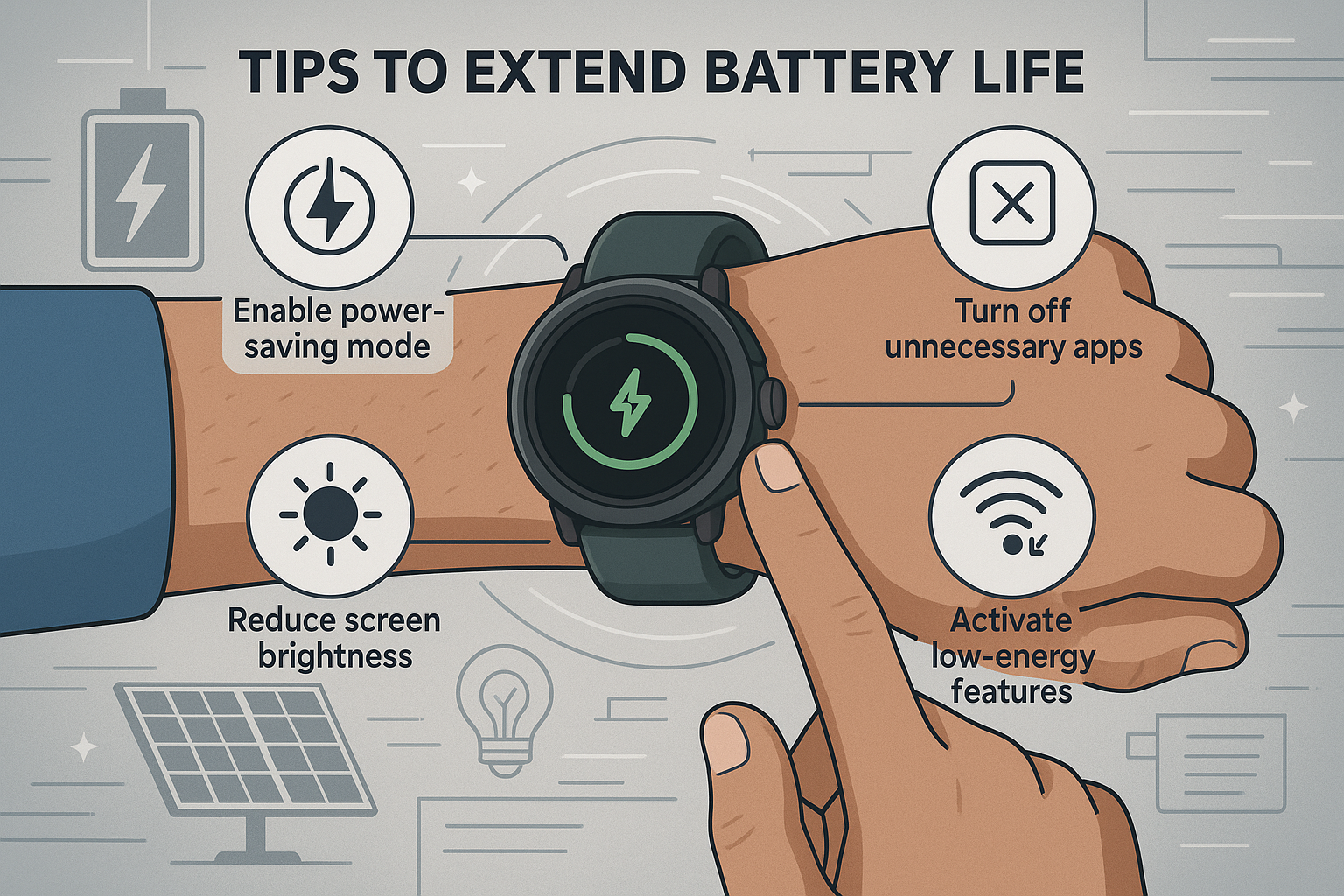
- Battery life on many wearables remains shorter than smartphones.
- Privacy concerns around always-on microphones and sensors are still being addressed by manufacturers.
- The range of compatible apps and services is narrower compared to smartphones.
Despite these gaps, the pace of improvement in wearable technology suggests many of these limitations will shrink significantly over the next few years.
What the Future Looks Like for AI Wearables
Industry observers believe that within the next decade, smartphones may shift from being the primary device to a secondary one. AI wearables could handle most routine daily interactions, while phones remain in bags or pockets for tasks that genuinely need a large screen or heavy processing power.
Companies across the tech industry are investing heavily in this space, developing lighter hardware, longer battery life, and smarter AI models that can understand context better. As these improvements arrive, the line between wearable and smartphone will continue to blur.
In conclusion, AI wearables are not replacing smartphones overnight, but they are steadily taking over the simpler, repetitive tasks that once kept us glued to our screens. For anyone looking to reduce phone dependency and stay more focused, today’s smart wearables already offer a compelling starting point.