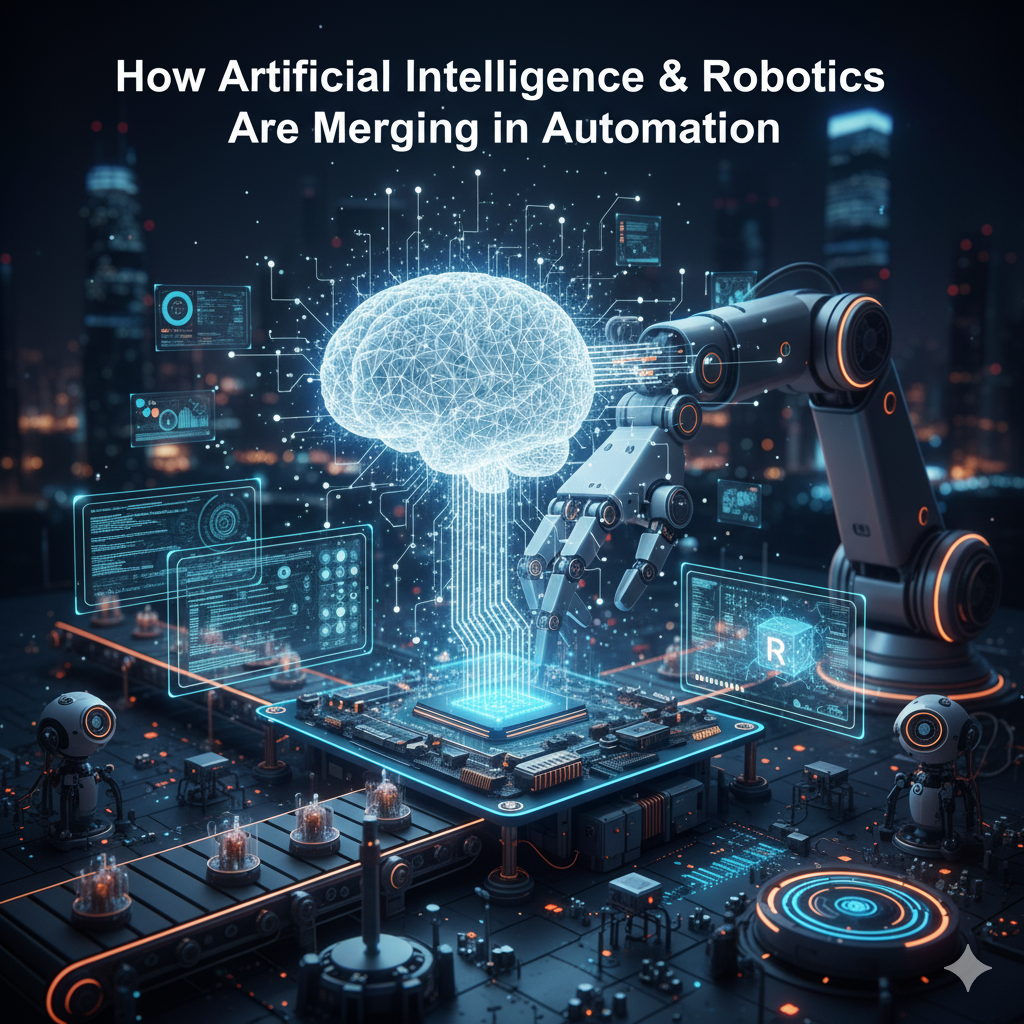
Automation has been reshaping industries for decades. But the real shift is happening now — as Artificial Intelligence merges with Robotics to create machines that do not just work fast, but work smart. This combination is changing how factories operate, how hospitals deliver care, and how goods move across the world.
What Changes When AI Enters the World of Robotics
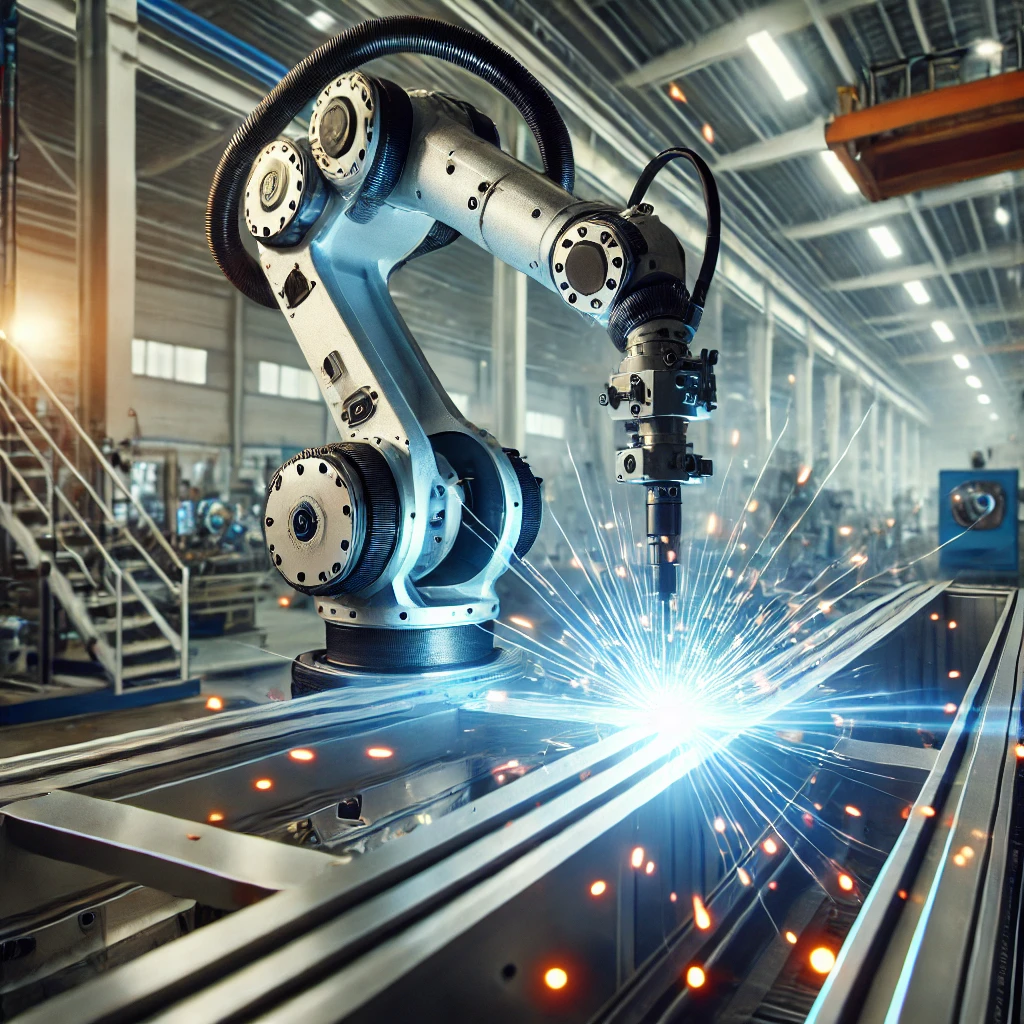
Traditional robots were built for repetitive tasks — welding, assembling, or moving objects along a fixed path. They were fast and consistent, but completely dependent on pre-set instructions. The moment something unexpected happened, they stopped.
Adding Artificial Intelligence changes that entirely. AI gives robots the ability to process information from their environment and respond to it in real time. Here is what AI-powered robots can now do:
- See and interpret surroundings using cameras, sensors, and computer vision.
- Make logical decisions based on live data rather than fixed commands.
- Learn from past experience to improve performance over time.
- Communicate naturally with humans through voice and gesture recognition.
A practical example: a warehouse robot equipped with AI can detect an obstacle in its path, calculate an alternate route, and complete its delivery — all without any human input.
Industries Already Using AI-Powered Robots
The impact of combining AI with robotics is visible across multiple sectors today.
| Industry | How AI Robots Are Being Used |
|---|---|
| Manufacturing | Detecting errors, assembling parts, and controlling machines without human supervision |
| Healthcare | Surgical robots assist doctors; AI analyzes medical data for faster diagnosis |
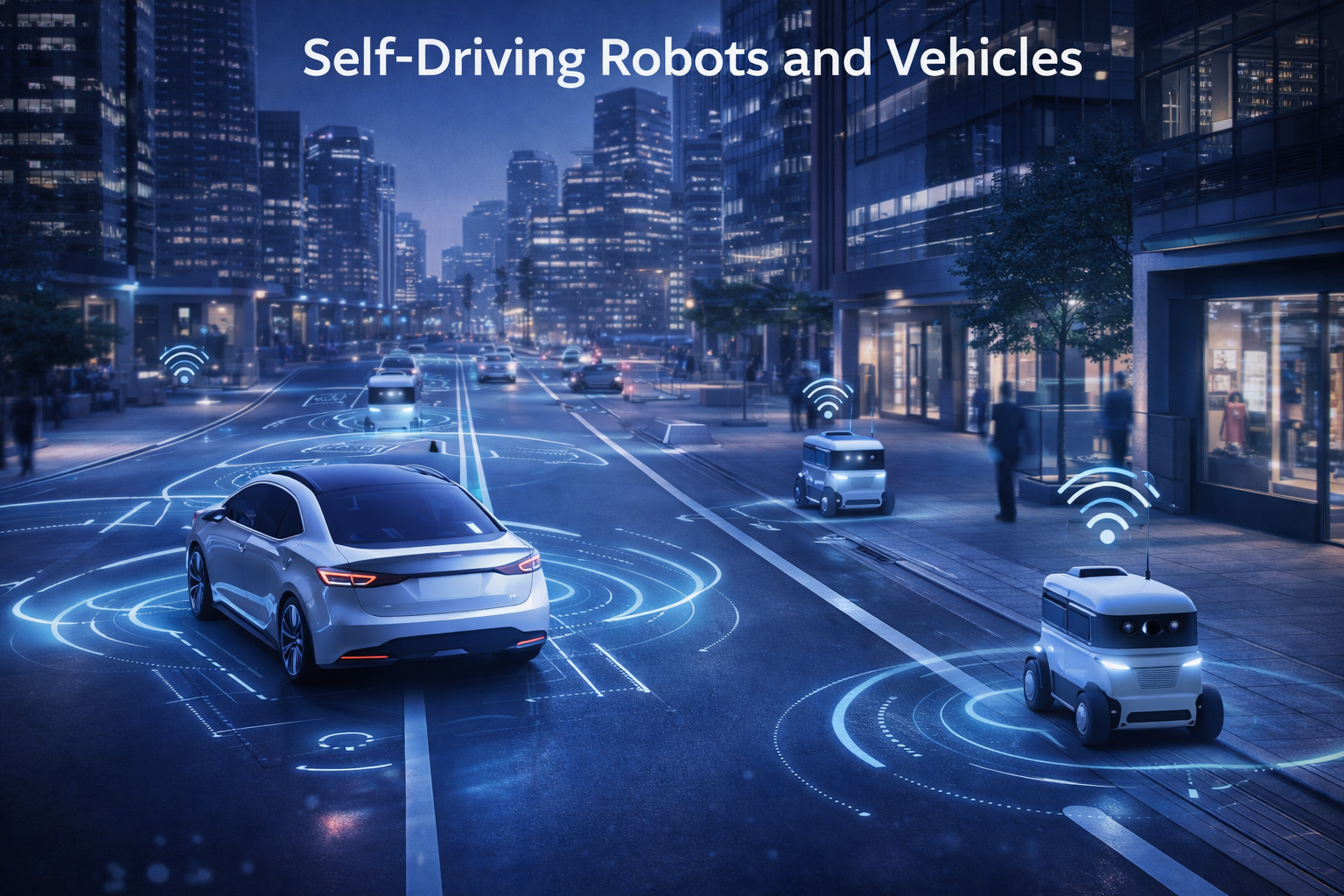
| Logistics and Warehousing | Moving goods, managing inventory, and handling last-mile deliveries |
| Food and Hospitality | Preparing food, serving customers, and maintaining hygiene standards |
Each of these industries is seeing real gains in speed, accuracy, and cost efficiency as a result of this technology.
Key Benefits of Merging AI with Automation
The advantages of bringing AI into robotic systems go beyond just speed. Here is a clear breakdown of what businesses and workers gain:
- Round-the-clock efficiency: Robots do not need breaks, shifts, or rest. They operate 24 hours a day, 7 days a week.
- Higher accuracy: AI reduces human error and delivers consistent output across thousands of repetitive cycles.
- Adaptive decision-making: Unlike older machines, AI robots can handle unexpected situations without shutting down.
- Cost and time savings: Faster production cycles and reduced dependency on manual labor lower overall operational costs.
- Improved workplace safety: Robots take on dangerous, physically demanding, or hazardous tasks that put human workers at risk.
Industry 5.0 — Humans and Robots as Teammates
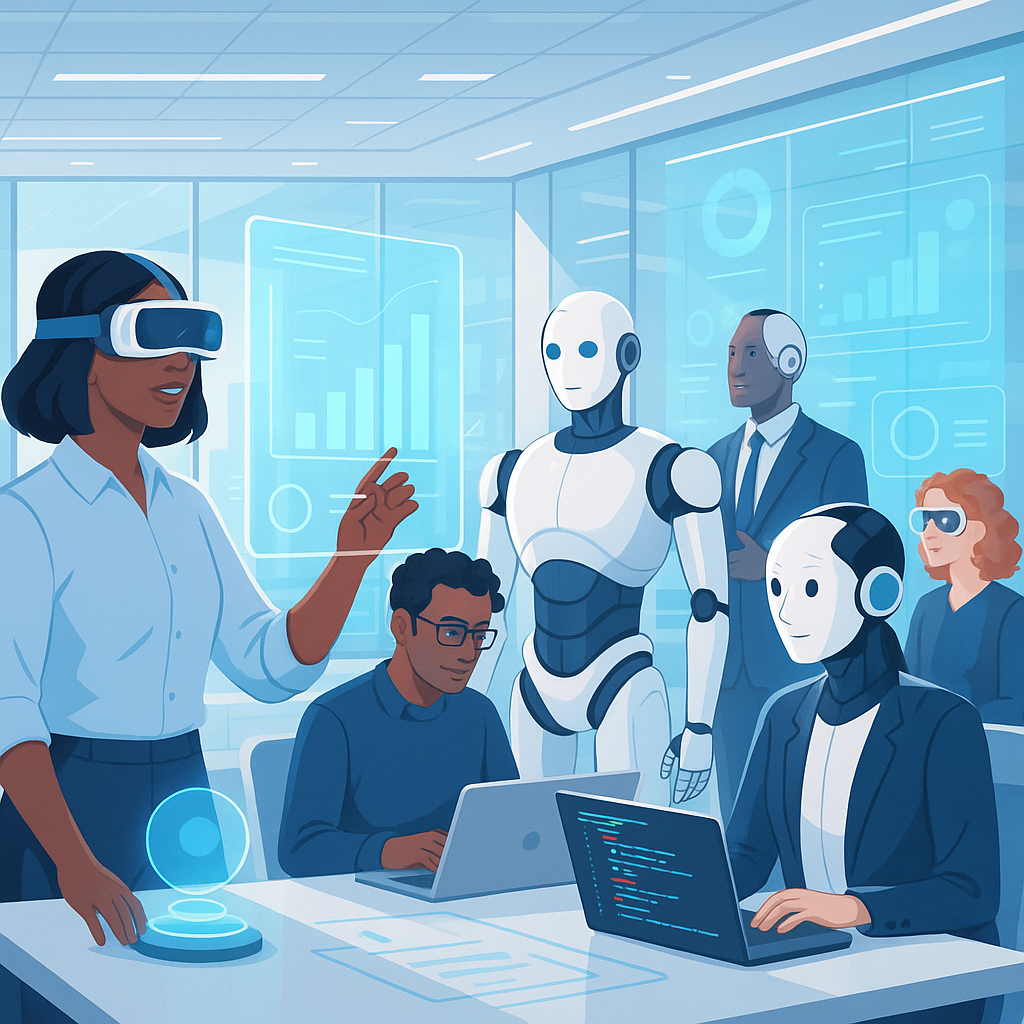
A common fear around automation is job loss. But the emerging concept of Industry 5.0 tells a different story. Rather than replacing humans, the goal is to build systems where people and robots work side by side.
In this model, robots handle the heavy, repetitive, or data-intensive work. Humans focus on what machines cannot replicate — creativity, emotional intelligence, complex problem-solving, and ethical judgment.
This kind of human-robot collaboration is already showing results in advanced manufacturing plants and research hospitals, where productivity and worker satisfaction have both improved.
Challenges That Still Need to Be Addressed
Despite the clear benefits, the path to widespread AI-robotics integration is not without obstacles.
- High upfront costs: Advanced robotic systems with AI capabilities remain expensive, putting them out of reach for many small and mid-sized businesses.
- Workforce skill gaps: Employees need training to operate, maintain, and collaborate with intelligent machines. This requires investment in education and reskilling programs.
- Data privacy risks: AI systems rely on large volumes of data. Protecting that data from misuse or breaches is a serious concern.
- Ethical and regulatory questions: Societies and governments are still working out how much autonomy robots should have, and who is responsible when something goes wrong.
Addressing these challenges will require coordinated efforts from businesses, governments, and educational institutions working together.
What the Future of AI and Robotics Looks Like
The next phase of smart automation will be even more connected and capable. Based on current trends, here is what is likely to emerge:
- Predictive maintenance robots that identify and fix equipment problems before they cause downtime.
- AI-driven assistants deployed in schools, offices, and hospitals to support daily operations.
- IoT-integrated robot networks where machines communicate with each other in real time across facilities.
- Personalized automation systems that adapt to individual user preferences and workflows.
The direction is clear — machines are moving from simply following instructions to genuinely understanding context and assisting humans in meaningful ways.
Artificial Intelligence and Robotics are no longer separate fields. Together, they form the backbone of a new kind of automation — one that is faster, safer, and far more capable than anything that came before. As this technology matures, the focus will increasingly shift toward making it accessible, ethical, and beneficial for everyone — not just large corporations. The future of work is collaborative, and both humans and intelligent machines have a role to play in it.
Frequently Asked Questions
AI gives robots the ability to process real-time data from sensors and cameras, make decisions based on that data, learn from past actions, and handle unexpected situations — capabilities that traditional pre-programmed robots do not have.
The current direction, known as Industry 5.0, focuses on human-robot collaboration rather than replacement. Robots handle repetitive, dangerous, or data-heavy tasks, while humans contribute creativity, emotional intelligence, and complex decision-making.
The main challenges include high initial investment costs, the need to retrain or reskill employees, data privacy concerns related to AI data usage, and unresolved ethical and regulatory questions about robot autonomy and accountability.