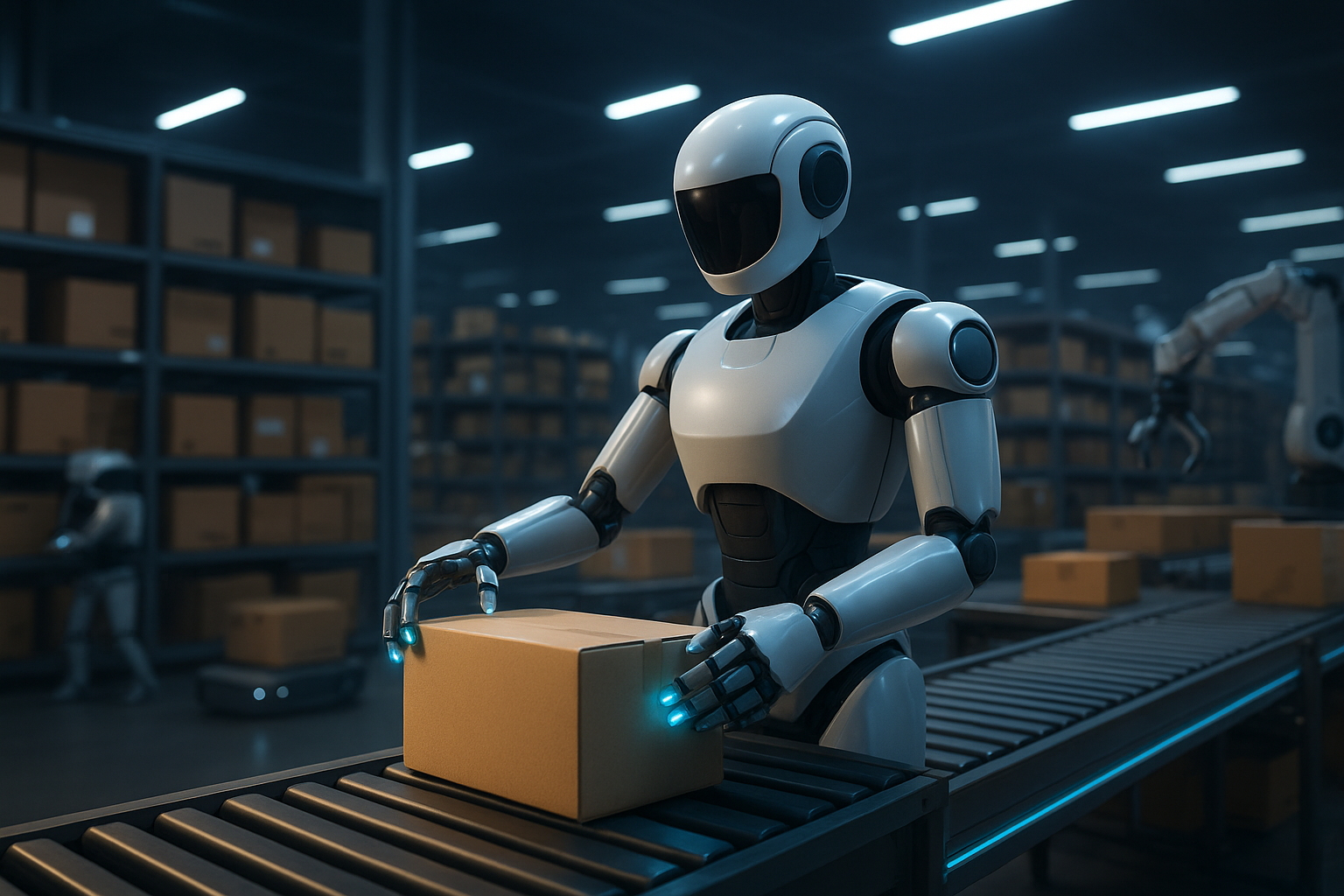
Amazon has introduced a new warehouse robot called Vulcan, and it comes with a capability that most industrial robots lack — a sense of touch. Unlike traditional robots that rely on cameras or suction cups, Vulcan can physically sense objects and adjust its grip accordingly. This makes it one of the most advanced warehouse robots Amazon has ever deployed.
What Is the Amazon Vulcan Robot?
Vulcan is Amazon’s latest addition to its growing fleet of warehouse automation machines. It was built to solve one of the hardest problems in robotics — picking up items of different shapes, sizes, and textures without dropping or damaging them.
Most warehouse robots struggle with soft packaging, slippery surfaces, or oddly shaped products. Vulcan handles these challenges using tactile sensing technology, which allows it to feel how much pressure it needs to apply when gripping an item.
- It uses tactile sensors to measure grip pressure in real time.
- It can handle soft, slippery, or irregularly shaped packages with precision.
- It is capable of managing up to 75% of all items found across Amazon’s warehouses.
This level of dexterity brings Vulcan much closer to how a human hand works compared to any previous warehouse robot.
How Vulcan’s Sense of Touch Works
Traditional robotic arms rely on visual data from cameras to identify and pick up objects. The problem is that cameras cannot always detect how firm or fragile an item is. Vulcan addresses this gap with tactile feedback — essentially giving the robot fingertip-like sensitivity.
When Vulcan grips a package, its sensors detect resistance and surface texture. Based on that data, it automatically adjusts the force it applies. This means it can handle a soft cloth pouch just as carefully as it handles a rigid cardboard box.
This approach reduces errors in picking and packing, speeds up the overall sorting process, and lowers the risk of product damage during handling.
Why Vulcan Matters for Amazon’s Warehouse Operations
Vulcan is not just a technical upgrade — it represents a meaningful shift in how Amazon runs its fulfillment centers. Here is why it stands out:
- Higher accuracy: Fewer picking errors means fewer returns and customer complaints.
- Faster throughput: Packages move through the system more quickly, reducing delays.
- Worker support: Vulcan is designed to take over repetitive and physically demanding tasks, not to replace human workers entirely.
- Scalability: With the ability to handle 75% of warehouse inventory, Vulcan can be deployed across multiple fulfillment centers at scale.
Amazon has been clear that Vulcan is meant to work alongside human employees, handling the tasks that are most physically tiring or prone to error.
Amazon’s History of Warehouse Robots
Vulcan is the latest step in Amazon’s long-running investment in warehouse robotics. The company has been building and deploying robots for over a decade. Here is a look at some of the key robots in Amazon’s lineup:
| Robot Name | Primary Function |
|---|---|
| Kiva Robots | Move shelving units across warehouse floors |
| Proteus | Autonomous navigation and cart movement |
| Cardinal | Picks up and sorts heavy boxes using a robotic arm |
| Vulcan | Handles items of varied shapes using tactile sensing |
With Vulcan, Amazon is now tackling the final frontier of warehouse automation — dexterity. Teaching a robot to feel and respond to physical feedback is a problem that robotics engineers have worked on for years, and Vulcan represents real progress in that direction.
What This Could Mean Beyond Warehouses
The technology behind Vulcan has potential applications well beyond Amazon’s fulfillment centers. Industries that require careful, precise handling of objects could benefit from similar tactile robotics:
- Healthcare: Handling medical supplies, fragile instruments, or patient care items.
- Retail: Sorting and stocking products on shelves without damage.
- Manufacturing: Assembling delicate components that require controlled pressure.
- Logistics: Managing mixed-item shipments in third-party warehouses.
As tactile sensing technology matures, it is likely to become a standard feature in next-generation industrial robots across many sectors.
Amazon’s Vulcan robot marks a genuine step forward in warehouse automation. By giving machines the ability to sense and respond to physical touch, Amazon has made its fulfillment operations more accurate, faster, and better suited to the wide variety of products it ships every day. The debut of Vulcan signals that the future of robotics is not just about speed and strength — it is equally about sensitivity and adaptability.
Frequently Asked Questions
Vulcan is Amazon's newest warehouse robot that uses tactile sensing technology to feel and grip objects of different shapes, sizes, and textures. It can handle up to 75% of the items found in Amazon's warehouses.
Vulcan uses tactile sensors that detect resistance and surface texture when gripping an item. Based on this feedback, it automatically adjusts the pressure it applies, allowing it to handle both soft and rigid packages without dropping or damaging them.
Amazon has stated that Vulcan is designed to work alongside human employees, not replace them. Its goal is to take over repetitive and physically demanding tasks, reducing strain on workers while improving overall warehouse efficiency.