Most of us pay close attention to what we eat and drink, but the air around us often goes unchecked. Pollutants, dust, allergens, and harmful gases can be present in the air at home, at work, or outdoors — and we may never know. Portable air-quality sensors are changing that by putting real-time air data right in your hands.
What Is a Portable Air-Quality Sensor?
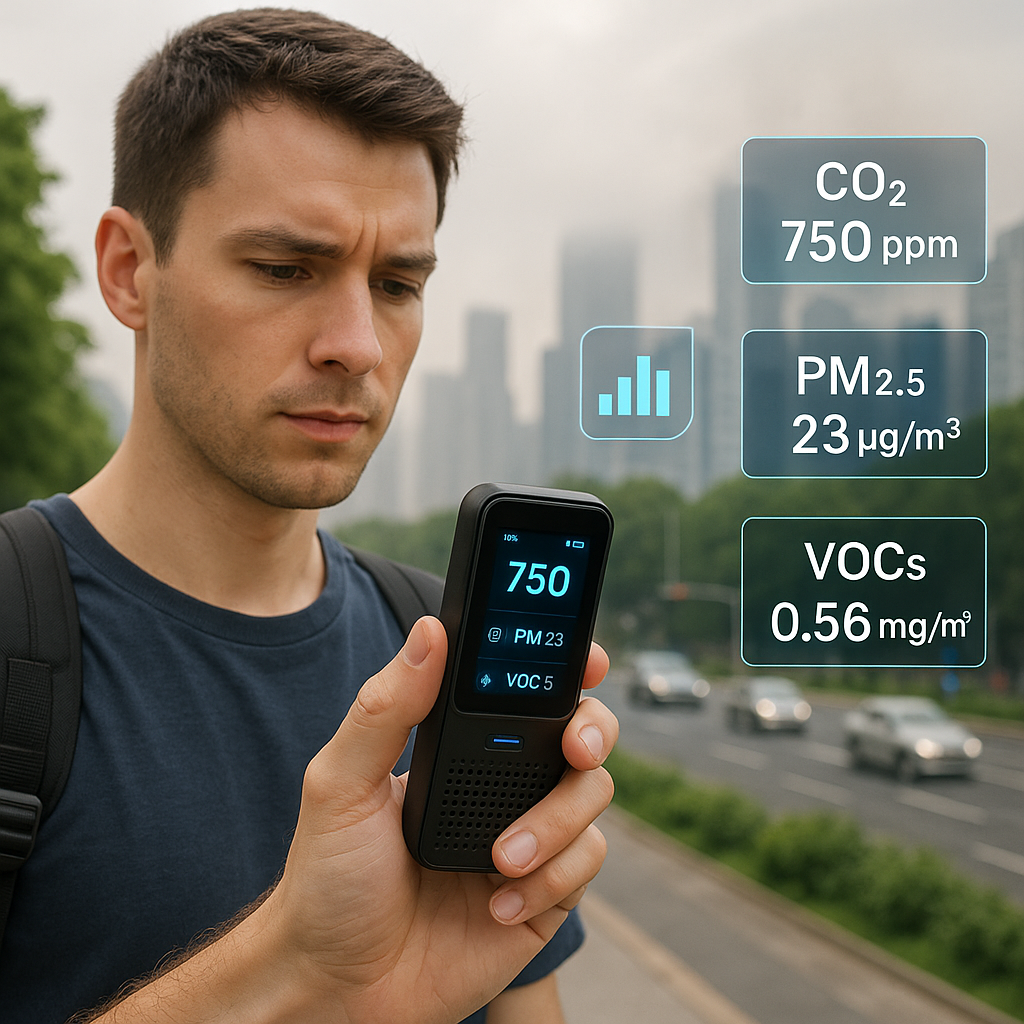
A portable air-quality sensor is a small, handheld device that checks the quality of the air around you in real time. It tells you whether the air is clean or polluted by detecting several key elements:
- PM2.5 and PM10 — fine dust and tiny particles that can enter your lungs
- Carbon dioxide (CO₂) and nitrogen dioxide (NO₂) — harmful gases linked to traffic and indoor sources
- VOCs (Volatile Organic Compounds) — chemicals released from paints, cleaning products, and furniture
- Temperature and humidity — factors that affect how comfortable and safe your environment is
Most of these devices connect to your smartphone via Bluetooth and display readings through a dedicated app, making the data easy to understand at a glance.
How Does a Portable Air-Quality Sensor Work?
These devices use a combination of sensor technologies to give you an accurate picture of your air environment. Here is how each component works:
- Particle sensors use light beams to count and measure dust and pollution particles floating in the air
- Gas sensors detect chemical compounds by reacting to their presence and measuring concentration levels
- Temperature and humidity sensors round out the data to give a complete view of your surroundings
All this information is processed inside the device and sent to your phone. Many apps present the data in colour-coded formats so you can instantly see whether the air quality is good, moderate, or unhealthy. Some devices also send alerts or health recommendations when pollution levels cross a certain threshold.
Why Are These Sensors Becoming So Popular?
Awareness about the health effects of poor air quality has grown significantly in recent years. People with asthma, allergies, or respiratory conditions are especially vulnerable, but even healthy individuals can experience headaches, fatigue, or reduced concentration when air quality drops.
Portable air sensors are gaining traction because they offer practical, everyday benefits:
- They provide instant readings without waiting for government data updates
- They work both indoors and outdoors, giving you a full picture of your exposure
- They help you avoid heavily polluted areas during outdoor activities like jogging or cycling
- They can prompt you to open a window, switch on an air purifier, or wear a mask when needed
- They support smarter decisions for your daily routine based on actual data
In Indian cities where air pollution levels frequently spike — especially during winter months — having a personal air monitor can make a real difference to your health choices.
Who Should Consider Using One?
Portable air-quality monitors are useful for a wide range of people. Here is a quick look at who benefits most:
| User Type | Key Benefit |
|---|---|
| Parents | Protect children from exposure to harmful pollutants at home or school |
| Remote workers | Improve indoor air quality for better focus and productivity |
| Health-conscious individuals | Reduce long-term exposure to pollutants that affect overall wellbeing |
| Travelers | Check air quality in unfamiliar locations before spending time there |
| Schools and offices | Monitor shared spaces and create safer environments for everyone |
Even if you are in good health, knowing what you breathe helps you plan better. You can decide when to keep windows closed, when to run an air purifier, or which route to take during your morning walk.
What Does the Future Hold for Air-Quality Sensors?
The technology behind portable air sensors is advancing quickly. Upcoming features expected in next-generation devices include:
- Built-in GPS to map air quality across different locations and track pollution patterns over time
- Personalised health tips based on your medical history and exposure data
- Smart home integration to automatically trigger air purifiers, fans, or ventilation systems when pollution rises
- Community data sharing that pools readings from multiple users to create detailed local air-quality maps
As more people adopt these devices, the collective data can help communities, researchers, and city planners identify pollution hotspots and work toward cleaner urban environments.
Portable air-quality sensors are no longer just a gadget for tech enthusiasts. They are becoming a practical health tool for anyone who wants to take control of what they breathe. With prices dropping and features improving, now is a good time to consider adding one to your daily routine.
Frequently Asked Questions
A portable air-quality sensor measures fine particles like PM2.5 and PM10, gases such as carbon dioxide (CO₂) and nitrogen dioxide (NO₂), volatile organic compounds (VOCs), and environmental factors like temperature and humidity.
Most portable air-quality sensors connect to your smartphone via Bluetooth. They send real-time data to a companion app where you can view readings, track trends, and receive health alerts when pollution levels rise.
People with asthma, allergies, or respiratory conditions benefit greatly, but parents, remote workers, travelers, and anyone spending time in urban or high-pollution areas can also use these devices to make healthier daily choices.