The way people shop online is changing fast. AI shopping agents are quietly taking over tasks that once required a human to open a browser, type a search query, and scroll through results. For businesses that rely on search visibility to drive sales, this shift carries serious implications for how SEO must evolve.
What Are AI Shopping Agents?
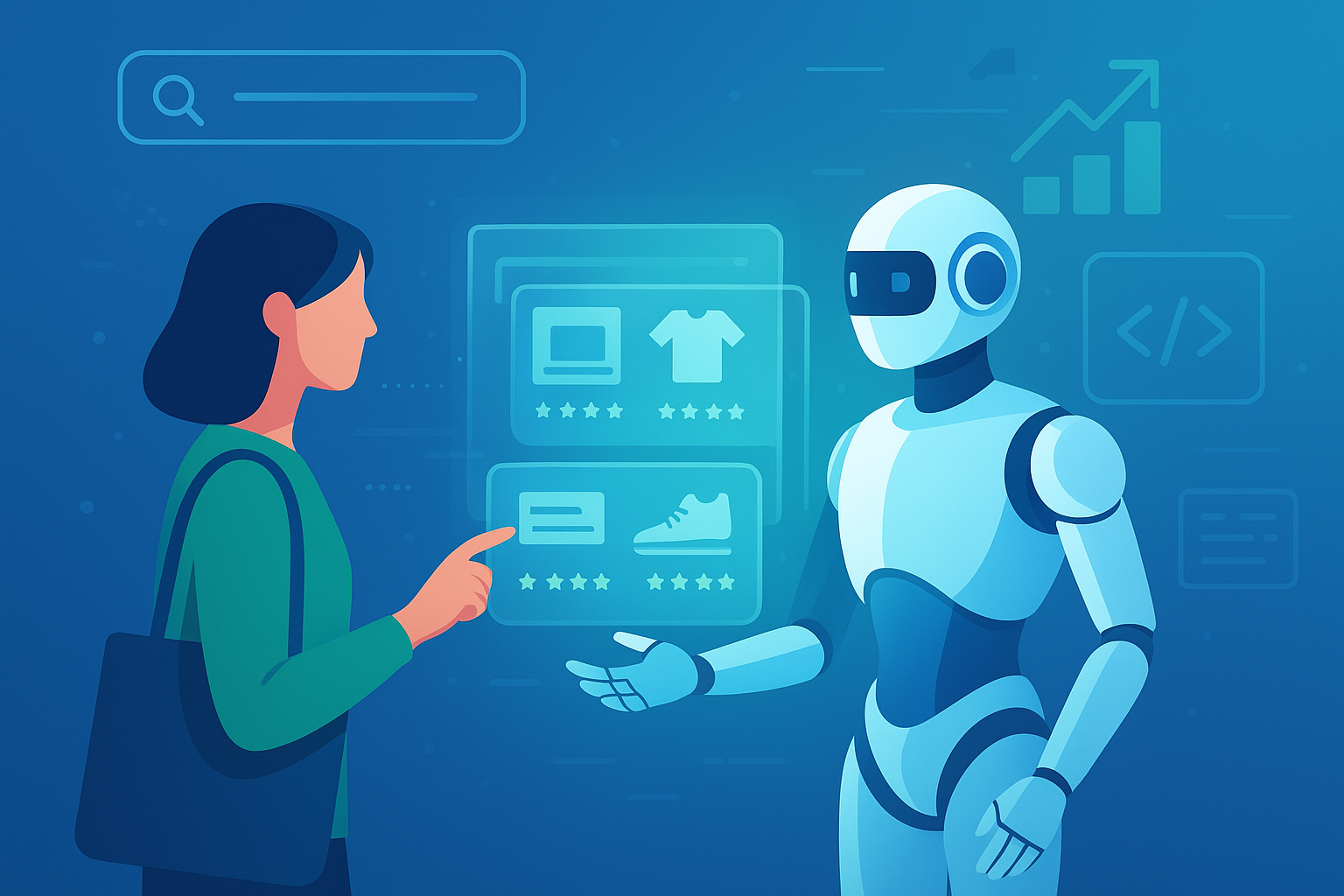
AI shopping agents are intelligent tools powered by artificial intelligence that handle the entire shopping process on a user’s behalf. Instead of a shopper visiting Google or Amazon to search for a product, they simply instruct their AI assistant to do it for them.
These agents are capable of:
- Searching for products across multiple websites simultaneously
- Comparing prices, delivery timelines, customer ratings, and product specifications
- Recommending the best options based on user preferences
- Adding items to a cart and completing the purchase without any manual input
For example, rather than typing “best headphones under ₹8,000” into a search engine, a user might simply tell their AI assistant: “Find me good wireless headphones under ₹8,000 with strong bass.” The agent then handles everything from search to checkout.
Popular AI assistants and emerging shopping tools from companies like Google, Amazon, and various startups are already building these capabilities into their platforms.
How AI Shopping Agents Are Disrupting Traditional SEO
Traditional SEO has long been built around keyword rankings, backlinks, and click-through rates from search engine results pages. AI shopping agents challenge all three of these pillars in distinct ways.
From keywords to user intent: Old-school SEO focused on matching exact keywords like “cheap running shoes.” AI agents, however, interpret what the user actually needs — their intent, budget, use case, and preferences — rather than just matching words. This means content must address real questions and needs, not just stuff in popular search terms.
Product data accuracy becomes critical: AI agents scan product pages for specific details — price, stock availability, shipping time, return policy, and customer reviews. If a website does not present this information clearly and in a structured format, the AI may simply skip it and recommend a competitor instead.
Technical performance matters more than ever: AI agents prefer websites that load quickly, work well on mobile devices, and present information in a clean, readable format. A slow or poorly structured site may be invisible to these agents, regardless of how well it ranks on traditional search.
Agent-to-agent commerce on the horizon: Looking ahead, the next stage could involve AI shopping agents communicating directly with a retailer’s own AI system to complete a purchase — without the human customer ever visiting the website. This model of machine-to-machine commerce would make traditional page visits and bounce rates largely irrelevant as ranking signals.
What Businesses Must Do to Stay Visible
Adapting SEO strategy for an AI-driven shopping environment requires a shift in both technical setup and content approach. Here are the key steps businesses should take:
- Implement structured data and schema markup: Use product schema to clearly communicate price, availability, ratings, and other key details to AI crawlers and agents.
- Write in natural, conversational language: Create content that answers real questions the way a customer would ask them — for example, “Which headphones are best for gym workouts?”
- Build trust signals actively: Encourage genuine customer reviews, display ratings prominently, and maintain transparent return and shipping policies. AI agents tend to favour sellers with strong trust indicators.
- Prioritise website speed and mobile performance: A fast-loading, mobile-friendly site with well-organised product listings is essential for AI readability.
- Optimise for both humans and machines: Your website now has two audiences — real shoppers and AI platforms. Content and structure must serve both effectively.
Comparing Traditional SEO vs AI-Optimised SEO
| Factor | Traditional SEO | AI Shopping Agent SEO |
|---|---|---|
| Primary focus | Keyword rankings | User intent and structured data |
| Content style | Keyword-rich text | Natural, conversational language |
| Technical needs | Backlinks, meta tags | Schema markup, fast load speed |
| Trust signals | Domain authority | Reviews, ratings, transparency |
| Audience | Human searchers | Humans and AI agents |
The table above highlights how the priorities for SEO are shifting as AI agents become more involved in the purchase journey.
The Bigger Picture for Indian E-Commerce Businesses
For Indian online retailers and D2C brands, this shift is particularly relevant. With smartphone penetration growing and voice-based shopping assistants becoming more common, Indian consumers are increasingly comfortable using AI-powered tools to make purchase decisions. Businesses that invest in structured product data, fast mobile experiences, and genuine customer reviews today will be far better positioned as AI-driven shopping becomes mainstream.
Ignoring this shift means risking invisibility — not just on Google, but across the AI platforms that are becoming the new gatekeepers of consumer attention.
The businesses that prepare now — by making their product information clear, their websites fast, and their trust signals strong — will remain discoverable not just to shoppers, but to the AI assistants that increasingly guide what those shoppers buy.