Businesses today want applications that are fast, scalable, and affordable. Two of the most popular approaches to building modern software are Cloud architecture and Serverless architecture. Both are powerful, but they work very differently. Choosing the right one depends on your project size, budget, and technical team. Here is a clear breakdown of both to help you decide.
What Is Cloud Architecture?
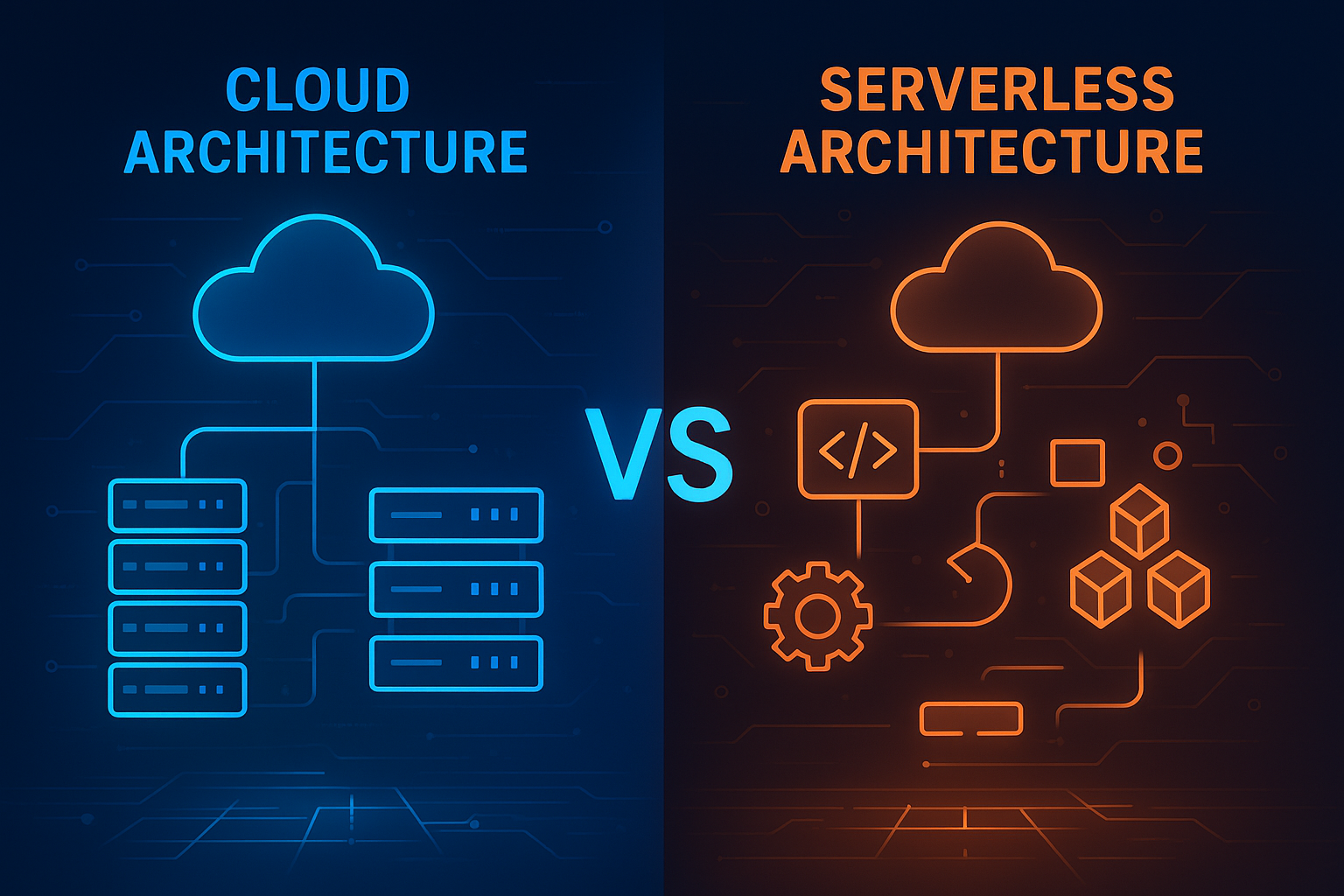
Cloud architecture means running your application on virtual servers hosted on cloud platforms like AWS (Amazon Web Services), Google Cloud, or Microsoft Azure. Instead of buying physical hardware, you rent computing power from these providers and manage it according to your needs.
With cloud architecture, you have control over the server size, storage capacity, and performance settings. However, your team is responsible for managing, updating, and securing those servers.
Advantages of Cloud Architecture:
- Full control over how your application runs
- Strong performance for large or complex applications
- Easy to scale server capacity during high traffic periods
- Works well for microservices and enterprise-level software
- Supports custom infrastructure configurations
Disadvantages of Cloud Architecture:
- Your team must handle updates, security patches, and scaling
- Higher costs because you pay for server uptime even when the server is idle
- Requires a dedicated DevOps team or strong technical knowledge
What Is Serverless Architecture?
Serverless architecture means you write the code and the cloud provider handles everything else. There are no servers to set up or maintain. You simply upload your function and it runs when triggered.
Popular serverless services include AWS Lambda, Firebase Functions, and Azure Functions. These platforms automatically manage the infrastructure behind the scenes.
Advantages of Serverless Architecture:
- Very low cost — you pay only when your code actually runs
- No server setup or maintenance required
- Faster development and deployment cycles
- Automatic scaling based on traffic demand
- Ideal for startups, small teams, and event-driven applications
Disadvantages of Serverless Architecture:
- Cold start delays — a slight lag when functions run after being idle
- Not suitable for long-running background processes
- Heavy dependency on a single cloud provider
- Difficult to use for very large or complex applications
Cloud vs Serverless: Side-by-Side Comparison
| Feature | Cloud Architecture | Serverless Architecture |
|---|---|---|
| Server Setup | You manage servers | No servers to manage |
| Cost Model | Pay for server uptime | Pay only when code runs |
| Scaling | Manual or semi-automatic | Fully automatic |
| Best For | Large apps, enterprise systems | APIs, events, quick apps |
| Flexibility | Very high | Limited |
| Maintenance | Required | Not required |
When Should You Choose Cloud Architecture?
Cloud architecture is the better choice when your project demands full control and high flexibility. It suits teams that have the technical expertise to manage infrastructure and need consistent, predictable performance.
Choose Cloud Architecture if:
- You are building large-scale enterprise software
- Your application requires long-running background tasks
- You need custom server configurations or specific compliance requirements
- Your team has a dedicated DevOps setup
- You want to avoid vendor lock-in by distributing across multiple cloud providers
When Should You Choose Serverless Architecture?
Serverless architecture works best when you want to move fast, keep costs low, and avoid the overhead of managing servers. It is especially popular among startups and small development teams.
Choose Serverless Architecture if:
- You want to reduce infrastructure costs significantly
- Your application traffic is unpredictable or seasonal
- You need to build and deploy features quickly
- Your app relies on event-driven triggers, APIs, or automation tasks
- You have a small team without dedicated server management resources
Many modern businesses also use a hybrid approach — running core services on cloud infrastructure while using serverless functions for specific tasks like notifications, data processing, or API responses. This gives the best of both worlds.
Ultimately, neither architecture is universally better. The right choice depends on your workload type, team size, budget, and long-term growth plans. Understanding the strengths and limitations of each will help you build smarter, more efficient applications.