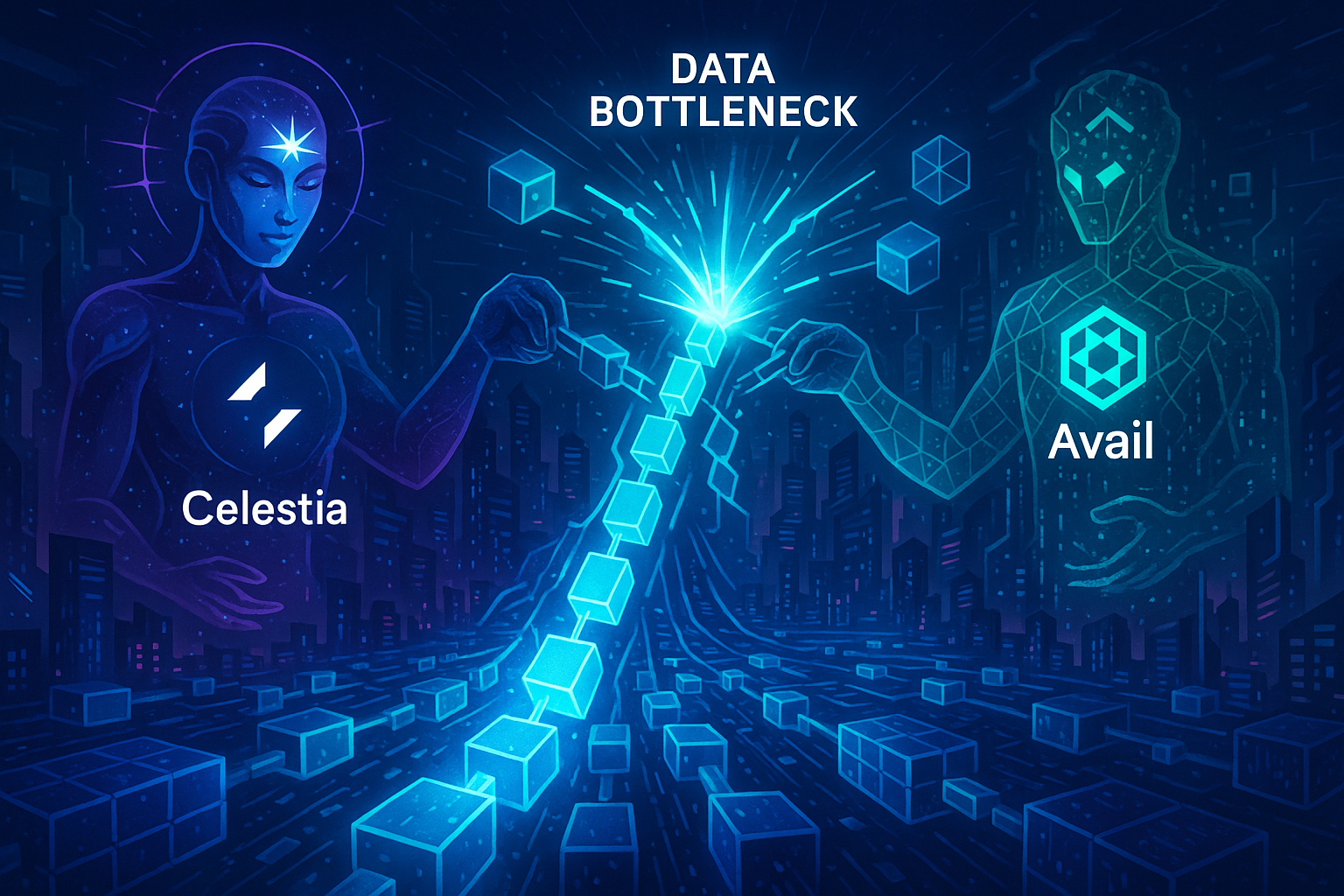
Blockchain networks have grown significantly in capability, but one persistent challenge continues to slow them down — data availability. Without reliable access to transaction data, networks face security gaps, fraud risks, and poor performance. Three major projects are now competing to solve this: Celestia, Avail, and EigenDA. Here is a clear breakdown of what each one does, how they differ, and which one might suit your project best.
What Is Data Availability and Why Does It Matter?
Data availability refers to the ability of all participants in a blockchain network to access and verify the data behind every transaction. When data is hidden or missing, serious problems follow.
- Security vulnerabilities that expose the network to attacks
- Fraudulent transactions that go unchecked
- Slower performance as validators struggle to confirm blocks
This issue is especially critical in modular blockchains and rollups, where transaction execution and data storage are handled by separate systems. Data Availability (DA) layers step in to ensure all data stays visible, complete, and verifiable at all times. Celestia, Avail, and EigenDA are the three leading solutions in this space.
Celestia: The Pioneer of Modular Data Availability
Celestia is widely recognised as the first blockchain built exclusively for data availability and consensus. Unlike traditional blockchains, it does not support smart contracts or decentralised applications. Its sole purpose is to store and verify data for other chains.
Key strengths of Celestia include:
- Modular architecture: Developers building rollups or custom chains can plug into Celestia purely for data storage, keeping their execution layer separate.
- Data Availability Sampling (DAS): Light nodes only need to check small random samples of data rather than the entire dataset, making verification faster and more efficient.
- Scalability through participation: As more users join the network, data validation improves, making the system faster over time.
Celestia is the ideal choice for developers building custom rollup chains who want to outsource data availability to a dedicated, battle-tested layer.
Avail: A Chain-Agnostic Data Layer Built by Polygon
Avail was created by the team behind Polygon, but it is designed to work with any blockchain ecosystem — not just Polygon. This chain-neutral approach sets it apart from the competition.
Key strengths of Avail include:
- Multi-chain compatibility: Works with Ethereum, Cosmos, and other major blockchain ecosystems without requiring deep integration.
- Light client support: Even low-powered devices can participate in data verification, making the network more accessible and decentralised.
- Cross-chain readiness: Built with multi-chain applications and blockchain bridges in mind, making it highly flexible for complex Web3 projects.
Avail is best suited for teams building applications across multiple blockchains who need a universal, flexible data availability layer that does not lock them into a single ecosystem.
EigenDA: Ethereum-Native Data Availability Through Restaking
EigenDA is a product of EigenLayer, a protocol that introduced the concept of restaking — allowing staked Ethereum to be reused to secure additional services and networks.
Key strengths of EigenDA include:
- Native Ethereum integration: Designed specifically to support Ethereum-based rollups, making it a natural fit for projects already in the Ethereum ecosystem.
- Restaking model: Validators can reuse their existing staked ETH to secure EigenDA, removing the need to stake new tokens and reducing capital requirements.
- Cost-efficient performance: Offers fast and affordable data availability for Ethereum-based applications, making it practical for high-throughput rollups.
EigenDA is the right choice for developers working within the Ethereum rollup ecosystem who need tight integration, strong security backed by Ethereum validators, and lower operational costs.
Side-by-Side Comparison: Celestia vs Avail vs EigenDA
| Feature | Celestia | Avail | EigenDA |
|---|---|---|---|
| Base Network | Independent (Modular) | Polygon team (Chain-agnostic) | Ethereum (Restaking) |
| Primary Use Case | Custom modular chains and rollups | Multi-chain rollups | Ethereum rollups |
| Security Model | Own validator set | Own validator set | Ethereum validators |
| Unique Advantage | Scalable DAS model | Chain-neutral integration | Native Ethereum support and restaking |
| Best For | Developers building new rollup chains | Multi-chain app developers | Ethereum-focused developers |
Each platform takes a different approach to solving the same core problem. Celestia focuses on being a dedicated modular DA layer for custom chains. Avail offers flexibility across multiple blockchain ecosystems. EigenDA leverages Ethereum’s existing security infrastructure through restaking to serve rollup developers efficiently.
As Web3 infrastructure matures, these three platforms are likely to become foundational components of faster, safer, and more scalable decentralised applications. The right choice depends entirely on the ecosystem you are building in and the level of flexibility or integration you require.