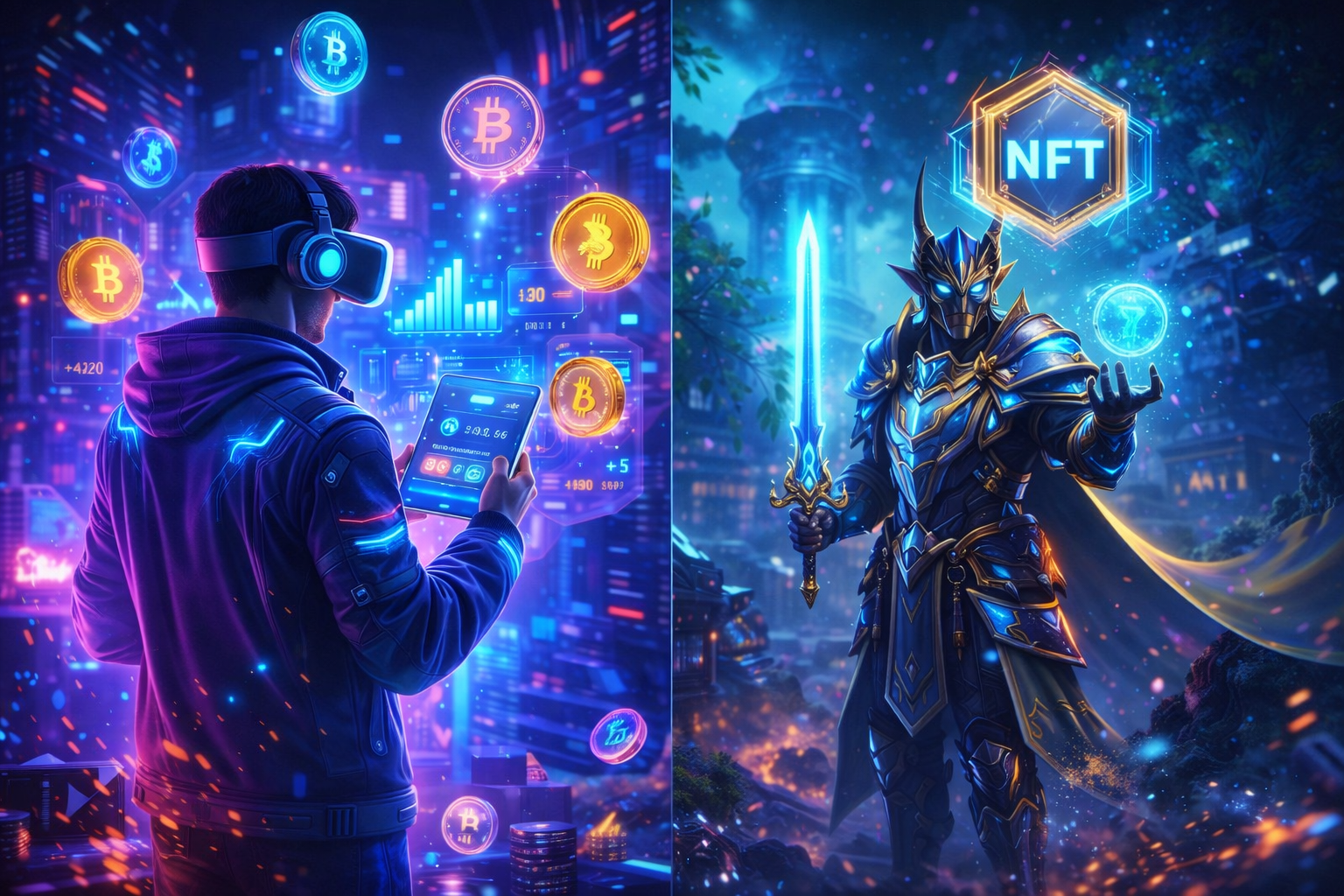
Gaming has grown far beyond entertainment. With blockchain technology entering the picture, players can now truly own their in-game assets, trade them freely, and earn real money while playing. This shift is quietly building a new kind of digital economy — one where gamers are also stakeholders.
What Is Blockchain Gaming?
In traditional games, everything you buy or earn — skins, weapons, characters — is stored on a company’s centralized server. You pay for it, but you never truly own it. The game developer can remove it, change it, or shut down the server entirely.
Blockchain gaming changes this dynamic completely. In Web3 games, in-game assets are minted as NFTs (Non-Fungible Tokens) on a blockchain network. This gives players verifiable, transparent ownership that no single company can take away.
With blockchain-based ownership, players can:
- Own their in-game characters, weapons, and items outright
- Trade or sell assets on open marketplaces
- Transfer items across compatible platforms
- Earn cryptocurrency tokens through gameplay
The ownership record lives on the blockchain — public, permanent, and tamper-proof.
How the Play-to-Earn Model Works
Play-to-earn (P2E) is a model where players receive cryptocurrency rewards for completing in-game tasks — finishing missions, winning battles, or contributing to the game’s ecosystem.
Axie Infinity became one of the most well-known examples. Players breed, train, and battle digital creatures called Axies to earn tokens, which can then be exchanged for real-world currency. At its peak, the game attracted millions of players, particularly in countries like the Philippines and Vietnam, where some treated it as a primary income source.
While the initial excitement has settled, the underlying concept continues to mature. Developers are now building more sustainable earning systems that don’t rely purely on speculation.
The Role of NFTs in Gaming Economies
NFTs bring the concept of digital scarcity to gaming. A rare sword, a limited-edition skin, or a virtual land parcel can be minted as a unique NFT — meaning only one person can own the original at any given time.
This creates real market value driven by community demand. Players who acquire rare assets early can sell them later at a profit, much like physical collectibles.
Platforms like Immutable are building the infrastructure to support large-scale NFT-based gaming ecosystems. Immutable focuses on making NFT transactions fast, low-cost, and environmentally friendly — addressing some of the biggest complaints about earlier blockchain gaming platforms.
| Feature | Traditional Gaming | Blockchain Gaming |
|---|---|---|
| Asset Ownership | Belongs to the developer | Belongs to the player |
| Trading Assets | Not allowed or restricted | Freely tradeable on open markets |
| Earning Real Money | Rare or unofficial | Built into the game model |
| Data Transparency | Centralized, opaque | On-chain, publicly verifiable |
Challenges the Industry Still Faces
Blockchain gaming is promising, but it comes with real challenges that developers and players must navigate.
- Token volatility: Cryptocurrency rewards can lose value quickly, making earnings unpredictable.
- High gas fees: On some networks, transaction costs make small in-game trades impractical.
- Regulatory uncertainty: Governments in several countries are still figuring out how to classify and regulate crypto-based game rewards.
- Game quality concerns: Many early P2E games prioritized earning mechanics over actual gameplay, leading to poor user experiences.
The industry has acknowledged these problems. The focus is now shifting toward sustainable tokenomics — designing in-game economies that hold value over time rather than collapsing after early hype fades.
What the Future of Web3 Gaming Looks Like
The next wave of blockchain games is aiming for AAA-quality experiences — the kind of high-budget, immersive games that mainstream players already enjoy — but with the added benefits of true ownership and earning potential.
Some developments likely to shape the space include:
- Cross-game asset interoperability — using the same NFT item across multiple games
- Decentralized governance — players voting on game updates and changes through token-based systems
- Metaverse integration — linking game assets with broader virtual world platforms
- Smarter in-game economies — better-designed token systems that reward long-term players over short-term speculators
As blockchain infrastructure becomes faster, cheaper, and more user-friendly, the barrier to entry for both developers and players will drop significantly. That could be the turning point that brings blockchain gaming into the mainstream.
Blockchain gaming and play-to-earn models have already proven one thing: digital ownership is possible, and players want it. The early hype may have cooled, but the core idea — that players should have real control over what they earn and own inside a game — is only getting stronger. The gaming industry is no longer just about playing. It is becoming about participating in a decentralized digital economy where your time and skill can hold genuine value.