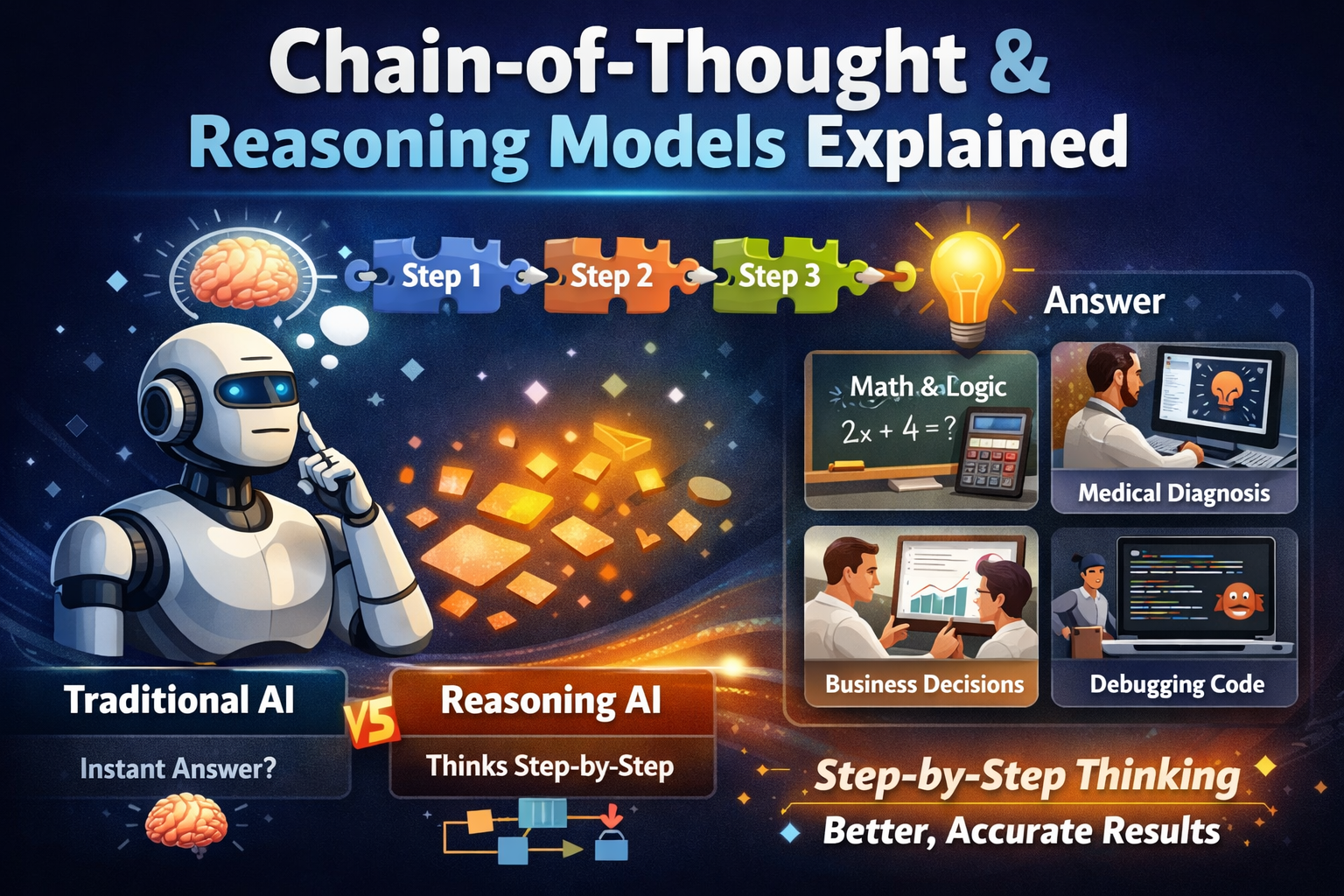

Artificial intelligence has moved well beyond answering questions or generating text. By 2026, AI agents are becoming autonomous digital workers — systems that can plan, reason, execute tasks, and collaborate across business platforms with little to no human supervision. This shift from simple chatbots to intelligent agents is one of the most significant changes happening in enterprise technology right now.
From Chatbots to AI Agents: What Has Actually Changed?
Traditional chatbots were reactive by design. They responded to prompts, followed scripted conversation flows, and handled narrow tasks like answering customer service FAQs. They had no ability to take initiative or adapt to new situations.
AI agents in 2026 work very differently. They can:
- Set goals and break them into smaller, manageable subtasks
- Access multiple tools, APIs, and enterprise systems simultaneously
- Analyze both structured and unstructured data
- Make context-aware decisions based on real-time information
- Continuously learn and improve from outcomes
Instead of waiting for a human to issue a command, modern AI agents can initiate actions based on business triggers — such as a spike in customer complaints or a missed shipment deadline.
What Exactly Is an Autonomous Digital Worker?
An autonomous digital worker is an AI-powered system that independently manages workflows that were previously handled by human employees. These are not simple bots following rigid rules. They combine reasoning, memory, and adaptability to handle complex, multi-step processes.
Real-world examples of what autonomous digital workers can do include:
- Processing invoices and reconciling financial data
- Managing supply chain logistics and flagging disruptions
- Scheduling operations and optimizing resource allocation
- Monitoring cybersecurity threats and responding in real time
- Conducting market research and summarizing actionable insights
This is a major step beyond robotic process automation (RPA), which can only follow pre-defined rules and breaks down when conditions change unexpectedly.
Core Technologies That Power AI Agents in 2026
Several key technologies work together to make autonomous AI agents possible:
- Large Language Models (LLMs): These enable reasoning, contextual understanding, and natural interaction with users and systems.
- Multi-Agent Systems: Multiple AI agents collaborate, each specializing in a domain — finance, HR, logistics — forming an intelligent, coordinated ecosystem.
- Tool Integration and API Access: AI agents connect directly to CRM systems, ERP platforms, cloud databases, and enterprise software to take real actions.
- Memory and Context Retention: Persistent memory allows agents to maintain awareness of long-term projects rather than starting fresh each session.
- Reinforcement Learning and Feedback Loops: Agents refine their strategies through performance feedback, becoming more efficient over time.
How AI Agents Compare to Traditional Automation
To understand the scale of this shift, it helps to compare AI agents directly with older automation technologies:
| Feature | Chatbots | RPA | AI Agents (2026) |
|---|---|---|---|
| Reactive responses | Yes | Yes | Yes |
| Autonomous planning | No | No | Yes |
| Cross-system integration | Limited | Moderate | Advanced |
| Context awareness | Basic | None | High |
| Continuous learning | Limited | None | Yes |
AI agents are not just tools — they function as collaborative digital coworkers that can take ownership of tasks end to end.
Real Business Applications Across Industries
AI agents are already being deployed across multiple business functions:
- Customer Service: Agents resolve complex issues by checking order systems, processing refunds, and escalating only when human judgment is truly needed.
- Enterprise Workflow Management: They coordinate cross-department tasks — scheduling meetings, updating dashboards, and triggering automated reports without manual input.
- Finance and Accounting: Autonomous systems audit transactions, detect anomalies, and prepare financial summaries faster than any human team.
- IT and Cybersecurity: Agents monitor network activity around the clock, respond to threats, and patch vulnerabilities in real time.
Benefits, Risks, and the Road Ahead
The advantages of deploying autonomous AI agents are clear:
- Tasks that once took hours can be completed in minutes
- Reduced dependency on repetitive manual labor lowers operational costs
- Large datasets are analyzed instantly for faster, data-driven decisions
- AI workers operate 24 hours a day, seven days a week without downtime
However, businesses must also take the risks seriously. Key concerns include:
- Governance and accountability when agents make errors
- Data privacy and regulatory compliance across jurisdictions
- Security vulnerabilities introduced through API integrations
- Over-reliance on automation reducing human critical thinking
- Ethical boundaries around autonomous decision-making
Strong monitoring frameworks and human oversight mechanisms are essential for responsible deployment. By 2026 and beyond, the trajectory points toward industry-specific AI agents in legal, healthcare, and manufacturing sectors, personalized AI executive assistants, and multi-agent ecosystems capable of running entire business departments autonomously.
The future of work is not AI replacing humans — it is AI handling execution and routine coordination while humans focus on strategy, creativity, and oversight. Organizations that adopt autonomous digital workers thoughtfully will gain real advantages in efficiency, scalability, and speed of innovation.