Artificial intelligence is reshaping industries across the world, and two terms that come up constantly are machine learning and deep learning. While both fall under the AI umbrella, they work differently and suit different kinds of problems. Understanding the distinction helps you make smarter decisions — whether you are a student, developer, or business professional exploring AI solutions.
What is Machine Learning?
Machine learning is a branch of artificial intelligence that allows computers to learn from data and make predictions or decisions — without being explicitly programmed for every task. Instead of following a fixed set of rules, a machine learning model studies past examples, identifies patterns, and applies those patterns to new situations.
Machine learning is broadly divided into three types:
- Supervised Learning: The model trains on labelled data. A classic example is predicting house prices based on historical data like size, location, and number of rooms.
- Unsupervised Learning: The model works with unlabelled data to find hidden patterns — such as grouping customers by their purchasing behaviour.
- Reinforcement Learning: The model learns by interacting with an environment, earning rewards for correct actions and penalties for wrong ones. This approach is widely used in robotics and gaming.
What is Deep Learning?
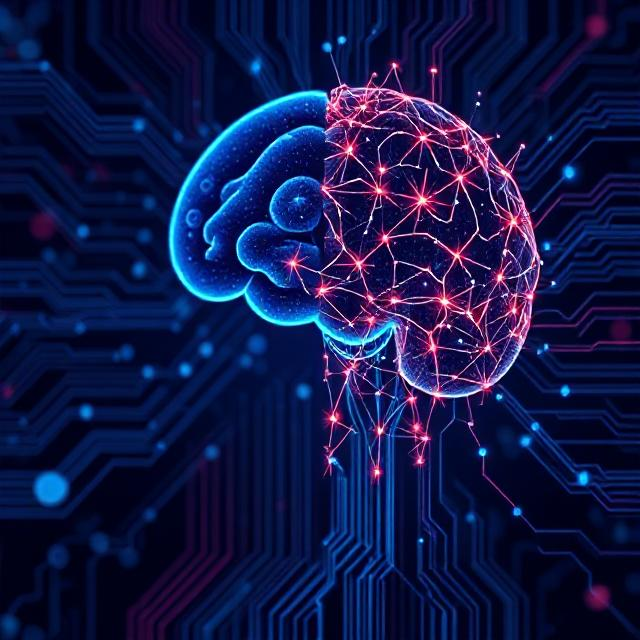
Deep learning is a more advanced subset of machine learning. It uses structures called neural networks — layers of interconnected nodes designed to mimic how the human brain processes information. Each layer handles data progressively, allowing the model to detect increasingly complex patterns.
One major advantage of deep learning is its ability to extract features from raw data — like identifying shapes or colours in an image — without human guidance. However, this power comes at a cost: deep learning models require significantly more data and computing resources, including high-performance hardware like GPUs (Graphics Processing Units).
Key Differences Between Machine Learning and Deep Learning
Here is a side-by-side comparison to make the differences clearer:
| Factor | Machine Learning | Deep Learning |
|---|---|---|
| Data Requirements | Works well with smaller datasets | Needs large volumes of data |
| Feature Engineering | Requires manual feature selection | Automatically identifies features |
| Complexity | Simpler models, fewer resources | Complex models, needs GPUs |
| Interpretability | Easier to understand and explain | Harder to interpret (black box) |
| Best Performance | Structured, tabular data tasks | Images, audio, video, text |
When Should You Use Machine Learning?
Machine learning is the right choice when:
- Your dataset is relatively small or medium-sized.
- You need a model that is easy to interpret and explain to stakeholders.
- The task involves structured data — like spreadsheets or databases.
- You are working on problems like fraud detection, customer churn prediction, or product recommendation systems.
In these scenarios, machine learning algorithms such as decision trees, random forests, or logistic regression deliver reliable results without demanding heavy infrastructure.
When Should You Use Deep Learning?
Deep learning is the better option when:
- You have access to large, complex datasets — such as images, audio clips, or video footage.
- The task requires the model to learn intricate patterns on its own.
- You are building applications like facial recognition, self-driving cars, speech recognition, or virtual assistants like Siri and Alexa.
- You have the computing infrastructure — particularly GPUs — to support model training.
Deep learning has powered some of the most impressive AI breakthroughs in recent years, from real-time language translation to medical image analysis. But it is not always the most practical choice for every project, especially when data or computing resources are limited.
In summary, both machine learning and deep learning are powerful tools within artificial intelligence. Machine learning is practical, interpretable, and effective for a wide range of everyday tasks. Deep learning, on the other hand, excels at handling complex, unstructured data at scale. Choosing between the two depends on your data, resources, and the complexity of the problem you are trying to solve. For most beginners and small-scale projects, starting with machine learning is a smart and accessible entry point into the world of AI.
Frequently Asked Questions
Not always. Deep learning performs better on complex, large-scale data like images and audio. For smaller, structured datasets, traditional machine learning models are often more efficient and easier to interpret.
Yes. Machine learning is generally considered more beginner-friendly. You can learn and apply machine learning algorithms effectively before moving on to the more complex concepts in deep learning.
Deep learning models typically require powerful hardware, especially GPUs (Graphics Processing Units), to handle the large amounts of data and complex computations involved in training neural networks.