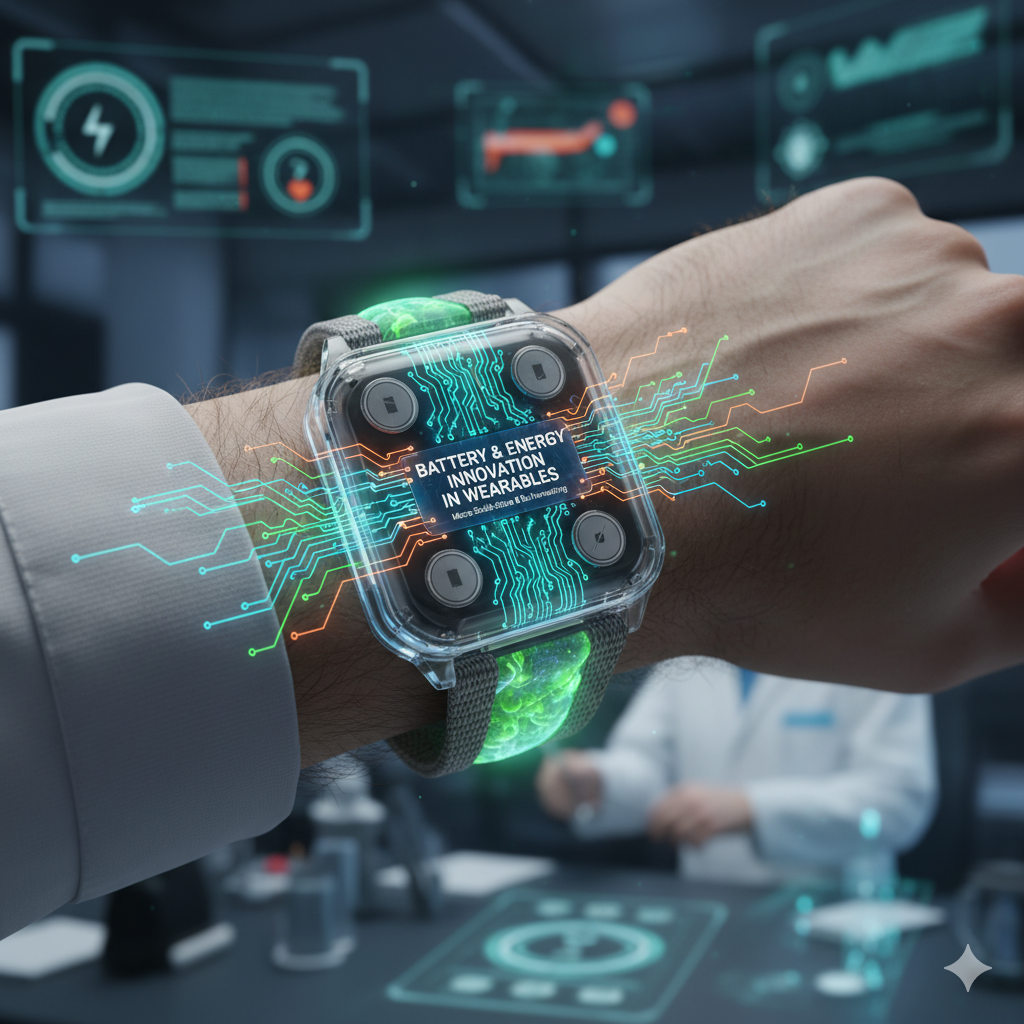
Battery life remains the single biggest frustration for smartwatch and fitness band users. No matter how advanced a wearable gets, if it needs daily charging, it loses its appeal. That is why the biggest names in tech are now pouring resources into battery and energy innovation — and the results are starting to look very promising.
Why Battery Life Matters So Much in Wearables
Wearables are compact by design. Unlike smartphones, they cannot carry large battery cells. Yet they are expected to run a growing list of demanding features around the clock, including:
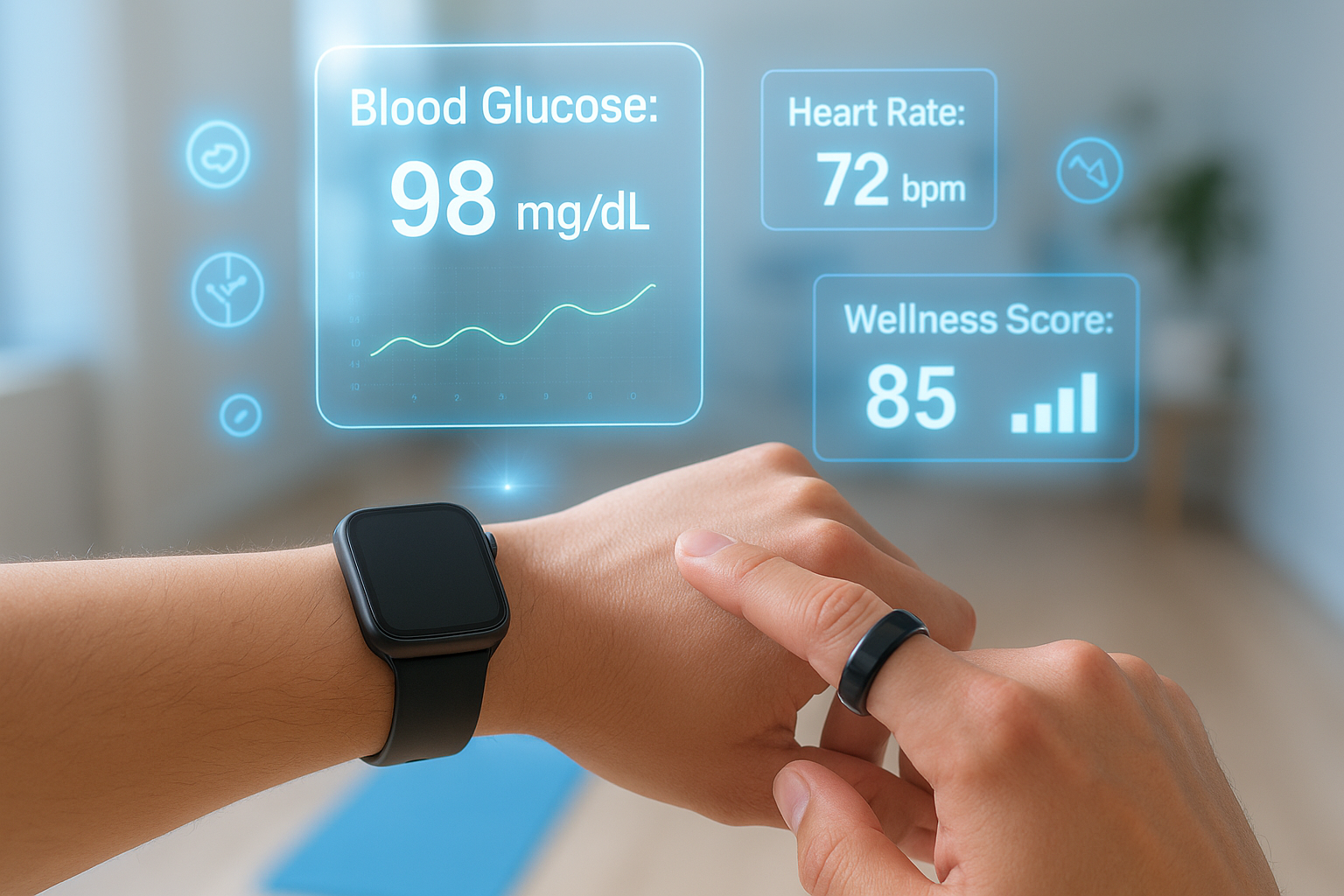
- Heart rate and SpO2 monitoring — continuous health tracking that drains power steadily
- GPS navigation — one of the heaviest battery consumers in any wearable
- Bluetooth and Wi-Fi connectivity — always-on connections that keep devices linked to phones and networks
- Notifications and third-party apps — real-time alerts and background processes running constantly
When battery capacity cannot keep up with these demands, users either face daily charging routines or bulkier devices. Neither option is ideal, which is why energy innovation has become central to the future of wearable technology.
New Battery Technologies Changing the Wearable Landscape
Researchers and manufacturers are working on several fronts to solve the battery problem. Here is a look at the most significant advances:
Solid-State Batteries replace the liquid electrolyte found in traditional lithium-ion cells with a solid material. This allows more energy to be packed into a smaller space, which means longer run times without increasing the size of the device.
Graphene Batteries are another major development. Graphene conducts electricity far more efficiently than conventional materials. Batteries built with graphene charge significantly faster and hold their charge longer — potentially enabling a smartwatch that charges in minutes and runs for an entire week.
Together, these two technologies could make the daily charging habit a thing of the past for most wearable users.
Self-Charging Wearables: Powering Up Without Plugging In
Some of the most exciting research focuses on wearables that generate their own power. Several approaches are already in development or early commercial use:
- Solar-powered watches — Brands like Garmin and Casio already offer models that use sunlight to extend battery life, reducing how often users need to charge
- Kinetic energy harvesting — Future wearables may recharge simply from the movement of your wrist while walking or running
- Body heat energy conversion — Thermoelectric sensors are being developed that can turn the natural warmth of the human body into usable electrical power
These self-charging methods could eventually make wearables nearly autonomous in terms of power, requiring little to no intervention from the user.
Smarter Chips, Displays, and Intelligent Power Management
Better batteries are only part of the solution. Engineers are also redesigning the internal components of wearables to consume far less power in the first place.
Ultra-low power processors can run multiple sensors simultaneously without putting heavy demands on the battery. OLED and E-Ink displays deliver clear, readable screens while using a fraction of the energy that older display technologies required.
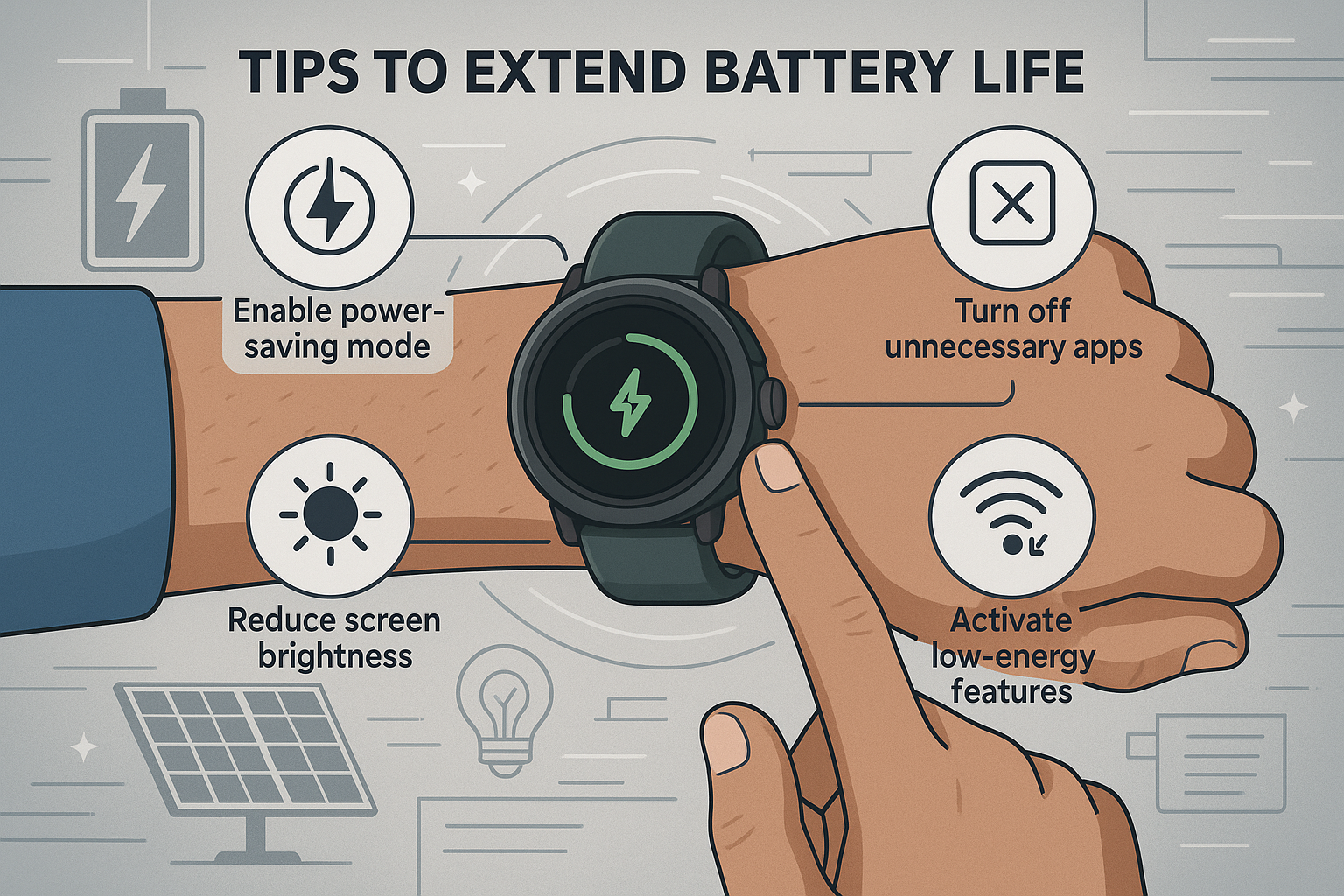
On the software side, intelligent power management is making a real difference. Smart algorithms now help wearables use energy more efficiently by:
- Reducing GPS update frequency when the user is not moving
- Automatically adjusting screen brightness based on ambient light and usage patterns
- Shutting down background applications when they are not actively needed
The practical result is that the same battery capacity goes noticeably further, without the user having to manually tweak any settings.
Charging technology itself is also improving rapidly. Magnetic wireless charging is now standard across many smartwatch brands. Fast charging solutions can deliver a full day of power in as little as 10 to 15 minutes. Over-the-air wireless charging — where a device charges without any physical contact or dock — is still under development but represents the next logical step.
What These Advances Mean for Everyday Users
The benefits of battery and energy innovation go well beyond technical specifications. For the average person wearing a smartwatch or fitness band, these changes translate into real, everyday improvements:
| Innovation | User Benefit |
|---|---|
| Solid-state and graphene batteries | Longer battery life, faster charging |
| Solar and kinetic self-charging | Less dependence on chargers |
| Low-power chips and displays | Thinner, lighter, more comfortable devices |
| Intelligent power management | Extended run time without manual effort |
| Fast and wireless charging | Quick top-ups with minimal hassle |
Longer-lasting batteries also carry an environmental benefit. Devices that need less frequent charging consume less electricity over time, and batteries with extended lifespans reduce electronic waste — a growing concern as wearable adoption increases globally.
In conclusion, battery and energy innovation is set to fundamentally change what users expect from their wearables. As solid-state batteries, self-charging capabilities, and smart power management move from research labs into consumer products, smartwatches and fitness bands will become more reliable, more comfortable, and more sustainable. The goal of a wearable that powers itself — and never needs to be taken off for charging — is closer than most people realise.
Frequently Asked Questions
Brands like Garmin and Amazfit are known for offering smartwatches with multi-week battery life, especially in GPS-light or watch-only modes. Solar-assisted models from Garmin and Casio can extend battery life further by harvesting sunlight.
A solid-state battery replaces the liquid electrolyte in traditional lithium-ion batteries with a solid material. This allows more energy to be stored in a smaller space, making it ideal for compact wearables that need longer run times without increasing device size.
Some wearables already use solar energy to supplement battery life, such as certain Garmin and Casio models. Research into kinetic energy harvesting and body heat conversion is ongoing, and future devices may be able to sustain themselves largely through these self-charging methods.