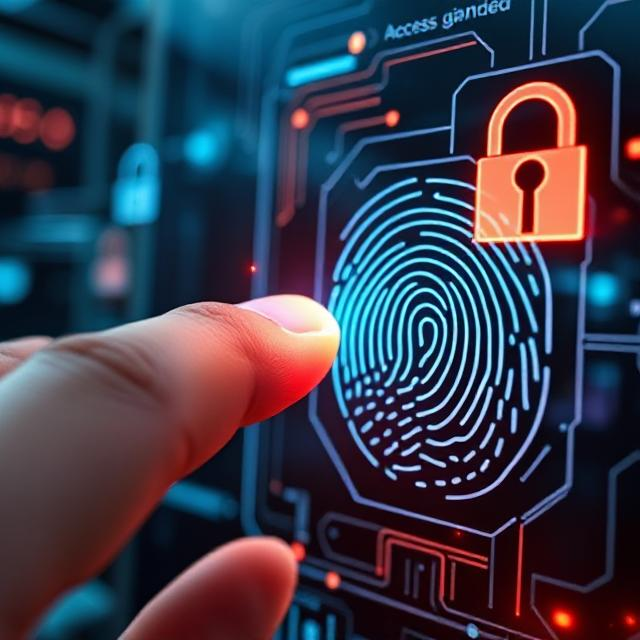
Fingerprint technology is now part of everyday life. From unlocking your smartphone to verifying payments and identifying suspects in criminal investigations, fingerprint scanning has become one of the most trusted forms of identity verification in the world. But how exactly does it work? Here is a clear breakdown of the science, the sensors, and the many ways this technology is used today.
What Are Fingerprints and Why Are They Unique?
Every human being is born with a unique set of fingerprints. These patterns begin forming in the womb and consist of ridges and valleys arranged in distinct formations. No two people — not even identical twins — share the same fingerprint pattern.
This biological uniqueness is what makes fingerprints so valuable for identification. The patterns remain stable throughout a person’s life, making them a reliable and permanent marker of identity. Three main fingerprint pattern types exist:
- Loops — the most common pattern, where ridges curve back on themselves
- Whorls — circular or spiral patterns
- Arches — ridges that rise in the center and flow from one side to the other
The Step-by-Step Process of Fingerprint Recognition
Fingerprint scanning systems work by comparing a live scan against a stored digital template. The process involves five key stages:
- Image Capture: When you place your finger on a sensor, it captures a high-resolution image of your fingerprint. The image must be detailed enough to record even the smallest ridge features.
- Image Preprocessing: The captured image goes through a cleanup process. This removes blurriness, distortion, or noise so the fingerprint appears as sharp and clear as possible before analysis begins.
- Feature Extraction: The system identifies key points in the fingerprint known as minutiae. These include ridge endings, bifurcations (where a ridge splits into two), and other distinctive markers that make each fingerprint unique.
- Template Creation: The extracted minutiae are converted into a digital template — a mathematical representation of the fingerprint. This template is stored securely in a database for future comparisons.
- Matching: During authentication, the system compares the live scan with the stored template. If enough matching points meet a predefined threshold, access is granted. If not, the attempt is rejected.
Types of Fingerprint Sensors Explained
Not all fingerprint sensors work the same way. Different technologies are used depending on the device and the level of security required.
| Sensor Type | How It Works | Common Use |
|---|---|---|
| Capacitive | Measures changes in electrical capacitance when a finger touches the surface | Smartphones, tablets |
| Optical | Captures a digital image of the fingerprint using light | Laptops, access control systems |
| Ultrasonic | Uses ultrasonic waves to create a detailed 3D image through the skin | High-security devices, premium smartphones |
Among these, ultrasonic sensors offer the highest accuracy and security. They can scan through dirt, moisture, and even minor skin damage — making them ideal for demanding environments.
Where Fingerprint Technology Is Used Today
Fingerprint recognition has moved well beyond smartphone screens. It now plays a critical role across multiple industries:
- Security and Access Control: Fingerprint scanners protect sensitive areas in offices, data centres, and government buildings by restricting entry to authorised personnel only.
- Digital Payments: Many banking apps and payment platforms use fingerprint authentication to approve transactions, replacing PINs and passwords for faster and safer payments.
- Law Enforcement: Police and investigative agencies use fingerprint databases to match prints found at crime scenes with known individuals, helping solve cases faster.
- Healthcare: Hospitals use fingerprint systems to accurately identify patients, access medical records, and control entry to restricted areas — reducing errors and improving safety.
- Border Control and Immigration: Airports and border agencies use fingerprint scanning as part of identity verification for travellers and visa applicants.
Challenges Facing Fingerprint Technology and What Comes Next
Despite its reliability, fingerprint technology is not without limitations. Several challenges continue to shape its development:
- Spoofing Risks: Bad actors have attempted to fool sensors using fake fingerprints made from silicone or gelatin. Researchers and manufacturers are constantly working on better anti-spoofing measures.
- Liveness Detection: Systems must be able to confirm that the fingerprint being scanned belongs to a living person and not a replica. Advanced liveness detection is now a key focus area for developers.
- Multi-Biometric Systems: Combining fingerprint recognition with other biometric methods — such as facial recognition or iris scanning — creates stronger, layered security that is much harder to bypass.
- Under-Display Sensors: One of the most exciting developments is the integration of fingerprint sensors directly beneath smartphone screens. This allows for a cleaner design while maintaining strong security. Several flagship Android devices already feature this technology.
As fingerprint technology matures, it is expected to become faster, more accurate, and more resistant to fraud. Its role in securing both personal devices and critical infrastructure will only grow in the years ahead.
Fingerprint recognition is a powerful blend of biology and engineering. Understanding how it works helps users appreciate why it is trusted by billions of people worldwide — and why it continues to be one of the most effective tools for digital identity verification available today.
Frequently Asked Questions
Yes, some older or basic sensors can be tricked using fake fingerprints made from materials like silicone or gelatin. However, modern sensors — especially ultrasonic ones — use liveness detection to confirm the fingerprint belongs to a real, living person, making spoofing much harder.
Ultrasonic fingerprint sensors are currently the most secure. They use sound waves to create a detailed 3D image of the fingerprint, can scan through moisture or dirt, and are more resistant to spoofing compared to capacitive or optical sensors.
No. Fingerprint data is not stored as a photograph. Instead, the system extracts key features called minutiae and converts them into an encrypted digital template. This template is what gets compared during authentication, and it cannot be reverse-engineered into the original fingerprint image.