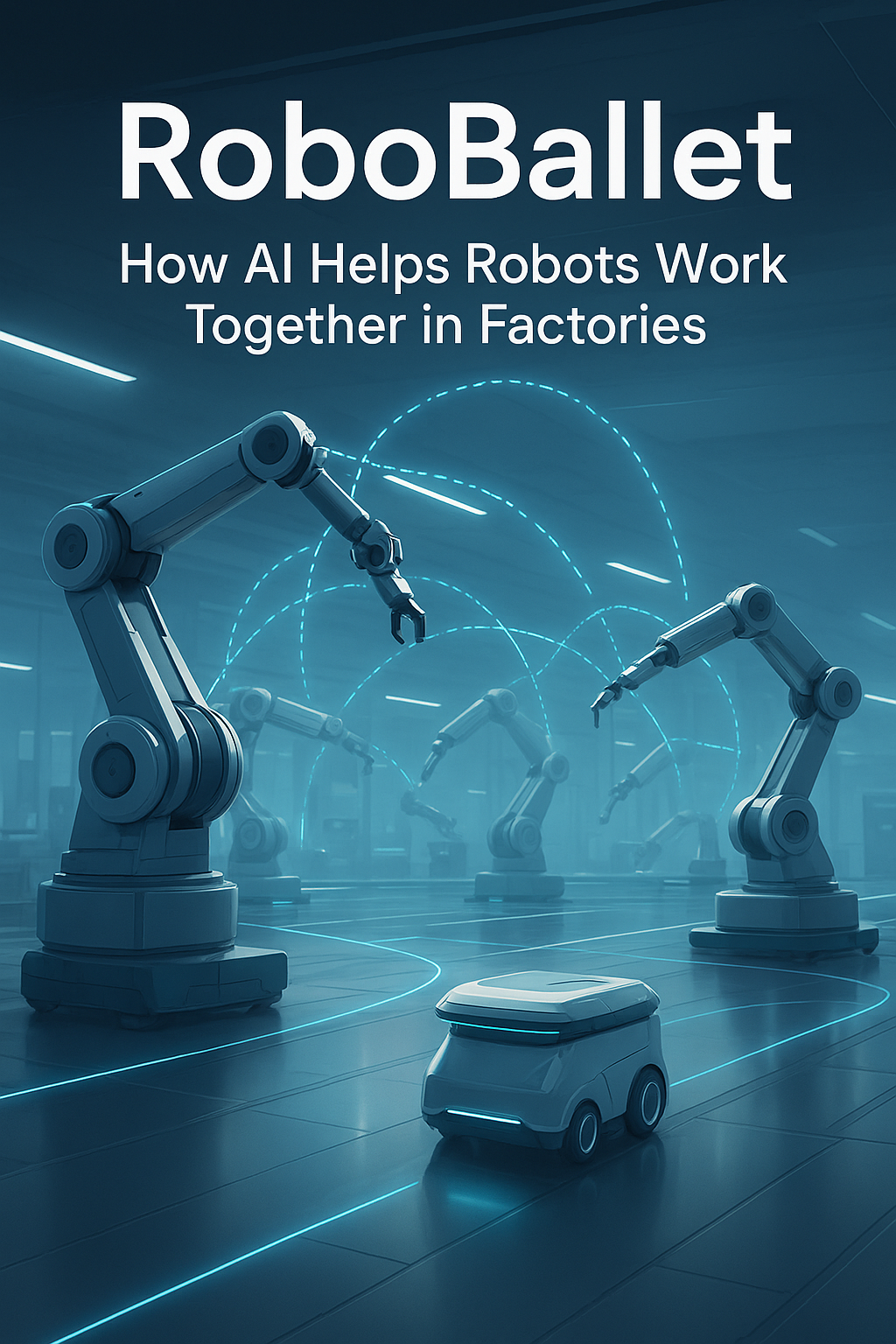
Imagine a group of ballet dancers moving in perfect sync on stage — every step timed precisely, every movement coordinated. Now picture that same harmony inside a factory, but with robots instead of dancers. That is exactly what RoboBallet brings to modern manufacturing. It is a technology concept where artificial intelligence coordinates multiple robots to work together like a well-rehearsed performance, making factory operations faster, safer, and smarter.
What Is RoboBallet?
RoboBallet is an AI-driven system designed to manage and coordinate multiple robots working simultaneously in a shared space. Just as a choreographer plans every dancer’s movement to avoid collisions and maintain rhythm, the AI in RoboBallet assigns tasks, manages timing, and ensures each robot knows exactly what to do and when.
The name itself captures the idea well — robots moving with the precision and coordination of ballet dancers, guided by intelligent software rather than human instruction at every step.
This is not just a concept for the future. It fits into the broader framework of Industry 4.0, where smart machines, data, and automation work together to reshape how things are made.
How RoboBallet Technology Works
The system operates through a combination of real-time decision-making, machine learning, and intelligent task management. Here is how it functions in practice:
- AI assigns roles: The system decides which robot handles which task and at what time, based on efficiency and availability.
- Real-time adaptation: If something changes on the factory floor — a delay, a malfunction, or a new task — robots adjust their actions immediately without human intervention.
- Collision avoidance: Just like dancers avoiding bumps on stage, the AI calculates each robot’s path to prevent crashes and overlaps.
- Continuous learning: Through machine learning, the robots improve their coordination over time, getting better at working together with each completed task.
This combination of speed, intelligence, and adaptability makes RoboBallet a significant step forward in factory automation.
Industries That Can Benefit from RoboBallet
The applications of this technology span several major industries where precision and speed are critical:
- Automobile and electronics manufacturing: Robots assemble parts quickly and accurately, reducing production time significantly.
- Warehouses and logistics: Multiple robots can move packages and manage inventory without colliding, improving throughput.
- Medical device production: Fragile and tiny components require extreme precision, which AI-coordinated robots can deliver consistently.
- Aerospace and spacecraft assembly: Complex builds with tight tolerances benefit from perfectly timed robotic teamwork.
Each of these sectors demands reliability and accuracy — qualities that RoboBallet is specifically designed to provide.
Why RoboBallet Matters for the Future of Manufacturing
The real value of RoboBallet goes beyond just making robots move nicely. It has measurable, practical benefits for businesses and industries:
| Benefit | What It Means in Practice |
|---|---|
| Faster Production | Robots working in sync complete tasks quicker than sequential or manual processes. |
| Fewer Errors | AI ensures tasks are done correctly the first time, reducing rework and waste. |
| Lower Operating Costs | Less downtime, fewer accidents, and reduced human supervision cut overall expenses. |
| Scalability | Factories can add more robots to the system without rebuilding workflows from scratch. |
For manufacturers looking to stay competitive, adopting coordinated robotic systems like RoboBallet is becoming less of an option and more of a necessity.
RoboBallet and the Road Ahead
The factories of the near future will look very different from the noisy, chaotic workshops of the past. With systems like RoboBallet, production floors will operate more like carefully directed performances — quiet, precise, and highly efficient.
As part of the Industry 4.0 movement, this kind of intelligent multi-robot coordination represents a shift in how humans think about manufacturing. The AI acts as the director, the robots are the performers, and the result is a production process that is faster, safer, and far more capable than anything relying on individual machines working in isolation.
Companies investing in this technology today are building the foundation for factories that can adapt, scale, and compete in a world where speed and accuracy define success.
RoboBallet shows that the future of manufacturing is not about one powerful robot — it is about many robots working together, guided by intelligence, toward a common goal.